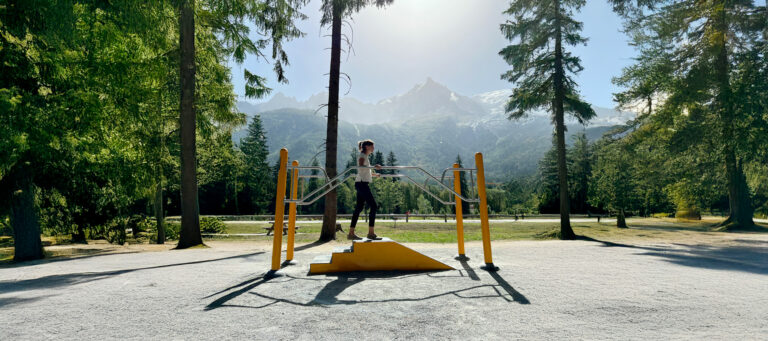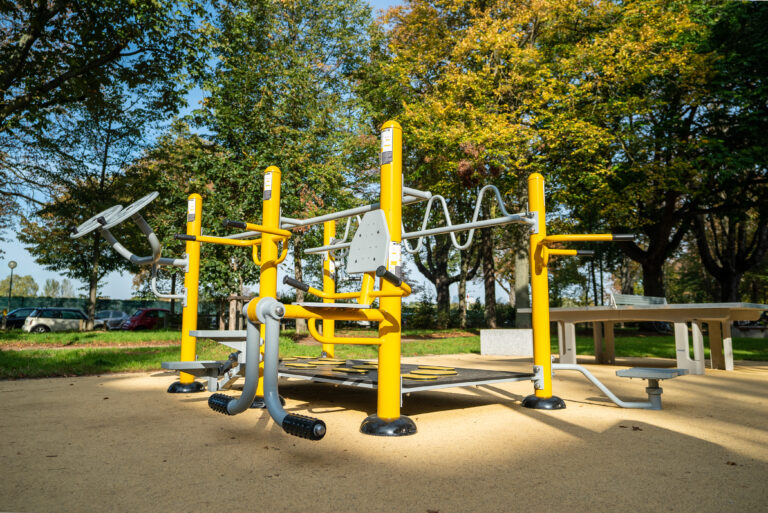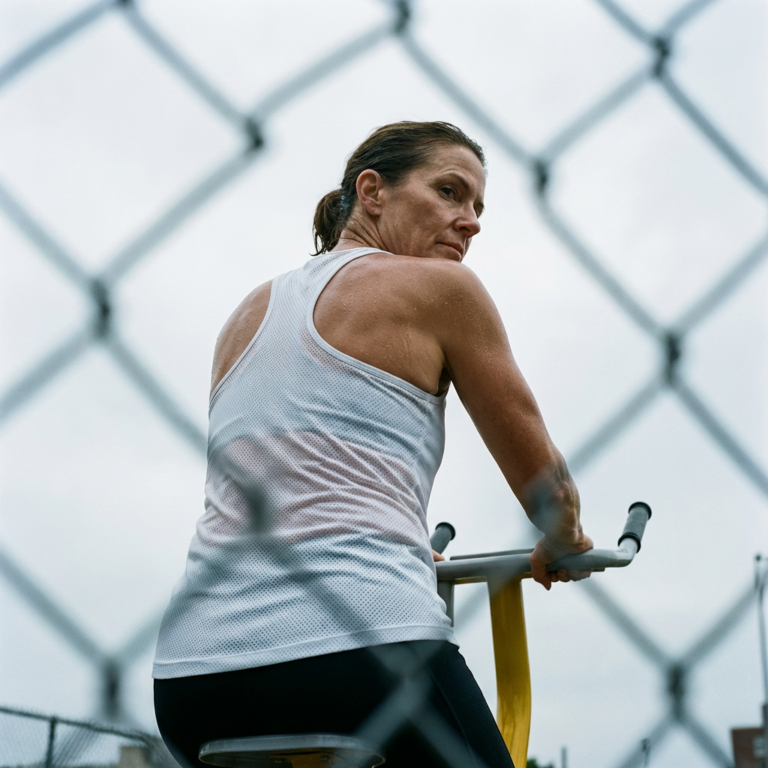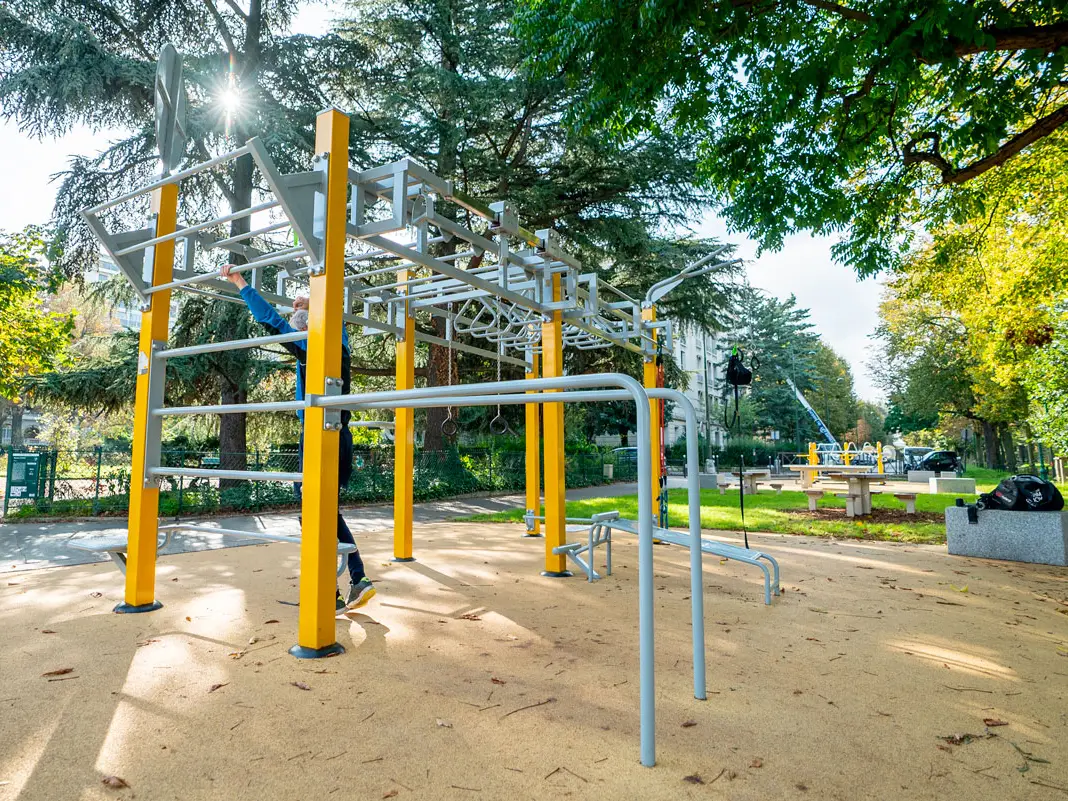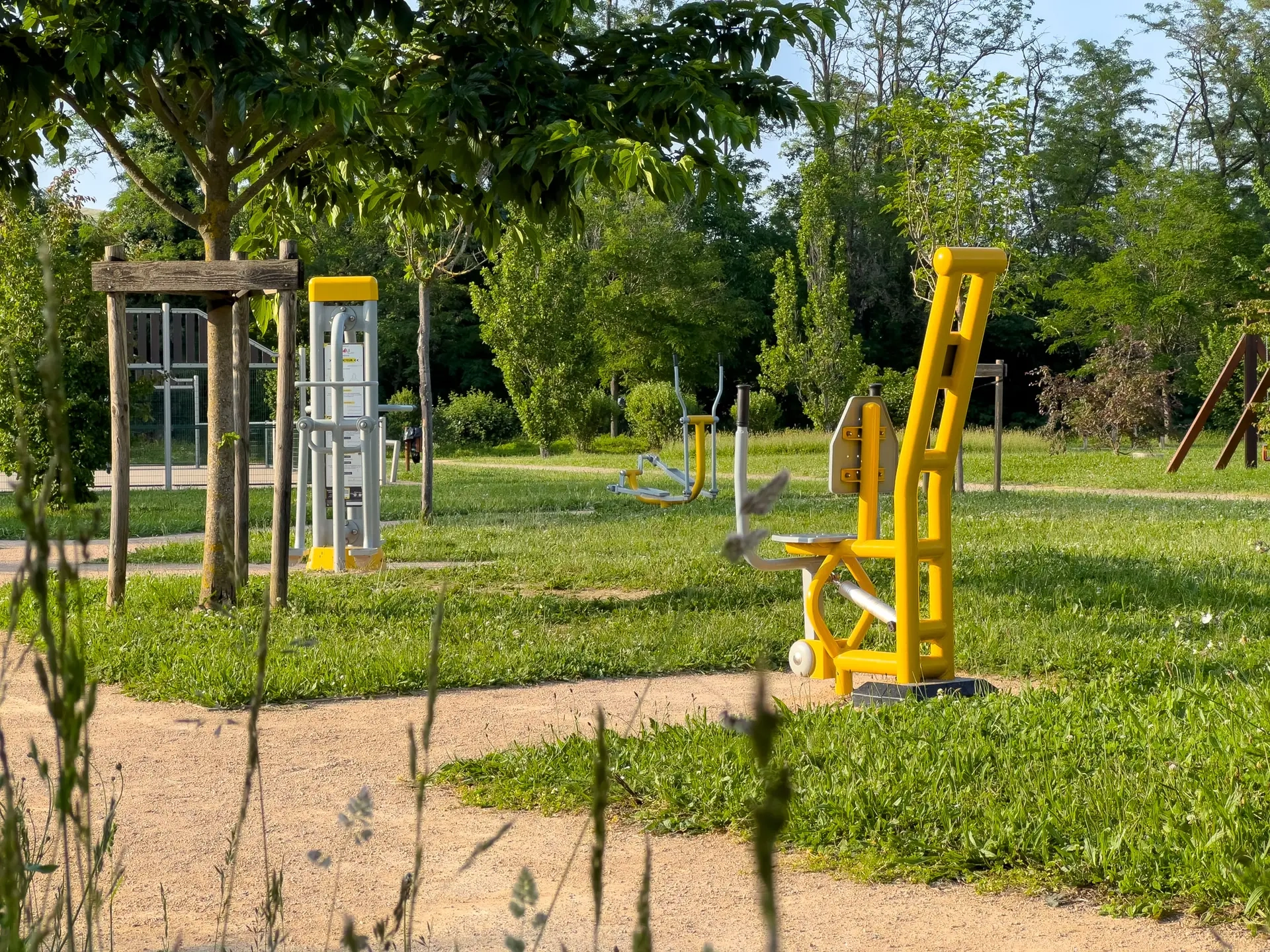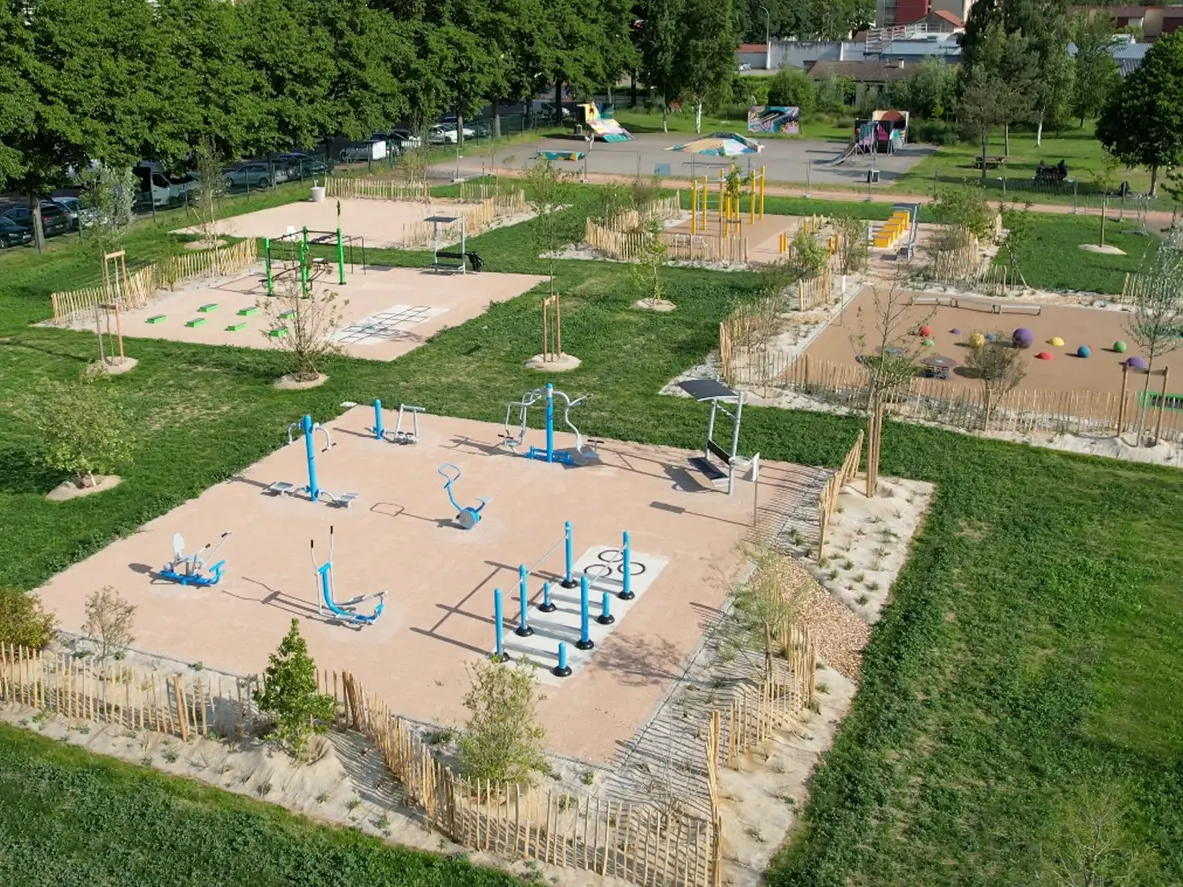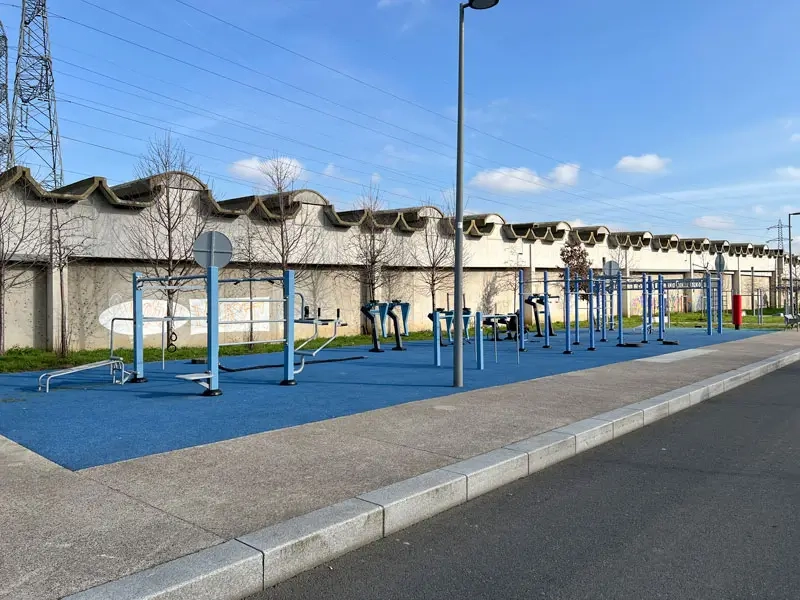

Walking in an outdoor fitness park, feeling the fresh morning air, and hearing the gravel under your feet. As soon as you spot the fitness area in the distance, exercise ideas start flowing. The strength training modules catch your eye: pull-up bars, abdominal benches, multi-purpose stations. Outdoor sports have never been so accessible thanks to municipal parks equipped with outdoor sports facilities. Rather than waiting for equipment to become available at the gym, everyone can enjoy these free, varied facilities designed for all fitness levels. Discover how to integrate this playground into your routine to boost your performance and add variety to your workouts.
Key takeaways:
- The outdoor fitness park is a space equipped with outdoor sports facilities, free and accessible to all
- Practical alternative to the gym: no subscription or time constraints
- Varied equipment: pull-up bars, abdominal benches, multi-purpose stations, fitness trails
- Allows for complete and adaptable training: strength training, cardio, agility, and coordination
- Suitable for all levels, with intensity-adaptable exercises
- Promotes circuit training and varied sessions
- Stimulating outdoor setting, conducive to motivation, well-being, and regularity
What is an outdoor fitness park?
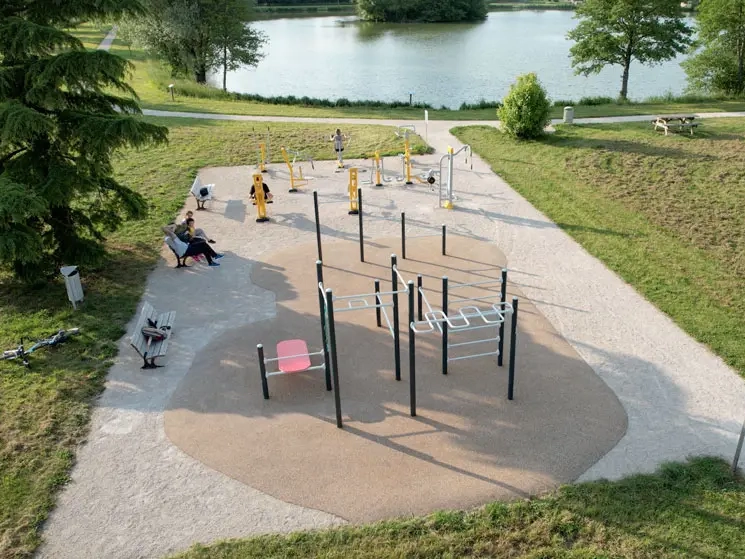
An outdoor fitness park is a space equipped with outdoor sports equipment, often installed in municipal parks or near natural areas. Each installation invites users to discover new movements and encourages collective or individual practice.
These spaces offer a safe alternative for outdoor strength training without a subscription or time constraints. They feature both modules for muscle strengthening and marked fitness trails designed to develop endurance, agility, and explosiveness.
What are the essential equipment pieces?
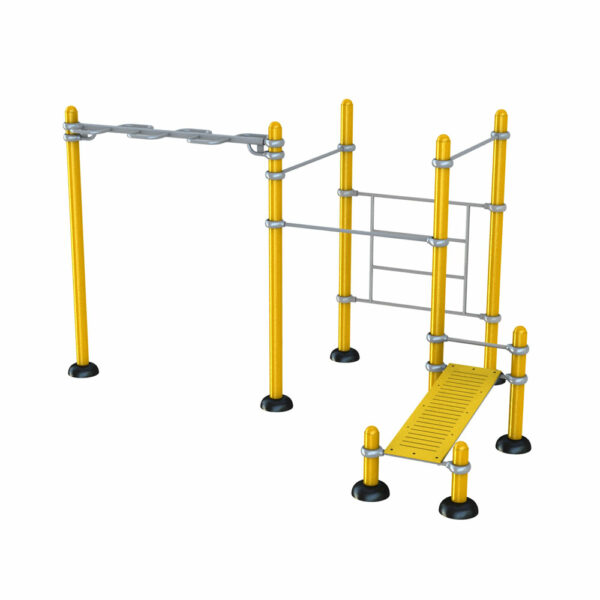
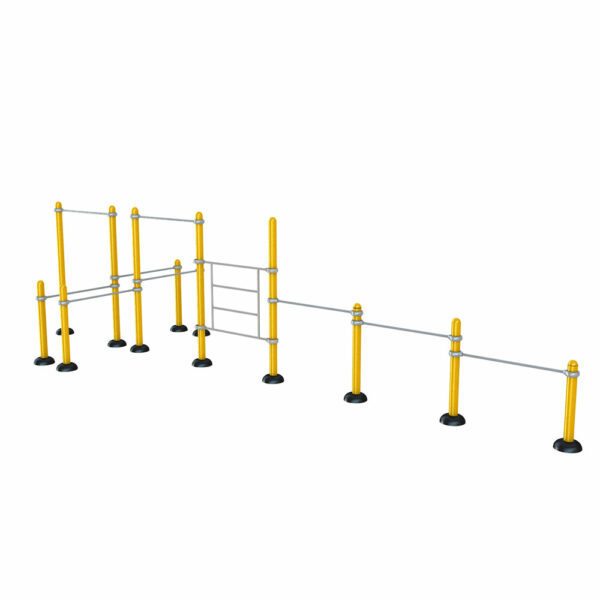
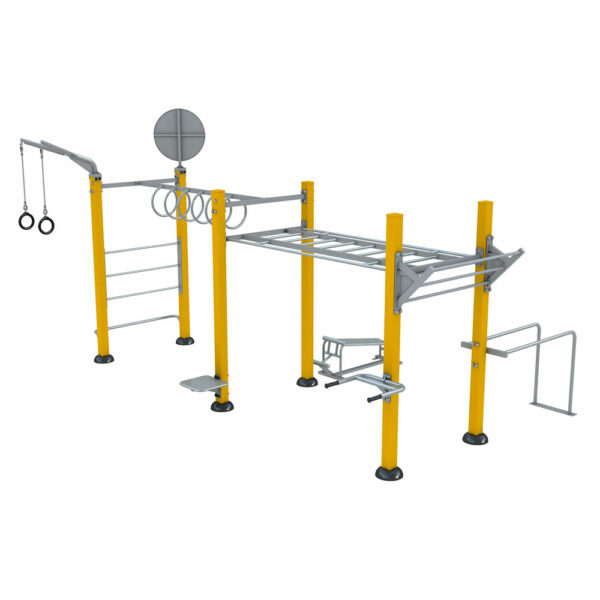
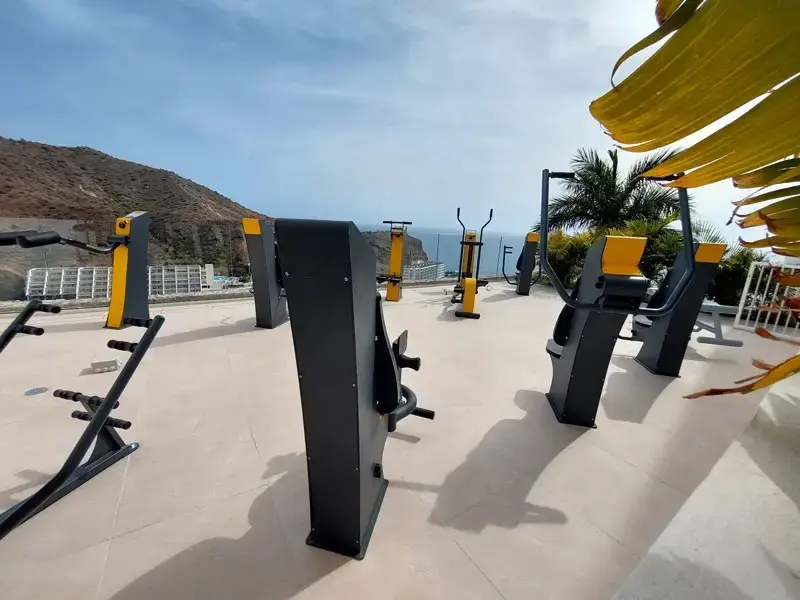
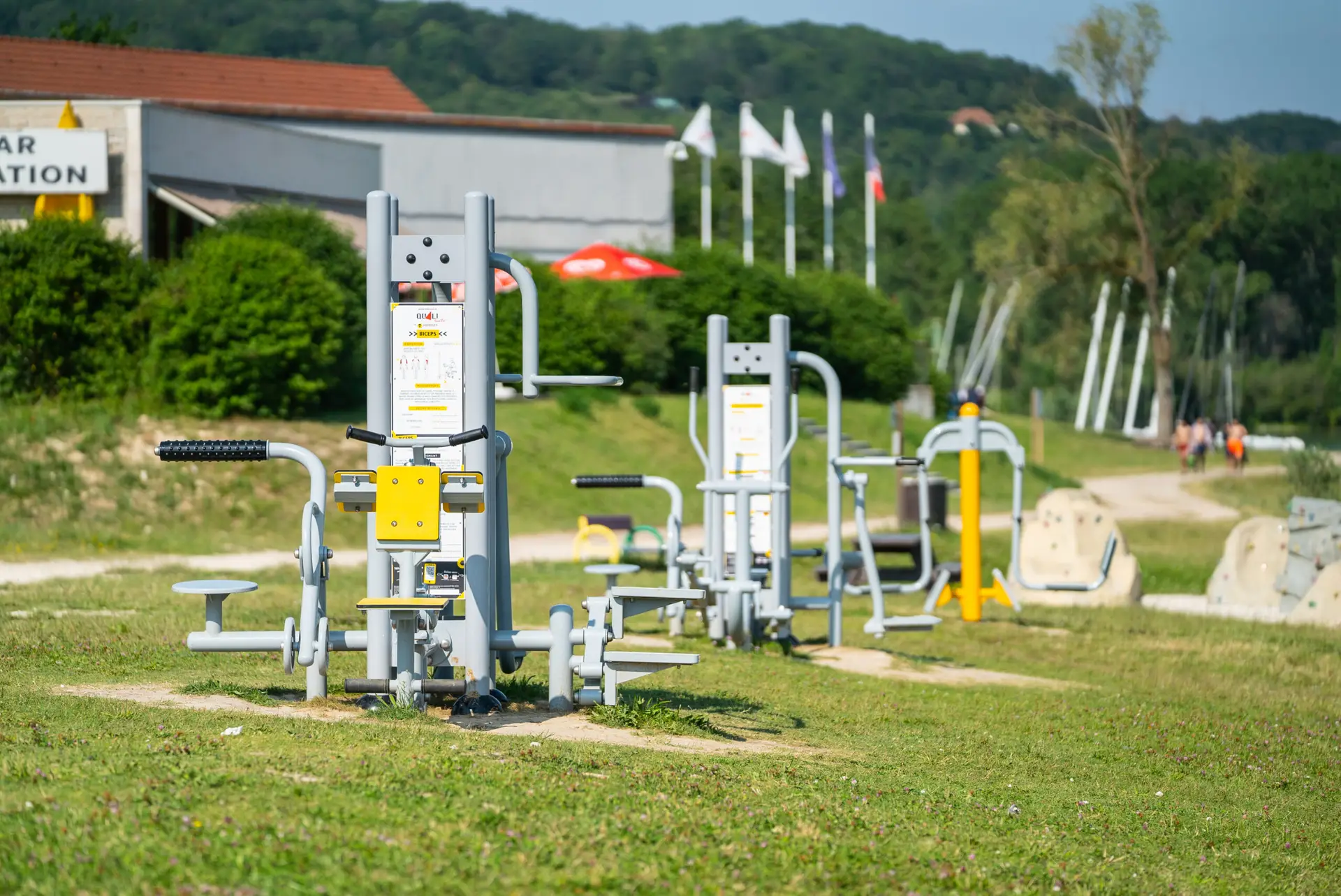
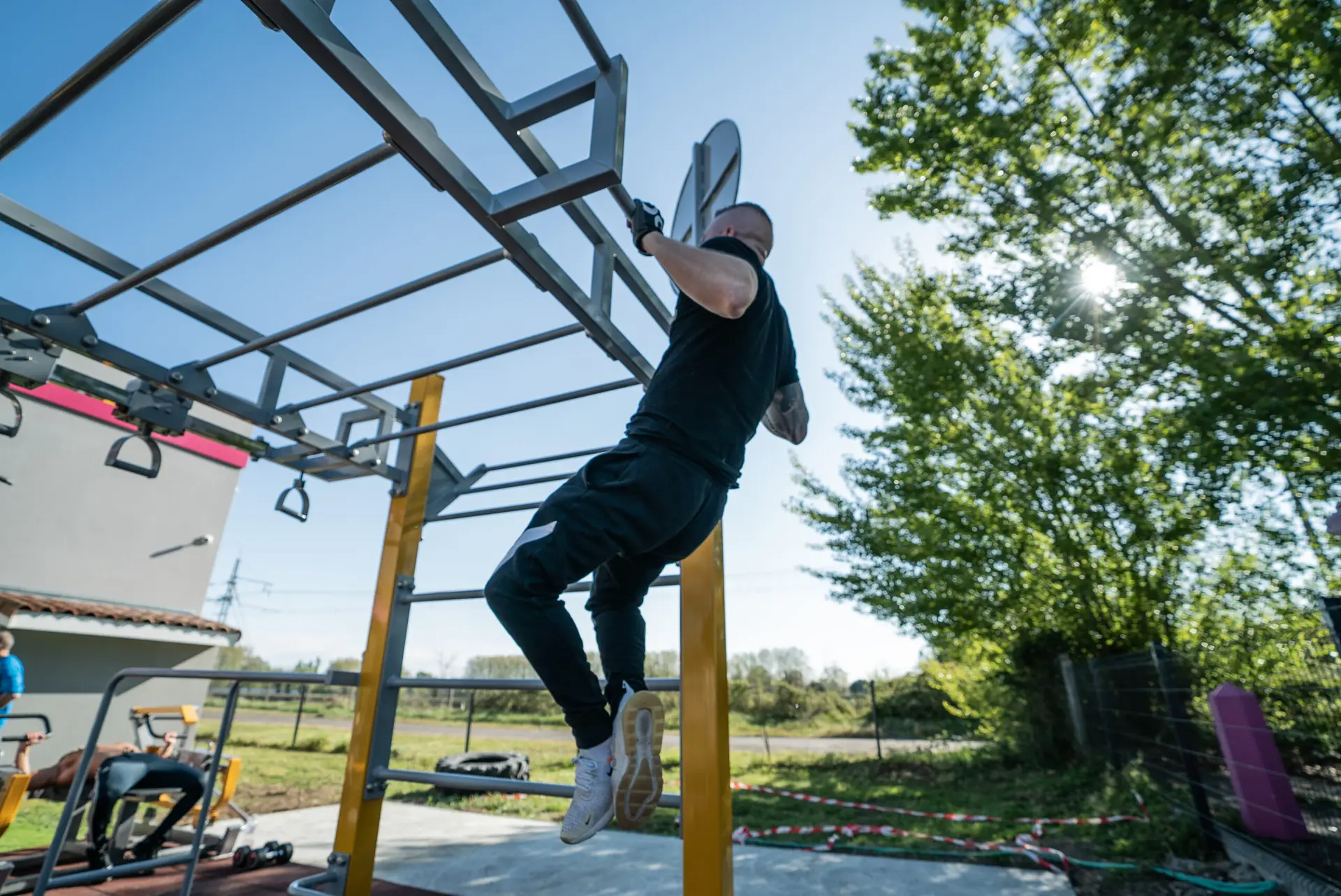
A quick tour around a fitness area reveals the variety of sports equipment: parallel bars, multi-exercise structures, abdominal benches, stairs, rings, and horizontal ladders await motivated individuals.
The organization of these sports facilities often promotes circuit training, where each module corresponds to a specific muscle group (pectorals on push-ups, lats on pull-ups, legs on the Roman chair). Many outdoor sports equipment pieces allow for intensity adjustment based on one’s level: adaptive height, variable width, or movable elements.

Classic Modules and Recent Innovations
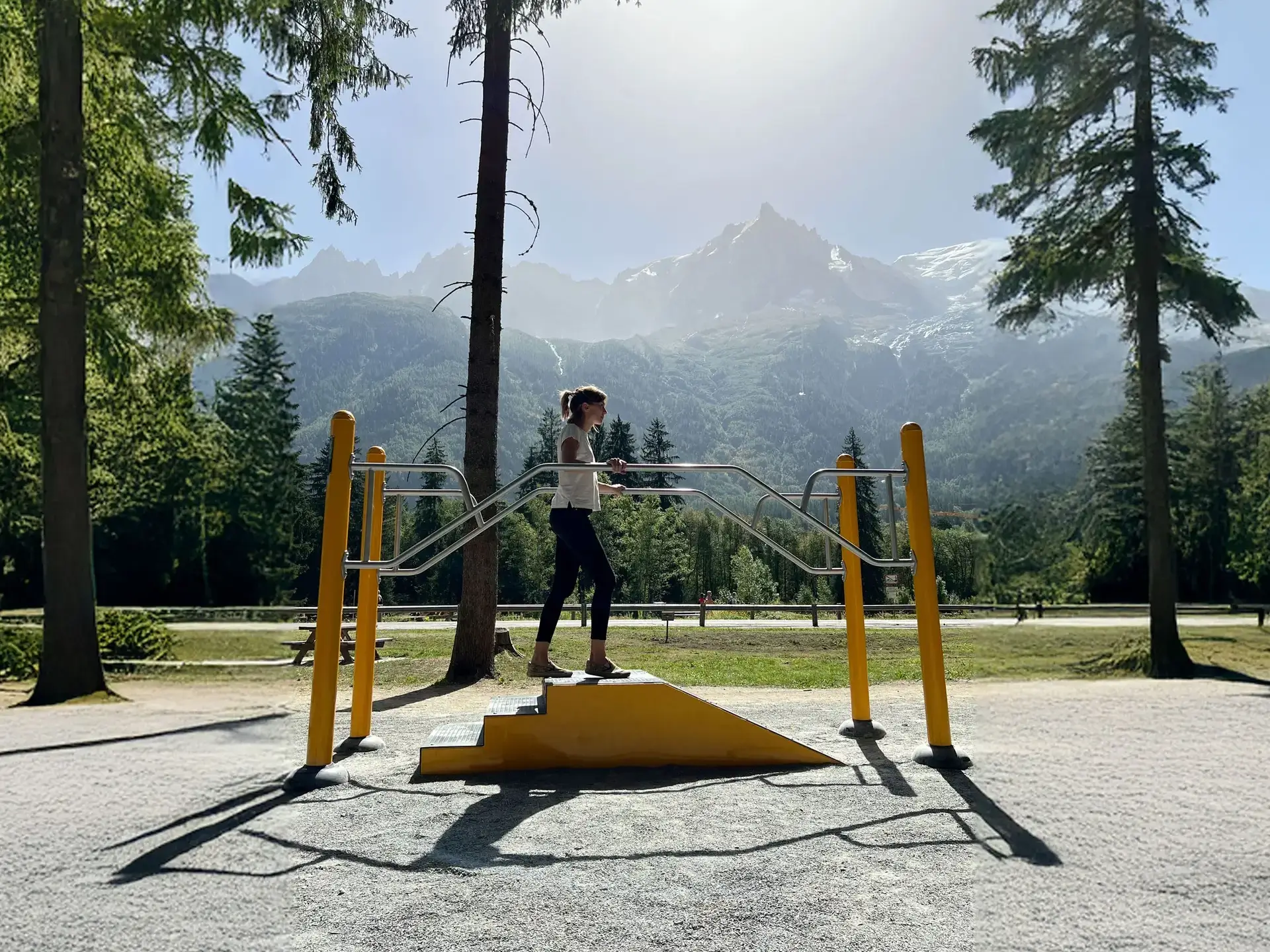
Standard equipment remains timeless. Fixed bars for pull-ups, dip stations for triceps, and steps for plyometric work form the ideal basis for varying your routines. Agility and coordination are paramount in the rapid transitions between each module.
Recent fitness stations now incorporate battle ropes, unstable platforms, or wheels to work on core strength and proprioception. The use of QR codes near the stations provides access to scientifically validated programs or those derived from passionate user feedback.
Focus on Safety and Maintenance
Working on soft ground significantly reduces the risk of injury during dynamic exercises or loss of balance. Before each session, check the condition of the handles and the absence of rusted or detached parts, especially if it has rained recently. A targeted warm-up, focusing on the joints involved, provides lasting protection for tendons and ligaments.
The collaborative aspect emerges through the exchange of advice among users. Identifying safe routines and spontaneously suggesting posture adjustments strengthens community spirit while limiting incorrect movements.
How to optimize your sessions on a fitness trail?
A productive session relies on three pillars: structuring your session, intelligently choosing exercises, and incorporating recovery. Take advantage of the diversity offered by these sports facilities to explore all dimensions of your physical fitness.
A concrete example of a circuit: start with 5 minutes of dynamic warm-up (knee raises, jumping jacks). Perform 8 to 10 different exercises according to the natural order of the trail, with 45 seconds of effort, followed by 30 seconds of active rest between each station. Prioritize a full range of motion for each movement, even if it means reducing the number of repetitions.
Programs Adapted for All Levels
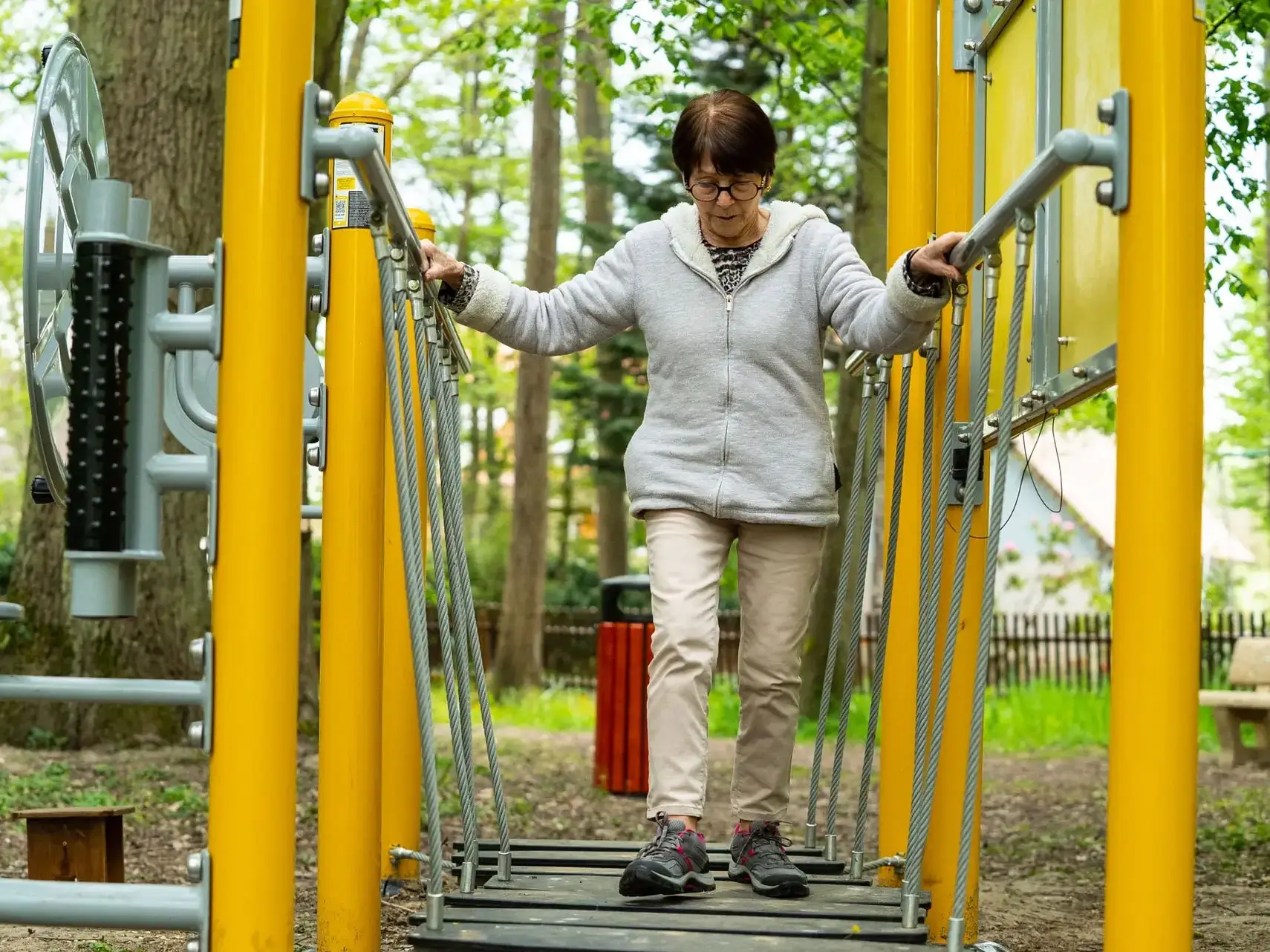
Beginners can focus on bodyweight exercises, with possible assistance on certain modules: low bar squats, incline push-ups, partial suspensions. More experienced individuals opt for explosive or weighted variations (weighted pull-ups, clap push-ups) to intensify the mechanical load.
Here is an example of structured progression:
- Weeks 1 to 4: Technical mastery and postural corrections
- Weeks 5 to 8: Increase in total volume and integration of sequences
- Week 9 and beyond: Exploration of advanced exercises and progressive overload
Complementary Roles of Urban Fitness Areas and Natural Spaces
The environment matters in the perception of effort. Outdoor fitness equipment installed at the edge of a forest stimulates differently than a concrete platform between two streets. Recharging in a natural setting during recovery particularly accelerates mental regeneration after an intense set.
The development of an urban area aims more at practicality and integration into daily life (active lunch break, post-work routine), while a module placed in nature emphasizes calm and reduces competitive pressure. Among the major advantages: permanent accessibility, diversity of ages and profiles, and a culture of sharing.
Tips to Maximize the Outdoor Fitness Park Experience
Outdoor training also means managing the unexpected: changing weather, crowd levels, different surfaces under the sports modules. Always bring a water bottle, a light towel, and, depending on the season, appropriate attire that allows for a full range of motion.
Between sets, take advantage of the setting to perform stretching exercises or practice deep breathing. Alternating between repeated efforts and conscious breaks promotes both muscular efficiency and nervous system recovery.
- Prioritize joint mobility at the beginning of the session.
- Test several sports modules to identify those that effectively challenge your weaknesses.
- Regularly incorporate a few meters of running or brisk walking between stations to boost your cardio.
- Invite a partner: guaranteed motivation and mutual correction.
- Adapt loads or intensities to your daily fatigue rather than pushing your ego.
| Equipment | Main Muscle Group Targeted | Example Exercise |
| Pull-up Bar | Lats/Biceps | Strict pull-ups, chin-ups |
| Parallel bars | Chest/Triceps | Dips, L-sit |
| Abdominal Bench | Core | Crunches, leg raises |
| Step or plyo box | Glutes/Thighs | Box jump, step-up |
Frequently Asked Questions about Outdoor Fitness Parks
Are outdoor sports equipment suitable for beginners?
Yes, the majority of sports modules found in an outdoor fitness park are designed to be accessible to all levels. Fitness areas often provide schematic explanations for performing each exercise safely.
- Adapted variations, such as incline push-ups or assisted dips.
- Personalized progression by adjusting the duration or intensity of effort.
How to ensure your safety during an outdoor strength training session?
Always check the condition of the sports equipment before use. Warm up for at least five minutes and prioritize controlled movements to avoid injuries and strains.
- Always use the provided grip to reduce the risk of slipping.
- Do not press on damaged or wet areas.
Can you create your own outdoor program?
Absolutely, the advantage of outdoor sports facilities is the freedom to create a plan tailored to your goals. Vary the order of sports modules, the effort time, or opt for unique combinations.
- Full-body circuit: alternate upper body, lower body, and cardio.
- Targeted sessions: dedicate each round to a distinct muscle group.
What maintenance is required to ensure the durability of outdoor sports equipment?
Municipalities conduct periodic checks, but it is helpful for each user to identify anomalies, detached parts, or visible wear. Report them to facilitate quick resolution and maintain constant vigilance when weather conditions change.
- Wipe off moisture before use.
- Briefly clean the handles to maintain their grip.
| Recommended Frequency | Action |
| Weekly | Visual inspection and quick cleaning |
| Monthly | Reporting/general condition analysis |
LET’S TALK ABOUT YOUR PROJECT