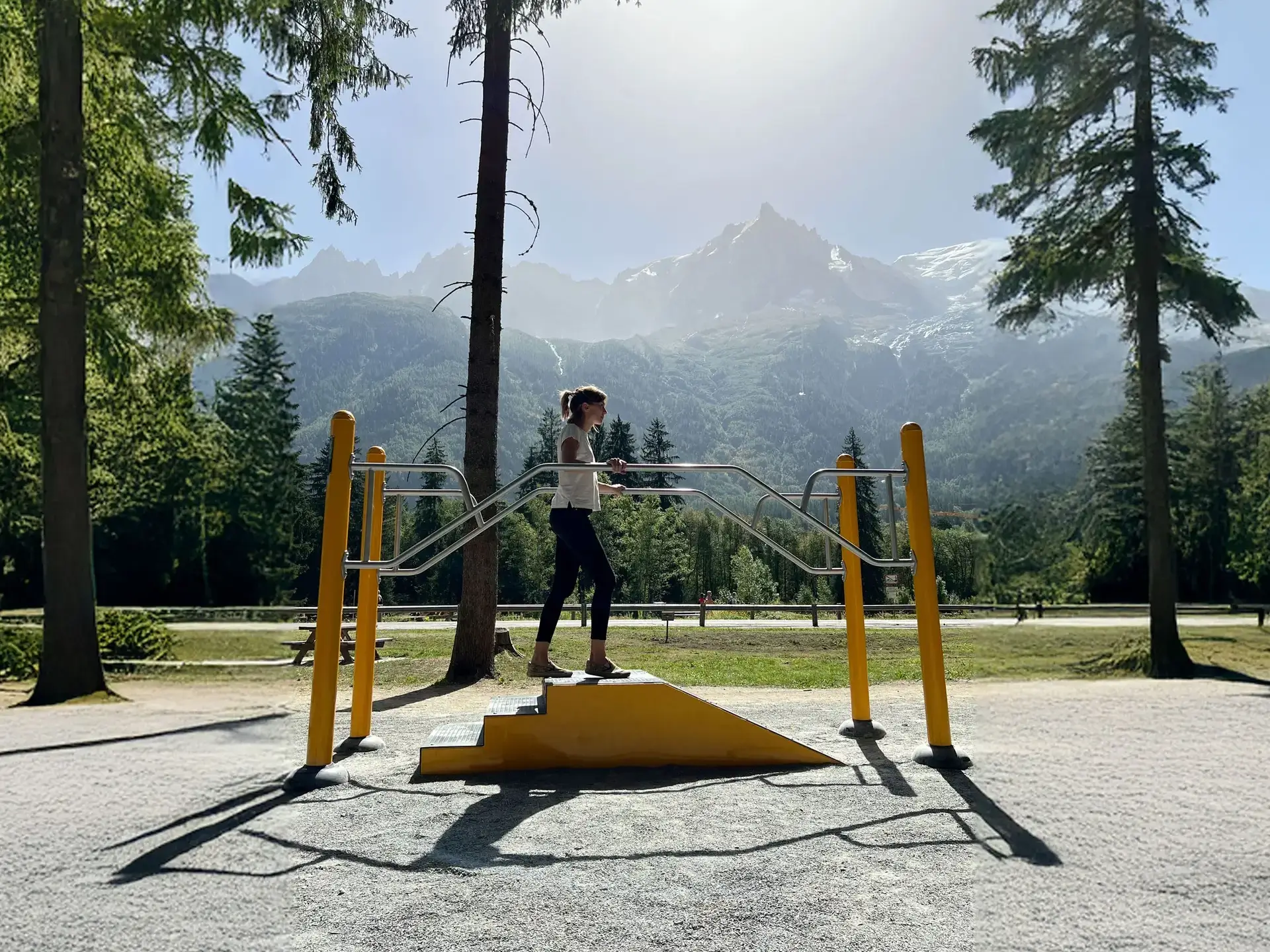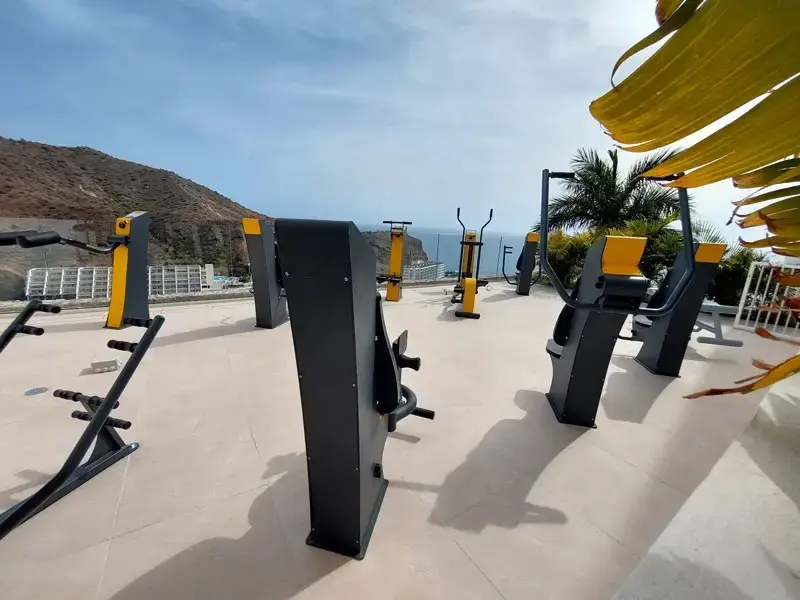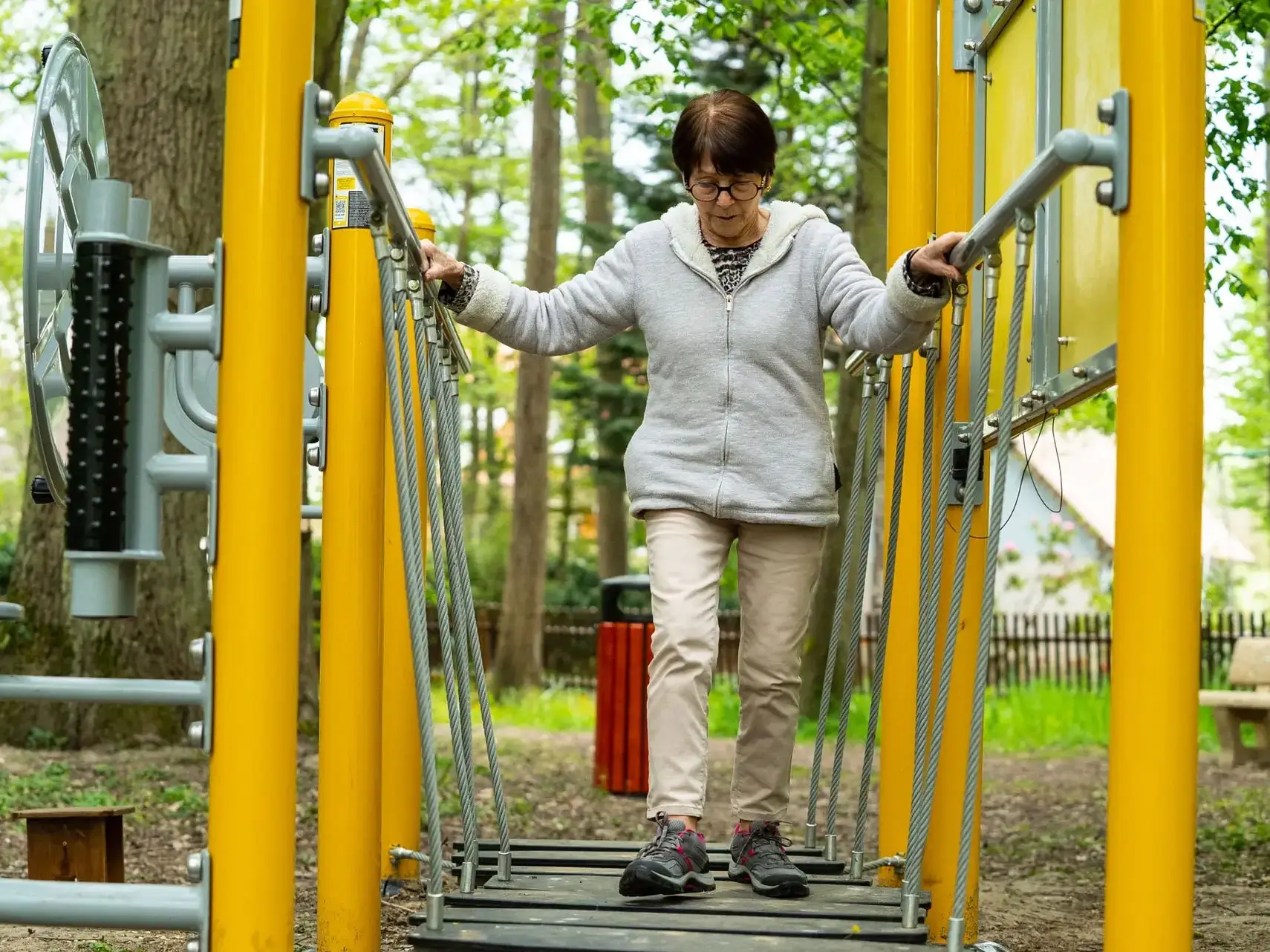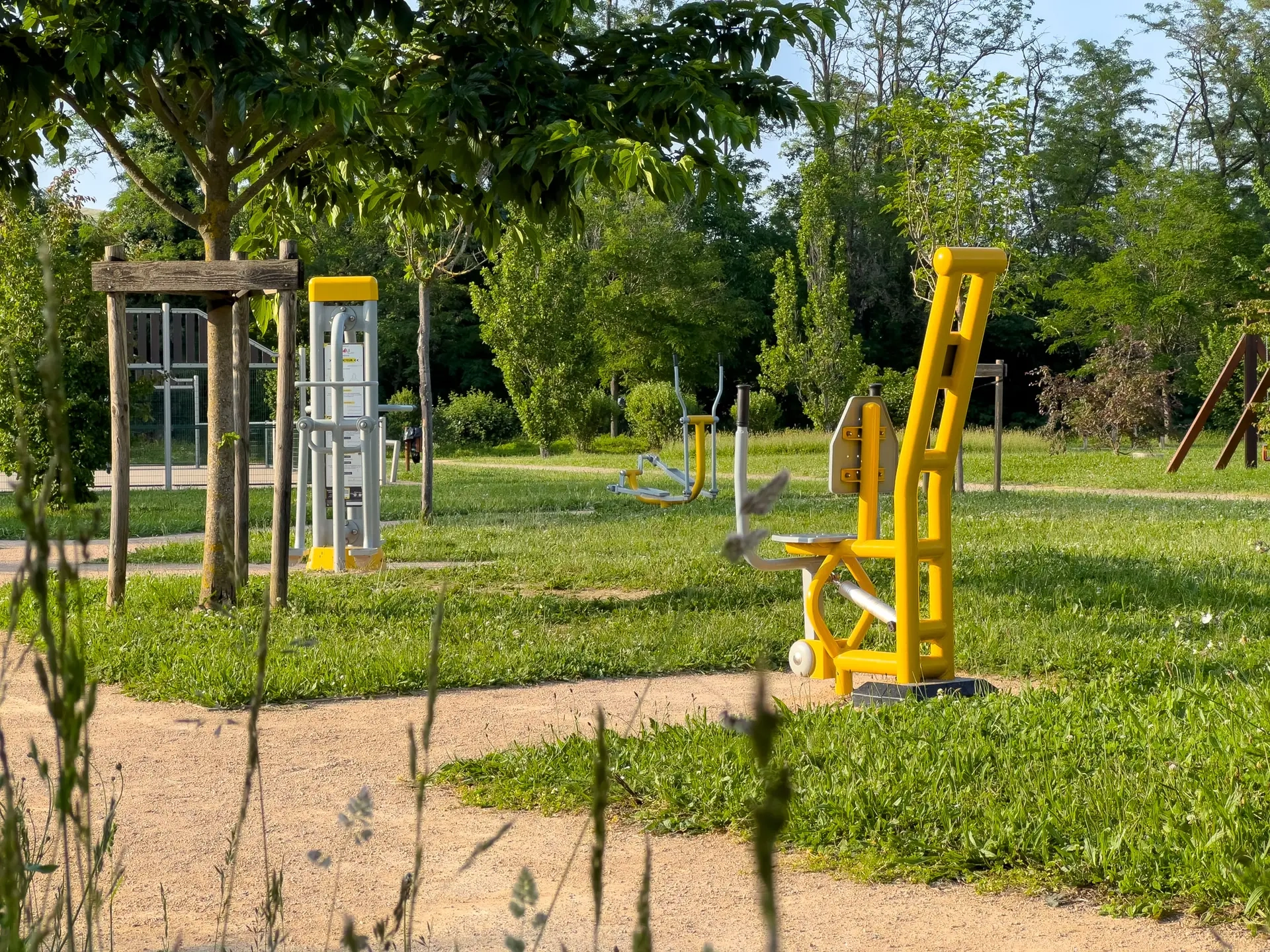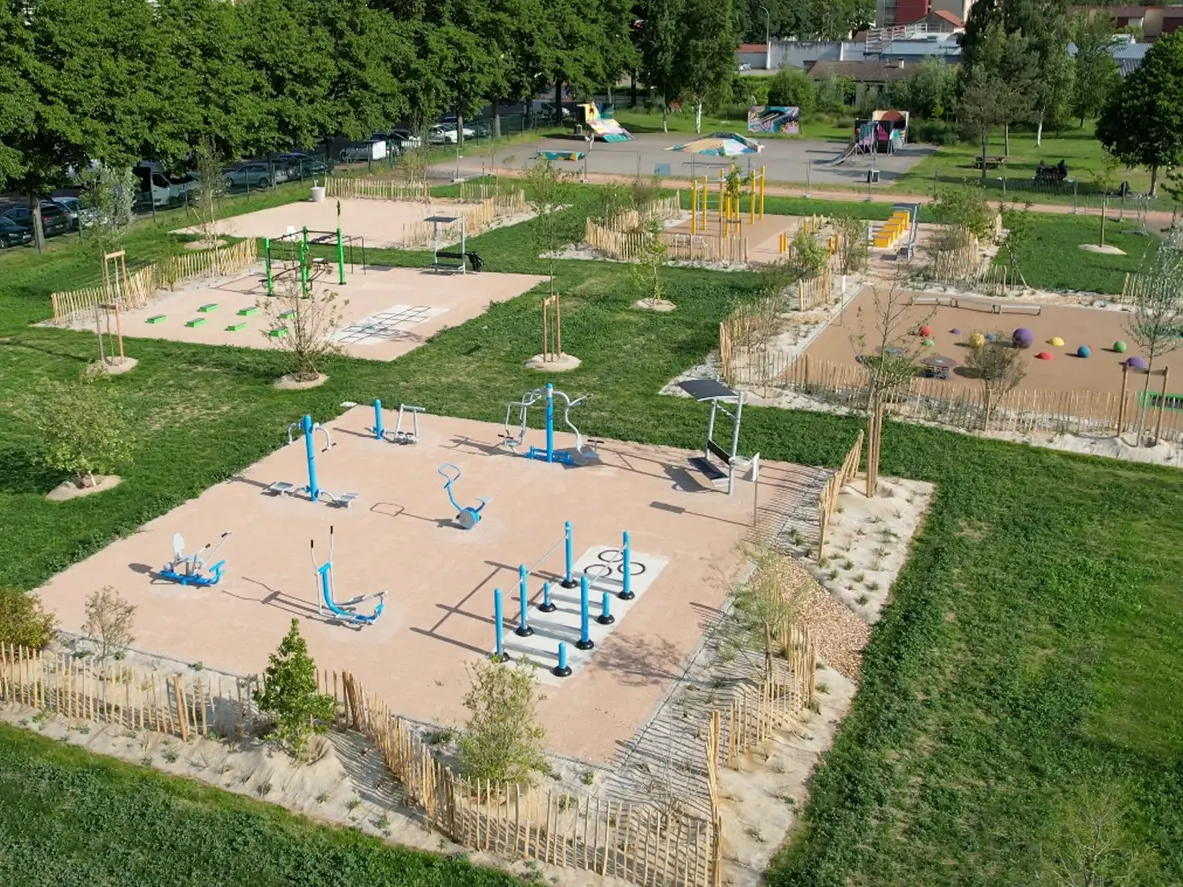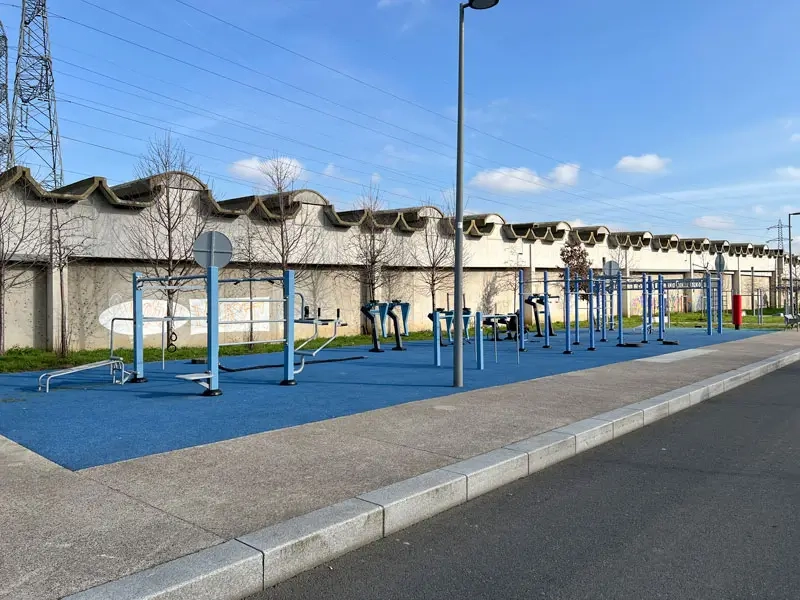

A regional nature park is not an untouchable wilderness. It is an inhabited territory, managed in partnership with local authorities, that reconciles the preservation of natural habitats with the development of sustainable human activity — including outdoor sport. Installing a fitness trail in this kind of area is therefore possible, but it comes under a regulatory framework and technical requirements markedly different from an ordinary urban project.
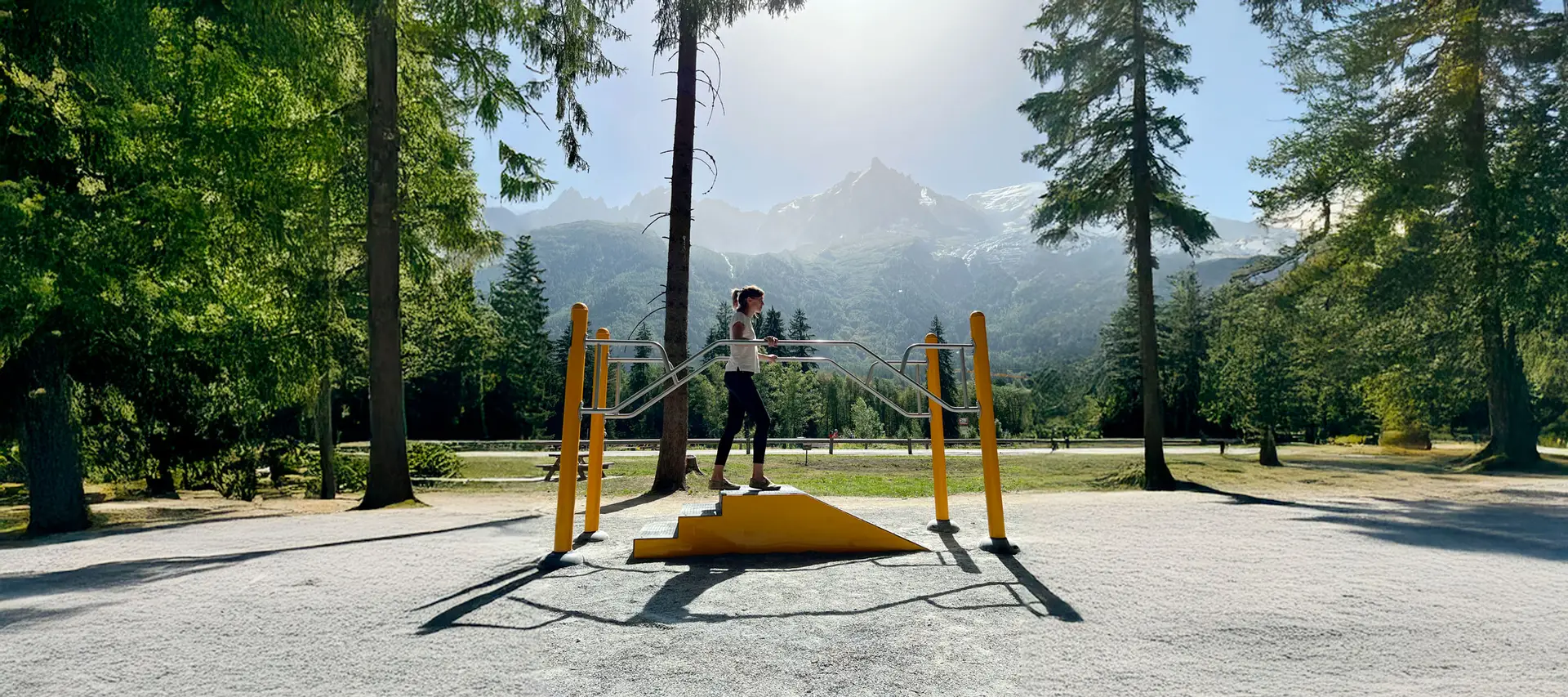
Municipalities within a regional nature park, groupings of municipalities, forest estate and natural area managers: this guide sets out the permits to obtain, the environmental constraints to respect, the equipment suited to this context, and the key stages of running a compliant, durable project.
Key takeaways from this article:
- A fitness trail can be installed in a regional nature park, provided it respects the park’s charter and the local environmental constraints.
- The park’s management authority must be consulted at the very start of the project, even though it does not itself issue the administrative permits.
- Depending on where the site sits, additional steps may be needed: a Natura 2000 impact assessment, a water permit or an opinion from the heritage authorities.
- Equipment should favour natural materials, be EN 16630 certified and, where possible, be fully reversible to limit the impact on the habitat.
- Because of the environmental studies and administrative procedures, allow 9 to 12 months before work can start.
What a regional nature park is and what that means for a sports project
Contrary to a common assumption, a regional nature park is not a strict protection zone comparable to a national nature reserve. It is a rural territory recognised for its heritage and landscape value, organised around a charter signed by the member municipalities and the regional authorities. That charter sets the rules for any intervention on the territory.
What a park charter can impose
• Requirements on usable materials: preference for local timber, prohibition of certain polymers or chemically treated metals incompatible with local wildlife and plant life
• Landscape integration constraints: maximum height of structures, permitted colours, no artificial night lighting in certain zones
• Total exclusion zones: protected natural habitats (Natura 2000 sites within the park), ecological corridors, wetlands, sensitive woodland edges
• A mandatory consultation procedure: an opinion from the park’s landscape and heritage committee before any notification of works is filed
• Reversibility requirements: installations must be removable without leaving any lasting trace on the natural environment
Key point: the park’s management authority is not an administrative body issuing permits, but an unavoidable interlocutor whose opinion often determines how the municipal or inter-municipal permit procedure unfolds.
The regulatory framework: which permits do you need?
A fitness trail project in a regional nature park triggers several permit regimes in parallel, depending on the nature of the works, the precise location and the characteristics of the zone concerned.
Prior notification of works or full planning permission
As with any outdoor fitness equipment project, a prior notification of works is required for structures below the height and footprint thresholds set by national planning law — commonly 12 m in height and 20 m² of footprint. Above those thresholds, full planning permission applies. In a park area, the file is handled by the municipality, but the case officer must obtain an opinion from the heritage authorities if the site lies in a heritage protection zone, and from the regional environmental authority for Natura 2000 sites.
The Natura 2000 impact assessment
If the site is in or near a Natura 2000 area (habitat of protected species listed under the Birds or Habitats Directives), an impact assessment must be produced before the permit application is filed. This document analyses the project’s potential impacts on the species and habitats concerned and proposes avoidance or mitigation measures. Where there are no significant impacts, a simplified form is enough; beyond that, a full file is required.
Water permits
If the project involves works less than 200 metres from a watercourse or in a wetland, a declaration or permit under water legislation may be required. The thresholds that trigger the obligation depend on the area made impermeable and the volume of water likely to be affected.
| Permit | Trigger condition | Average processing time | Who to deal with |
| Prior notification | Structure below the planning thresholds | 1 to 2 months | Municipality + case officers |
| Planning permission | Structure above the planning thresholds | 3 to 4 months | Municipality + planning and environmental services |
| Natura 2000 impact assessment | Natura 2000 site or nearby perimeter | Included in the main file | Regional environmental authority |
| Water permit | Works less than 200 m from a watercourse | 2 to 6 months | Water authority |
| Opinion of the park authority | Systematic within the park | 4 to 8 weeks | Park management authority |
Worth remembering
In a regional nature park, the overall time between starting the studies and the first spade in the ground is rarely under 9 to 12 months. Building that reality into the project timetable is essential if you want to avoid friction with elected members or funders.
Environmental constraints: what to watch for on the ground
Beyond the administrative permits, physically installing a fitness trail in a natural setting has environmental impacts that the project owner must anticipate from the design stage.
Choosing and protecting the natural ground
In a nature park, sealing the ground is a red line you do not cross without solid justification. Natural soil performs essential ecological functions: rainwater infiltration, habitat for soil-dwelling species, a corridor for seed dispersal. Every square metre of concrete or asphalt has to be justified functionally.
For fitness trails in natural settings, the preferred solutions are permeable surfaces: free-draining compacted gravel, compressed wood chips, limestone gravel or reinforced grass. EPDM rubber tiles, where they are needed under certain active machines, should be laid on a draining bed with no concrete foundation if the bearing capacity of the ground allows.
Managing protected species
Before any earthworks, an ecological survey of flora and fauna is strongly recommended and sometimes required by the park authority. It identifies the presence of protected species (amphibians, reptiles, saproxylic insects, wild orchids and so on) likely to be affected by the works. Where such species are confirmed, a protected species derogation must be sought from the regional environmental authority — a long and uncertain procedure that can put the planned location back in question.
Impact on ecological corridors
Regional nature parks play a major role in preserving national ecological networks. A badly positioned fitness trail can cut a wildlife movement corridor (hedgerow, riparian woodland, forest edge). The park’s ecological corridor map, available from the management authority, should be consulted at the feasibility stage to make sure the location does not break these continuities.
Seasonal restrictions on works
In a nature park, works are generally subject to seasonal windows to protect the breeding of sensitive species. The most common rule: no earthworks between 1 March and 31 July (the bird nesting period). This calendar can vary depending on the species present on the site and the park authority’s requirements.
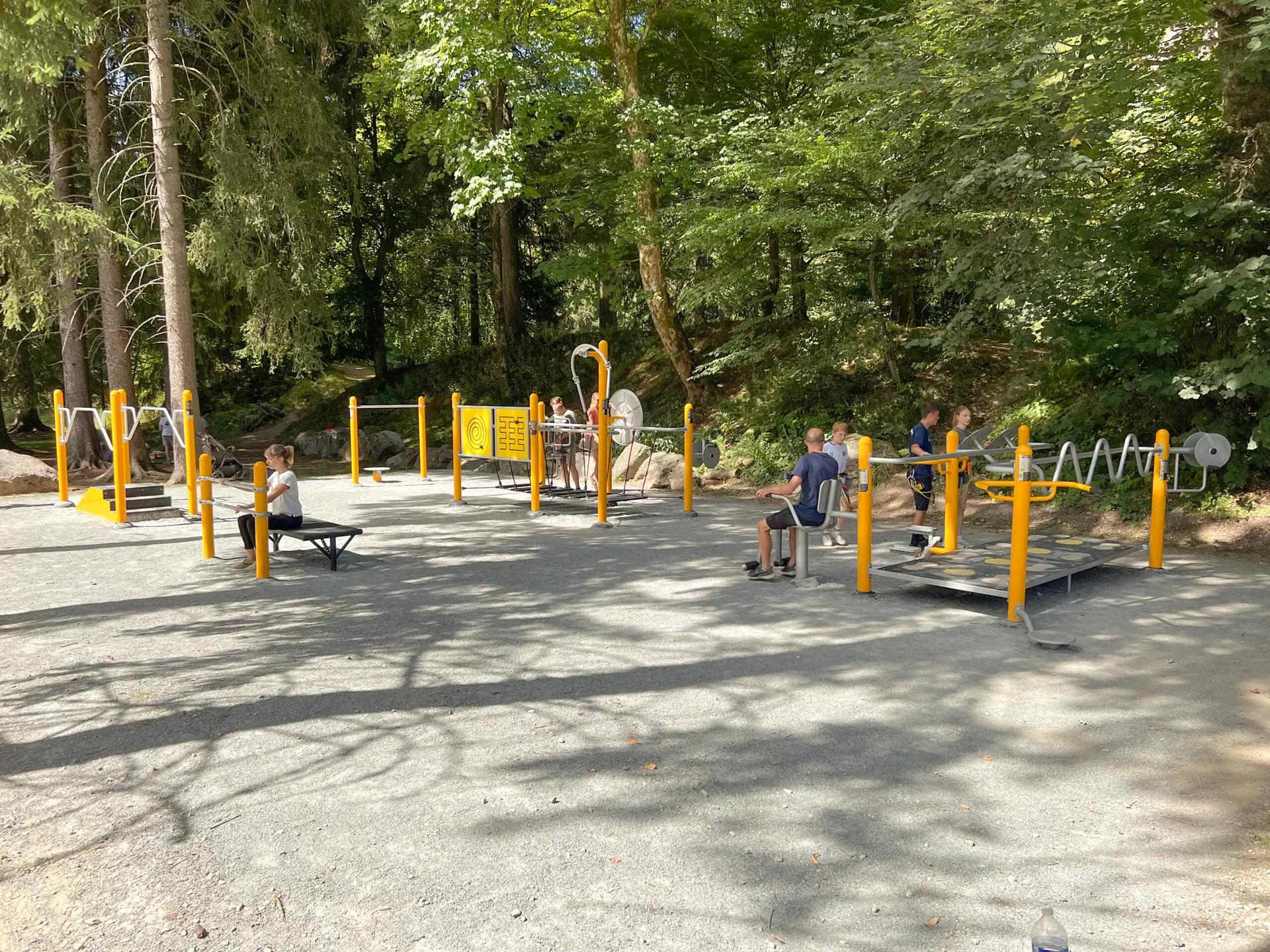
Which equipment to choose for a fitness trail in a nature park?
The context of a nature park imposes stricter equipment selection criteria than an urban setting. Four dimensions are decisive.
Materials: timber first
Most park charters recommend or require solid timber for sports structures in natural spaces. Timber has several decisive advantages here: it blends into the landscape, it has a favourable carbon footprint, it is easy to dismantle and recycle at end of life, and it fits the reversibility requirements.
The timber used must be certified and treated with processes compatible with the natural environment. For outdoor structures in contact with the ground (anchors), the minimum use class is class 4 (timber in permanent contact with soil and moisture). Recommended species are black locust, sweet chestnut, oak and treated Douglas fir — species that are either naturally durable or properly treated without environmentally aggressive biocides.
EN 16630 certification
Whether a trail is installed in an urban setting or deep in the countryside, freely accessible fitness equipment remains subject to EN 16630. This point is often misunderstood: the standard does not only apply to the concrete-and-steel equipment of urban parks. It covers any fitness equipment installed in a space accessible to the public, whatever the nature of the site. A manufacturer offering EN 16630 certified timber structures is the right partner for this kind of project.
Anchoring: minimising ground impact
Screw anchors (helical ground screws) should be preferred wherever the bearing capacity of the ground allows. They avoid pouring concrete and are fully reversible, a criterion often required by park charters. On ground with low bearing capacity or in wetlands, anchors bolted to plates on localised concrete pads are an acceptable alternative, provided the volumes of concrete are kept to a minimum.
Landscape integration of colours and shapes
In a nature park, structures in bright colours (red, yellow, electric blue) are frequently ruled out by the charter. Permitted shades usually sit in the natural range: forest green, earth brown, slate grey, untreated raw timber. Check this constraint with the park authority before selecting your equipment range.
| Criterion | Standard requirement (urban) | Nature park requirement (stricter) |
| Structural materials | Powder-coated steel or timber | Certified solid timber preferred |
| Timber treatment | Class 3 or 4 | Class 4, environmentally compatible biocides |
| Colours | Free, subject to local planning rules | Natural shades imposed by the charter |
| Anchoring | Concrete embedment or pads | Helical ground screws preferred |
| Reversibility | Not required | Often imposed by the charter |
| Certification | EN 16630 | EN 16630 (unchanged) |
| Signage | Powder-coated aluminium | Timber or natural materials advised |
Putting the project together: stages and key players
A fitness trail project in a nature park is a partnership project by nature. Its success depends as much on the quality of the dialogue with local stakeholders as on the quality of the equipment.
Stage 1: Pre-assessment and consultation with the park authority
Before any technical study, an informal contact with the park authority’s “sport and leisure” or “development” officer helps identify suitable zones, the major constraints and any similar initiatives already led by other member municipalities. This first exchange determines the project’s feasibility and steers the choice of site.
Stage 2: Feasibility study and ecological survey
Following the authority’s guidance, a technical and environmental feasibility study is carried out on the chosen site. It covers: soil and bearing capacity analysis, mapping of sensitive species, verification of easements and buried utilities, and an initial layout scheme. This study is generally entrusted to a consultancy specialising in natural area development.
Stage 3: Project design and supplier consultation
The layout project is formalised with the chosen equipment manufacturer, incorporating the constraints identified in the feasibility study. The final layout plan, the equipment data sheets and the anchoring specifications make up the tender documents.
Stage 4: Filing the permit applications
The administrative files (prior notification or planning permission, Natura 2000 assessment where applicable, water declaration where applicable) are filed in parallel with the relevant services. The park authority’s opinion is formally requested at this stage.
Stage 5: Works and handover
Works are carried out within the seasonal windows imposed and under the manufacturer’s technical supervision for sign-off of the anchors. An EN 16630 compliant installation report is produced and included in the as-built file handed to the project owner.
| Stage | Estimated duration | Expected deliverables |
| 1 – Park pre-assessment | 4 to 8 weeks | Feasibility note, suitable zones identified |
| 2 – Feasibility study + ecological survey | 8 to 16 weeks | Technical report, first layout plan |
| 3 – Design + supplier consultation | 6 to 10 weeks | Tender documents, final plan, manufacturer quote |
| 4 – Administrative permits | 8 to 20 weeks | Permit decisions, park authority opinion |
| 5 – Works and handover | 2 to 4 weeks | As-built file, EN 16630 installation report |
Funding: what support is available for a project in a nature park
A fitness trail in a regional nature park can attract specific funding that ordinary urban projects cannot reach. The nature of the territory opens access to environmental and territorial schemes that can be combined.
Funding you can tap
• National rural equipment grants: state schemes targeting rural municipalities and their groupings, often covering 40 to 80% of the net cost
• National local investment support: for structuring projects led by groupings of municipalities
• European rural development funds (LEADER strand): the Local Action Groups operating in nature park territories can co-fund active tourism and sports facility projects in rural areas at 50 to 70%
• Regional funding: most regions have a support fund for nature parks or dedicated funds for the sustainable development of natural spaces
• Water agencies: for projects including rainwater management measures (permeable surfaces, vegetated swales)
• Heritage foundations or local sponsorship: for projects with strong heritage or landscape value
Strategic tip
The park’s management authority is often the best guide to the funding available in its territory. Some parks have a project engineering service that helps member municipalities put the financing together, free of charge.
Combining national grants, LEADER funds and regional funding can in some cases cover 80 to 90% of the project’s net cost, leaving the municipality’s own contribution marginal.
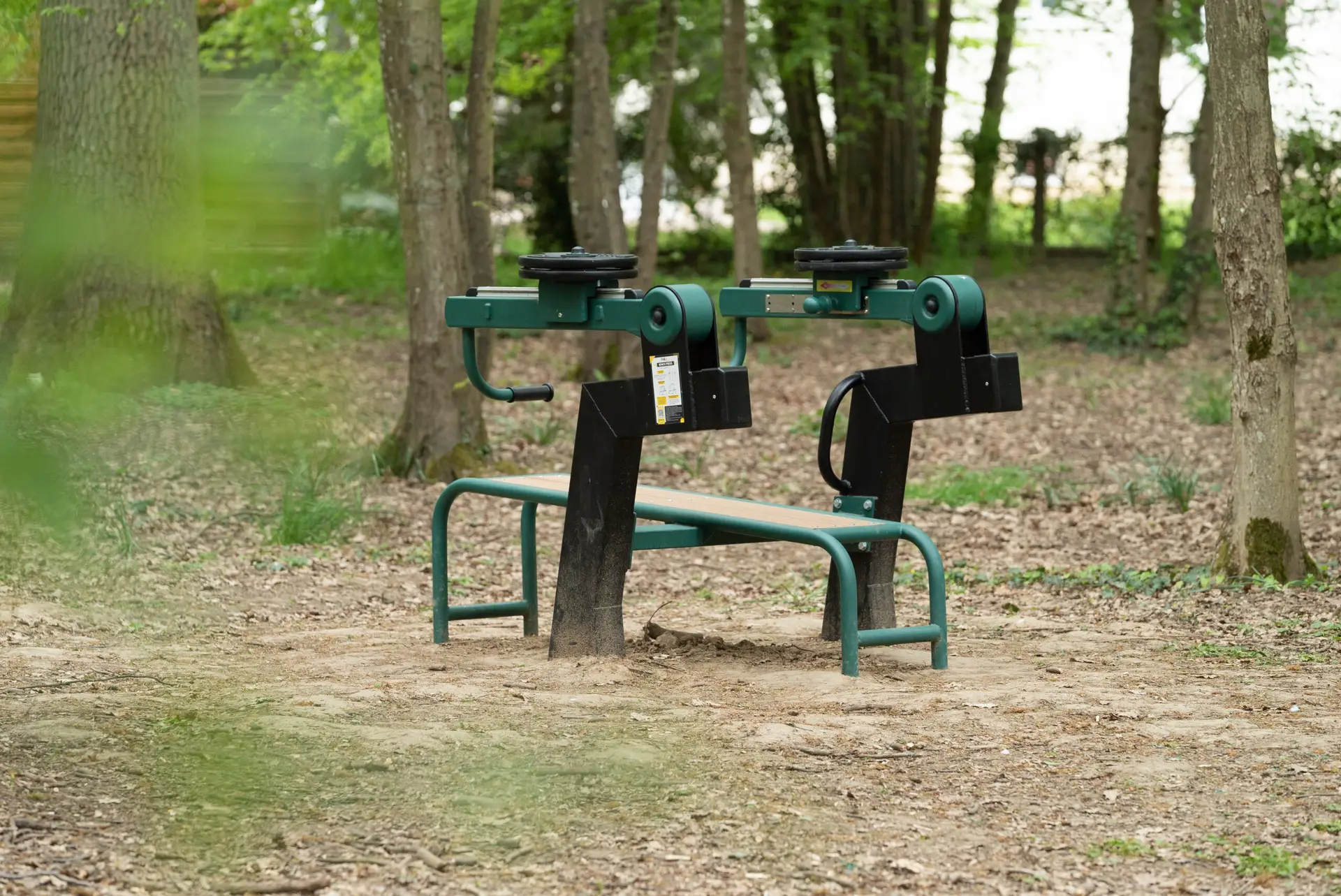
Frequently asked questions about fitness trails in regional nature parks
Can a regional nature park refuse a fitness trail project?
A park’s management authority has no direct power of refusal: it is not an administrative body issuing permits. An unfavourable opinion is nonetheless a strong signal that generally leads the case officers in the planning and environmental services to issue reservations or binding requirements. In practice, a negative opinion from the park makes the project very hard to deliver within the timescale and conditions originally envisaged. Talking to the authority up front is therefore non-negotiable.
Can you install lighting on a fitness trail in a nature park?
Artificial night lighting is one of the most frequently restricted items in a nature park. Light pollution affects nocturnal wildlife (bats, insects, migratory birds) and the quality of the night sky, a landscape asset that many parks actively protect. Permanent lighting is generally ruled out. Presence-triggered lighting with warm colour temperatures (< 2,700 K) can be accepted under conditions in some parks.
How long does a timber fitness trail last in a natural setting?
A properly maintained class 4 timber trail lasts 15 to 25 years in a natural setting. The main factor in its deterioration is not weather exposure but the quality of upkeep: annual checks on the anchors, preventive replacement of wear parts, surface treatment every 3 to 5 years for treated timber. Naturally durable species (black locust, sweet chestnut) need less maintenance than Douglas fir or treated pine.
Does a fitness trail in a nature park need an annual EN 16630 inspection?
Yes, without exception. Being located in a protected natural area changes nothing about the annual inspection obligations set by EN 16630. A fitness trail accessible to the public, wherever it is, must undergo an in-depth annual inspection carried out by a qualified operator, with a documented report. In a natural setting, that inspection must also cover the condition of the ground anchors, which are particularly exposed to moisture variation and ground movement.
Should you consult local nature conservation groups?
Consultation is generally not a legal requirement, but it is strongly advised for the social acceptability of the project. Local groups (ornithological societies, botanical associations, nature conservancies) often have detailed knowledge of the ground that formal studies can miss. A project built together with these local players gains a territorial legitimacy that eases the administrative process and heads off legal challenges.