
Would you like to offer your companion more than just a walk? The agility course for dogs is a complete activity, ideal for both mental and physical stimulation. Well-designed, it encourages dog training, reinforces complicity and guarantees shared pleasure.

For long-lasting, safe results, we recommend the use of agility equipment specially designed for dogs. Unlike improvised solutions, professional obstacles ensure stability, ease of use and adaptability for all levels, from beginner to advanced dog.
Key takeaways:
- Agility improves a dog’s physical and mental condition
- Dedicated equipment guarantees safety and progress
- A modular course allows you to evolve as your training progresses
Dog agility course essentials
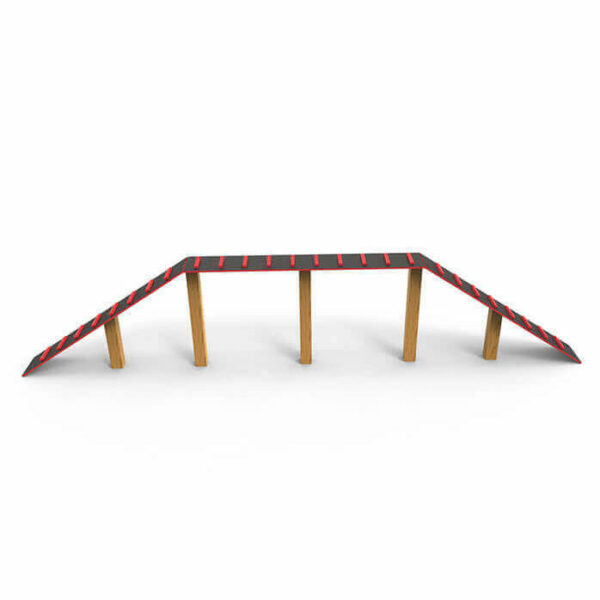
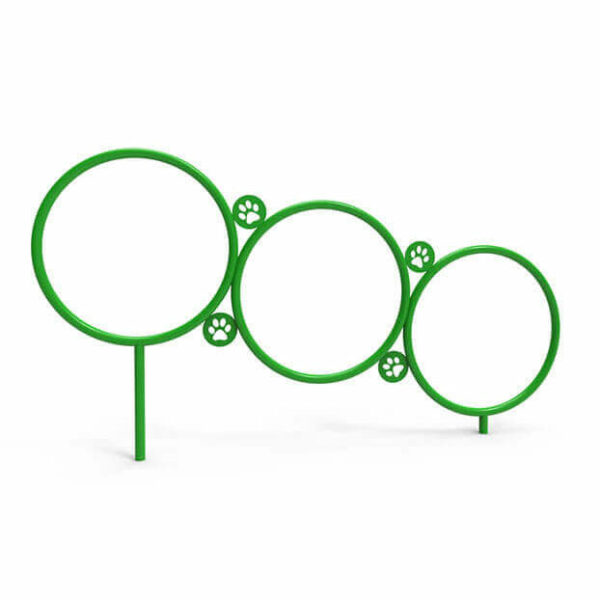
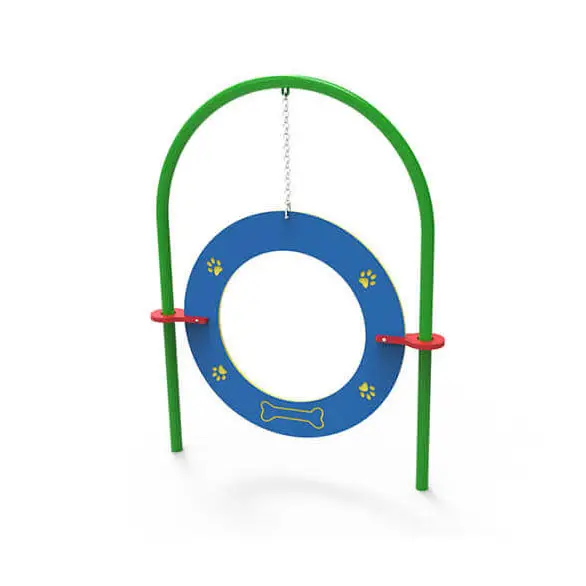
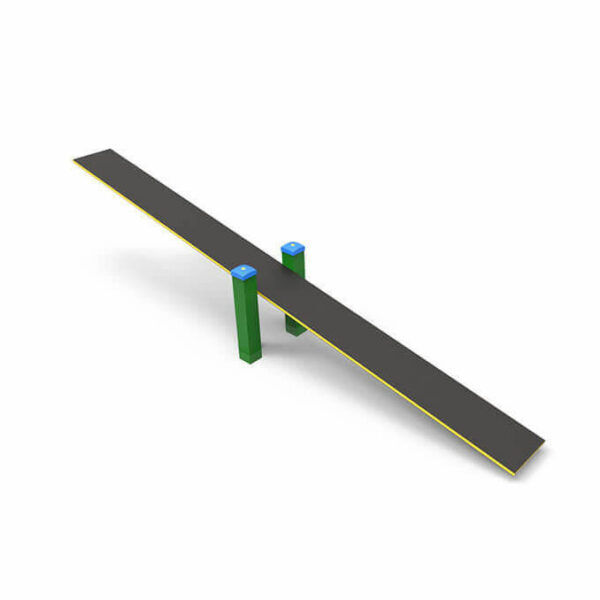
A well-structured agility course includes several types ofagility obstacles: jumps with bars, tunnels, bridges, scales or platforms. Each element calls on a specific skill, providing a variety of exercises and maintaining the dog’s interest throughout the session. By multiplying the challenges, you reinforce your dog’s agility, obedience and speed, without forgetting the playfulness essential to his motivation.
The use of professional agility equipment enables us to offer reliable, tested obstacles adapted to canine morphology. Adjustable heights, non-slip surfaces and reinforced bindings ensure smooth training, without unnecessary stress or risk.
Safety remains an absolute priority. Dedicated equipment is designed to limit shocks, prevent tipping and protect the dog’s joints, even during regular use.
Why choose professional agility equipment rather than DIY?
Opting for agility obstacles designed specifically for dogs has many advantages:
- Optimum stability thanks to ballasted or anchorable bases
- Shock-, moisture- and wear-resistant materials
- Precise settings to adapt difficulty to dog size and level
- Enhanced safety, with no sharp edges or unstable elements
Professional equipment also saves a considerable amount of time: no complex assembly, no compromises on sturdiness, and quick set-up of the course.
The main agility obstacles to integrate
Adjustable show jumping
Jumping is a must in agility. Professional models offer lightweight light, adjustable barsThe height can be adjusted in a matter of seconds, for smooth, joint-friendly progress. The height can be adjusted in a matter of seconds, for smooth, joint-friendly progress.
The agility tunnel
The tunnel stimulates the dog’s confidence and curiosity. Tunnels designed for canine agility offer a comfortable diameter, a flexible yet resistant structure and excellent ground holding. Straight or slightly curved, they can be easily integrated into any course.
Slalom
Dog slalom develops lateral agility and coordination. Professional poles are generally flexible, removable and perfectly spaced to adapt to all sizes of dog, while reducing the risk of impact.
Platforms and balance obstacles
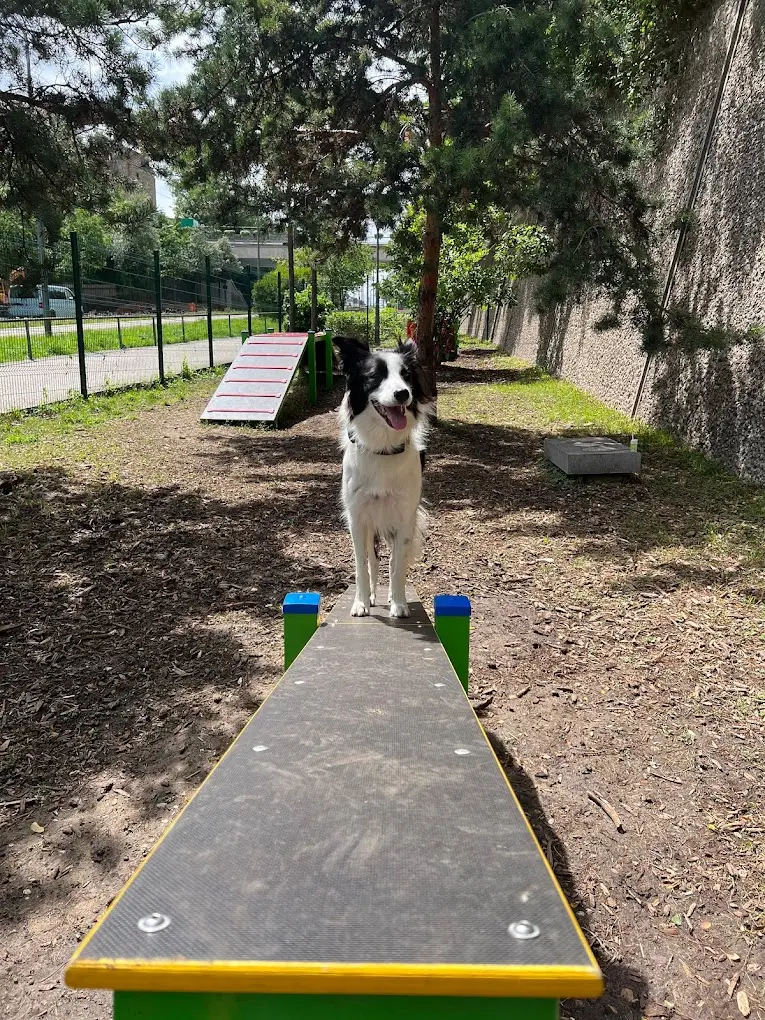
Platforms and balance zones enhance confidence and body control. Non-slip surfaces and secure ledges ensure a stable crossing, even for novice dogs.
Mental and physical stimulation through a variety of exercises
A monotonous course can quickly tire the dog. Alternate instructions, vary the layout of agility obstacles and offer different short sequences: this encourages mental and physical stimulation and improves concentration. By regularly changing the order of obstacles, you develop your dog’s versatility and adaptability.
Coordination between handler and dog is built on this diversity. Use simple commands (“jump”, “tunnel”, “slalom”) combined with clear gestures. This interaction reinforces mutual understanding and accelerates the duo’s technical progress.
| Obstacle | Targeted competence | Safety Council |
| Jump | Height / impulse | Lightweight bar and stable support |
| Tunnel | Exploration / confidence | Clear entrance, adapted width |
| Slalom | Lateral agility | Flexible stakes, spaced according to the dog’s size |
| Gateway | Balance | Non-slip surface and safety edges |
Rewards and motivation during dog training
How can rewards be used to reinforce the desire to progress?
A dog’s motivation is largely based on a good reward system. Depending on his tastes, offer him special kibbles, petting or verbal encouragement after each success. Start by rewarding frequently, then gradually spacing out to create a real challenge and anchor positive learning for the long term.
Vary the pleasures to avoid routine. Occasionally offer a favorite toy or share a game at the end of a run. This maintains enthusiasm and makes your dog want to take on new challenges at every session.
How important is failure management?
In agility, no punishment should be allowed to hinder progress. If the dog bypasses an obstacle or hesitates, calmly return to the previous step and temporarily simplify the exercise. A reassuring environment reduces stress and builds confidence, essential for learning new techniques.
Celebrate every little bit of progress, no matter how imperfect. This reflex supports initiative-taking and accelerates memorization, so your dog gains confidence on the dog agility course.
Frequently asked questions about creating an agility course for dogs
What are the essential agility obstacles for beginners?
- Lightweight, adjustable jump bars
- Straight or slightly curved tunnels
- Slaloms made of removable poles
- Small, low walkways with non-slip surfaces
Start with these essential elements of the course covers most of the dog’s motor needs and remains accessible whatever the surface area available.
How to guarantee the safety of homemade agility obstacles?
Inspect each component before training: check that it is stable, free of sharp edges and securely fastened. Select materials suited to your dog’s size, and limit heights to prevent accidents.
- Thick PVC or sanded wood for supports
- Non-abrasive tarpaulins and textiles for tunnels
- Heavy-duty mats for hard floors
How often and for how long should you train your dog on the course?
Two to three sessions a week are all you need to make progress, each lasting between 10 and 20 minutes. Choose several short exercises rather than a single prolonged workout: this maintains attention and avoids mental fatigue.
| Level | Sessions/week | Average duration |
| Beginner | 2 | 10-15 min |
| Intermediate | 3 | 15-20 min |
| Advanced | 3+ | 20 min + variation |
Why invest in dedicated dog agility equipment?
Choosing professional agility equipment provides your dog with a safe, motivating and progressive environment. Unlike improvised solutions, these products are designed to last, to accompany your dog’s progress and to guarantee optimum comfort of use.
- Maximum safety
- Controlled progress
- Professional quality
- A fun, high-performance experience
A well-equipped course becomes a real training area, serving your dog’s well-being and performance.