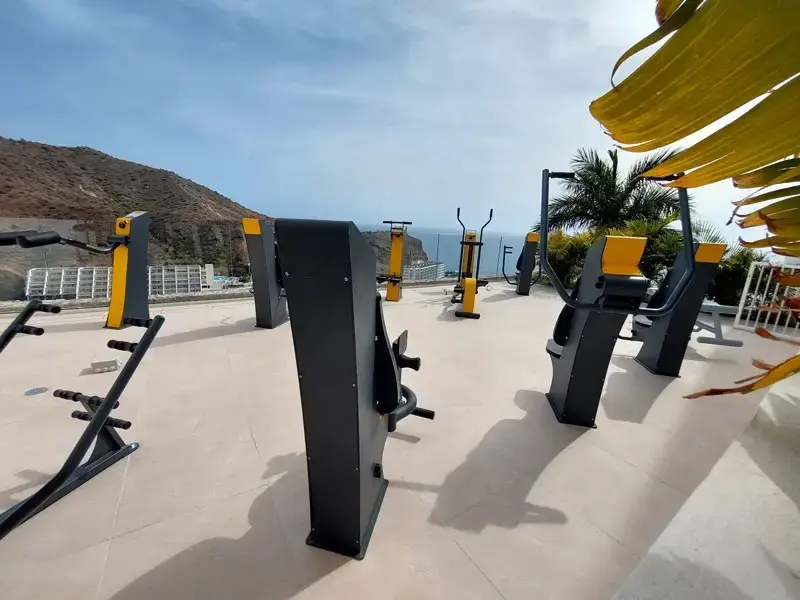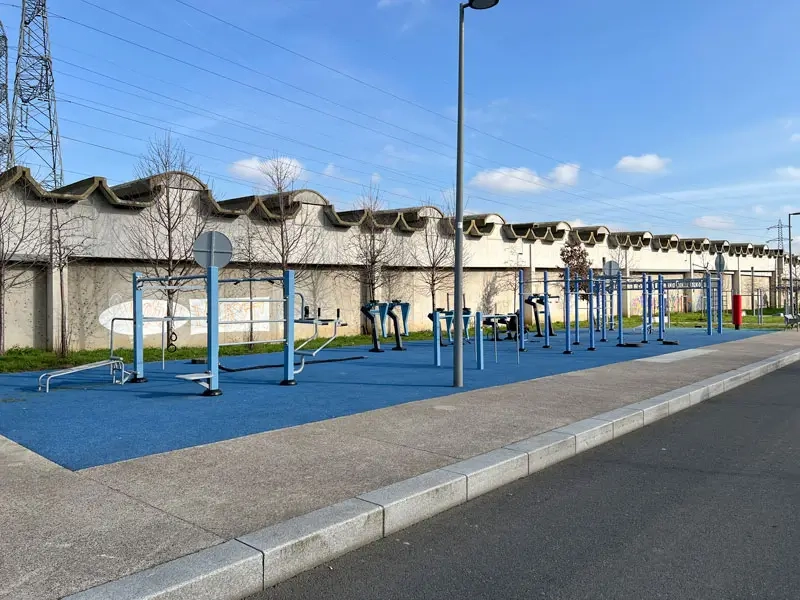

Installing outdoor fitness equipmentnear the sea is an ambitious project that confronts managers and local authorities with a major technical challenge: marine corrosion. Salt-laden air, sea spray, constant humidity and significant temperature variations form an aggressive cocktail that can wipe out an investment in just a few years if the materials chosen are not suitable. In this context, grade 316 stainless steel, known as “marine stainless steel”, is not a premium option: it’s an absolute necessity. This technical guide explains why and how to choose equipment that is truly adapted to coastal environments.

Understanding corrosion in the marine environment: a constant challenge
The marine atmosphere: a chemically hostile environment
Sea air differs from continental air in that it is rich in chlorides, chlorine ions produced by the evaporation of seawater. These suspended particles settle on all exposed surfaces and chemically attack metals at a radically higher rate than inland. The corrosiveness of the atmosphere is classified according to ISO 9223 in five categories (C1 to C5), with marine areas directly exposed to sea spray being classified as C4 (high) to C5 (very high).
Added to these chlorides are high relative humidity, often in excess of 80% in coastal areas, the presence of suspended sulfates in some regions, and repeated cycles of condensation and evaporation that concentrate corrosive agents on metal surfaces. The result is continuous chemical aggression, 24 hours a day, 365 days a year.
| 📊 Comparative dataIna marine atmosphere (category C4-C5), the corrosion rate of unprotected steel is 40 to 80 times higher than that observed in an ordinary urban atmosphere (category C2). Equipment designed to last 20 years in an urban environment can be out of use in 3 to 5 years at the seaside if it isn’t made from suitable materials. |
Corrosion mechanisms specific to coastal areas
Several types of corrosion simultaneously threaten metal equipment in marine environments. Galvanic corrosion occurs when two dissimilar metals come into contact in the presence of an electrolyte (salt water plays this role). Pitting corrosion, characteristic of attacks by chlorine ions, creates deep cavities in the metal, weakening the structure from within without always being visible to the naked eye. Finally, stress corrosion can occur on parts subjected to repeated mechanical stress, accelerating the propagation of cracks.
These mechanisms make simple painting or epoxy coating inadequate in aggressive coastal environments. Surface protection can slow down corrosion, but cannot prevent it if the base metal is not intrinsically chloride-resistant. This is precisely where grade 316 stainless steel comes in.
316 L stainless steel: the metallurgical solution to the marine challenge
Chemical composition and resistance properties
316 stainless steel (and its carbon-based 316 L variant) is an austenitic steel whose chemical composition has been specifically optimized to withstand chloride environments. Its exceptional resistance to corrosion is based on two key elements of its composition.
The first is the chromium content (16-18%), which forms a passive layer of chromium oxide (Cr₂O₃) on the steel surface in the presence of oxygen. This nanometric layer, invisible to the naked eye, is self-regenerating: if scratched or mechanically damaged, it spontaneously reconstitutes itself within a few hours in the presence of oxygen. It is this property that makes stainless steel “rustproof”.
The second distinguishing feature of grade 316 compared to 304 (the most common stainless steel) is the addition of molybdenum (2-3%). This element considerably strengthens the resistance of the passive layer to chlorine ions, which have the precise effect of destabilizing and perforating the chromium oxide layer on standard stainless steels. Without molybdenum, 304 stainless steel corrodes rapidly in marine environments; with molybdenum, 316 stainless steel stands up reliably.
| 🔬 Composition 316 L vs. 304Inox304: 18% chromium, 8% nickel, 0% molybdenum: suitable for low-aggression indoor and urban environments. Inox 316 L: 17% chrome, 10-14% nickel, 2-3% molybdenum, carbon < 0.03%: specifically designed for chloride, marine and chemical environments. The “L” (Low carbon) further reduces the risk of intergranular corrosion during welding. |
Material comparison: which grade for which environment?
| Material | Chloride resistance | Sustainability in marine areas | Recommendation |
| Standard galvanized steel | Insufficient | 3 to 7 years | To be avoided at all costs in coastal areas |
| Powder-coated steel (no stainless steel) | Low | 5 to 10 years | Acceptable more than 5 km from shore |
| 304 stainless steel | Moderate | 8 to 12 years | Insufficient within 1 km of the sea |
| 316 L stainless steel (marine stainless steel) | Excellent | 20 years and over | Recommended for all coastal areas |
| Duplex 2205 | Excellent | 25 and over | For ultra-aggressive environments (harbor, bay) |
Variant 316 L: why the “L” is important
The 316 L (Low carbon) variant is preferred to standard 316 for outdoor sports equipment, as it has a carbon content of less than 0.03%. This characteristic is decisive during welding operations: in steel with a higher carbon content, the heat of welding causes the precipitation of chromium carbides at the grain boundaries, locally depleting the chromium content and creating areas of weakness with regard to corrosion. With 316 L, this phenomenon, known as sensitization, is virtually eliminated, guaranteeing homogeneous strength throughout the part, including at weld points.
Define the coastal zone: how far to switch to 316 stainless steel?
The question of distance from the coast is often misunderstood. Many managers think that only equipment installed directly on the seafront requires maximum protection. The reality is more nuanced.
| Approximate distance from coastline | Corrosivity level and material recommendation |
| 0 to 200 m (seafront, seawall, beach) | C5: very severe. 316 L stainless steel mandatory for all metal parts. Monthly inspections recommended. |
| 200 m to 1 km | C4 to C5: severe. 316 L stainless steel highly recommended. Galvanizing has been insufficient in this proximity. |
| 1 to 3 km | C3 to C4: moderate to high. 316 L stainless steel recommended for sensitive parts (assemblies, pins, screws). Powder-coated steel possible for main structures with rigorous maintenance. |
| 3 to 10 km (depending on wind exposure) | C2 to C3: moderate. Quality thermo-lacquered galvanized steel with acceptable epoxy paint. Regular monitoring. |
| Over 10 km (except prevailing sea winds) | C1 to C2: low. Sufficient standard equipment with normal preventive maintenance. |
| ⚠️ Prevailing wind factorDistancealone is not enough to assess risk. A town located 5 km from the coast, but exposed to permanent prevailing sea winds, may have a corrosivity category of C4. Conversely, a site naturally protected by a dune or coastal forest 500 m from the sea may be less corrosive. A site analysis is recommended for major projects. |
Pitfalls to avoid when purchasing coastal equipment
Mixing materials: a fatal mistake
The most common mistake is to invest in a main structure in 316 L stainless steel, while using screws, bolts, pins and washers in standard steel or 304 stainless steel. These small, often less visible parts are the first to corrode in a marine environment, and their corrosion can contaminate adjacent 316 stainless steel parts through galvanic corrosion. 100% marine-grade equipment should use 316 L stainless steel, or duplex, for absolutely all metal parts, including the smallest fasteners.
Insufficient surface treatments
Even 316 L stainless steel can benefit from an additional surface treatment to maximize its durability in marine environments. Acid passivation (treatment with nitric or citric acid after manufacture) eliminates ferric contamination and optimizes the protective oxide layer. Mirror polishing or electropolishing reduces surface roughness, limiting moisture and chloride retention zones. Although optional, these treatments can significantly extend equipment life in the most aggressive environments (C5).
Relying on insufficient certification
Some manufacturers advertise the “corrosion resistance” of their equipment without specifying the grade of steel used or the validation tests carried out. It is essential to ask for material data sheets (with certified chemical composition), salt spray tests carried out (ISO 9227 standard) and feedback from similar installations in marine areas. A reputable manufacturer can provide these documents without difficulty.
Care and maintenance in coastal areas: best practices
Even with 316 L stainless steel, an appropriate maintenance program is essential to ensure long-term equipment durability and safety. The coastal environment demands greater vigilance than installations in ordinary urban environments.
Regular cleaning: the golden rule
Cleaning with clear water (preferably fresh or deionized) is the most effective maintenance operation in marine areas. It removes chloride deposits before they become embedded and attack the passive layer. The recommended frequency is at least once a month in zone C4, and every two weeks in zone C5 (seafront). After storms or strong sea winds, immediate cleaning is preferable.
Cleaning should be carried out with a soft cloth or non-abrasive brush to avoid scratching the stainless steel surface. Absolutely avoid metal sponges, standard steel brushes and chlorine-based household products, which can paradoxically weaken the passive layer.
Reinforced inspection of assembly points
The most vulnerable areas on coastal equipment are assembly and welding points, and mechanical clearances where water can stagnate. These areas should be visually inspected monthly and technically inspected quarterly. Any trace of red rust (corrosion of external ferric particles, sometimes mistaken for stainless steel corrosion) should be treated immediately by cleaning with dilute oxalic acid.
The maintenance register: even more important in maritime areas
In coastal areas, documented maintenance takes on an even more critical dimension than in ordinary environments. The maintenance register must record every cleaning, visual inspection and corrective intervention, with the date, nature of the operation and name of the person involved. This register is not only a sustainability management tool, but also a legal protection document in the event of an accident due to corrosive degradation.
| Operation | Frequency zone C4 (1-3 km) | Frequency zone C5 (0-1 km) |
| Cleaning with fresh water | Monthly | Bimonthly (every 2 weeks) |
| Visual inspection | Monthly | Bi-monthly |
| In-depth technical inspection | Half-yearly | Quarterly |
| Main inspection (expert) | Annual | Annual with written report |
| Preventive anti-corrosion treatment | Annual if necessary | Half-yearly |

316 stainless steel in practice: which equipment is concerned?
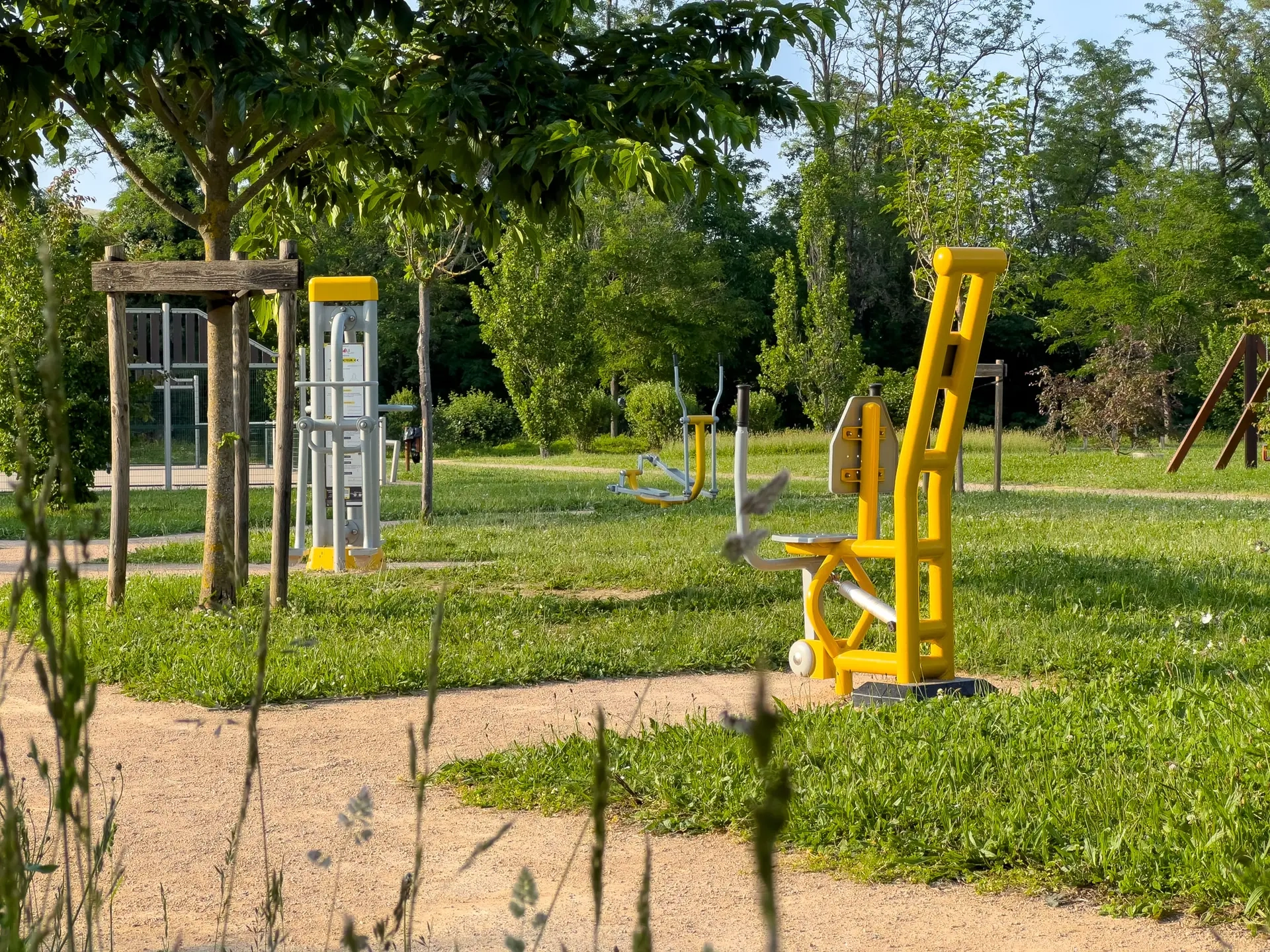
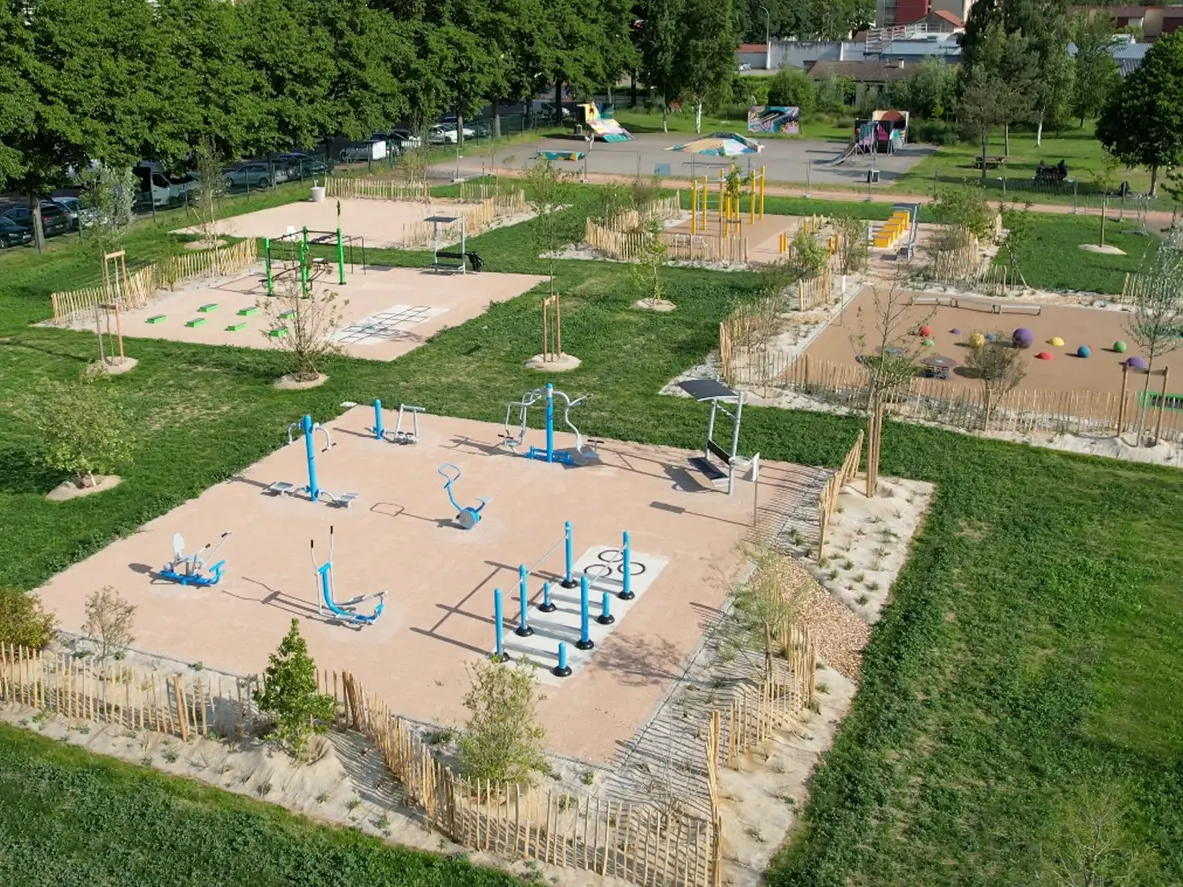
In coastal areas, all outdoor fitness equipment must be designed with marine constraints in mind. Some equipment is particularly exposed by design or use.
– Body-building and street workout equipment(pull-up bars, parallel bars, dips): this equipment concentrates mechanical stress and repeated strain on the attachment points, which must be made of 316 L stainless steel.
– Cardio-training equipment(rowing machines, elliptical bikes): their internal mechanisms (axles, bearings, cables) are particularly sensitive to chloride penetration. Protecting moving parts is crucial to their functional longevity.
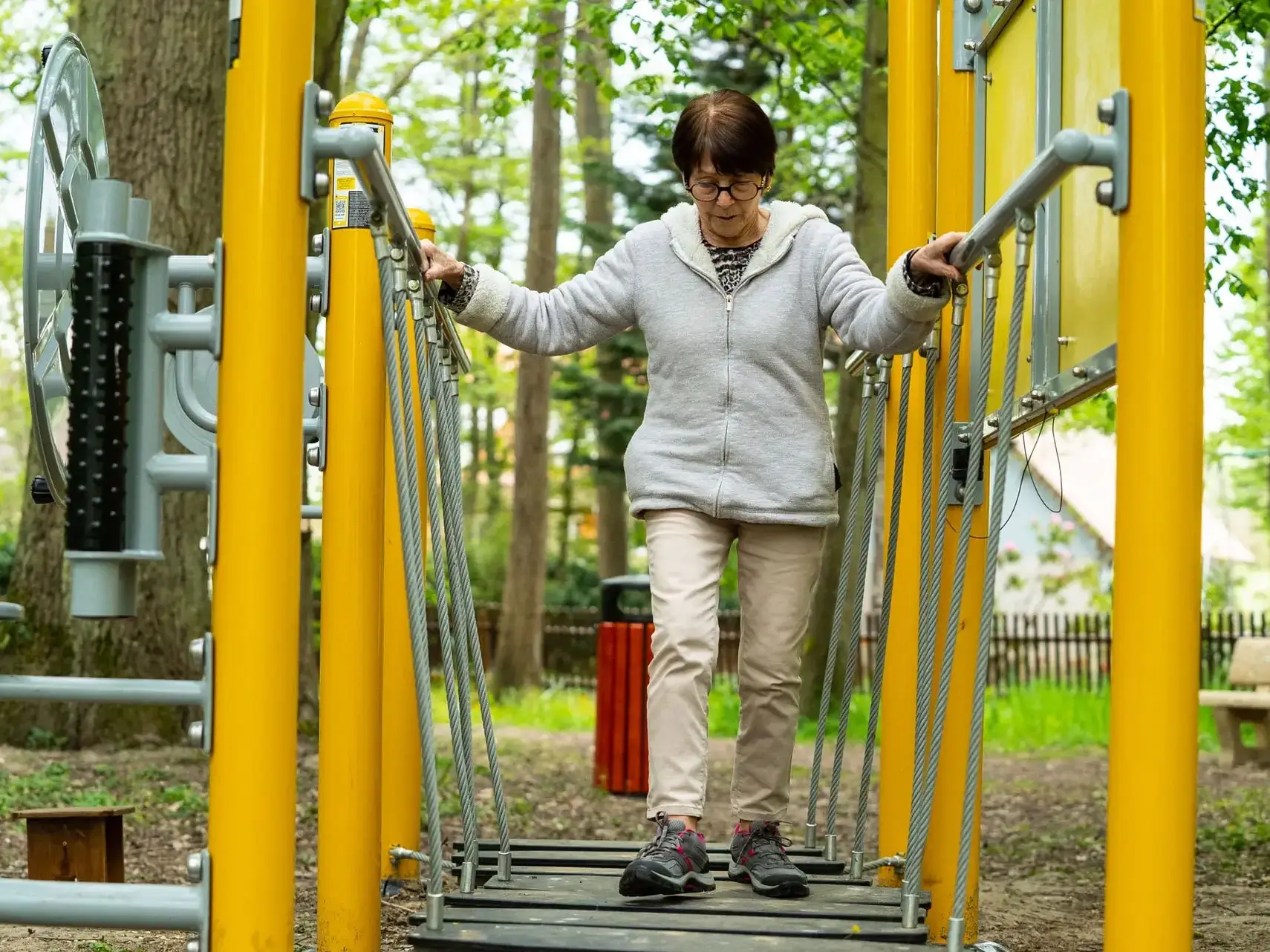
– Fitness trails and walkways: ground anchors and multiple assemblies create numerous points of contact between parts, which are ideal areas for galvanic corrosion if materials are not homogeneous.
– Agility equipment(dog courses, balance structures): often installed in highly exposed coastal parks, they must meet the same 316 L stainless steel requirements as fitness equipment for adults.
– Signage and information panels: often neglected, metal signage supports are the first to corrode and give a poor image of the installation.
Cost of 316 L stainless steel: an additional cost that always pays for itself
316 L stainless steel represents a higher purchase price than standard galvanized or powder-coated steel, generally estimated at between 20% and 40% depending on the equipment and supplier. This additional cost must be set against the total cost of ownership over the plant’s lifetime.
Galvanized steel equipment installed in a C4-C5 zone will require total replacement in 5 to 8 years, i.e. two to three replacement cycles over the lifespan of 316 L stainless steel equipment (20 years and more). Adding the costs of removal, landfill, soil remediation and new installation, the total cost of galvanized steel equipment in marine areas is very often two to three times that of 316 L stainless steel equipment over 20 years.
In coastal areas, the choice of materials is not a question of aesthetics or comfort: it’s a technical decision with direct consequences for the durability, safety and total cost of ownership of outdoor fitness equipment. 316 L stainless steel, with its molybdenum-rich composition and self-healing passive layer, is the only metallic material capable of withstanding the aggression of marine chlorides in corrosivity categories C4 and C5. Choosing any other material in these environments means planning a premature, high-cost replacement. Investing in 316 L stainless steel means investing once for twenty years.