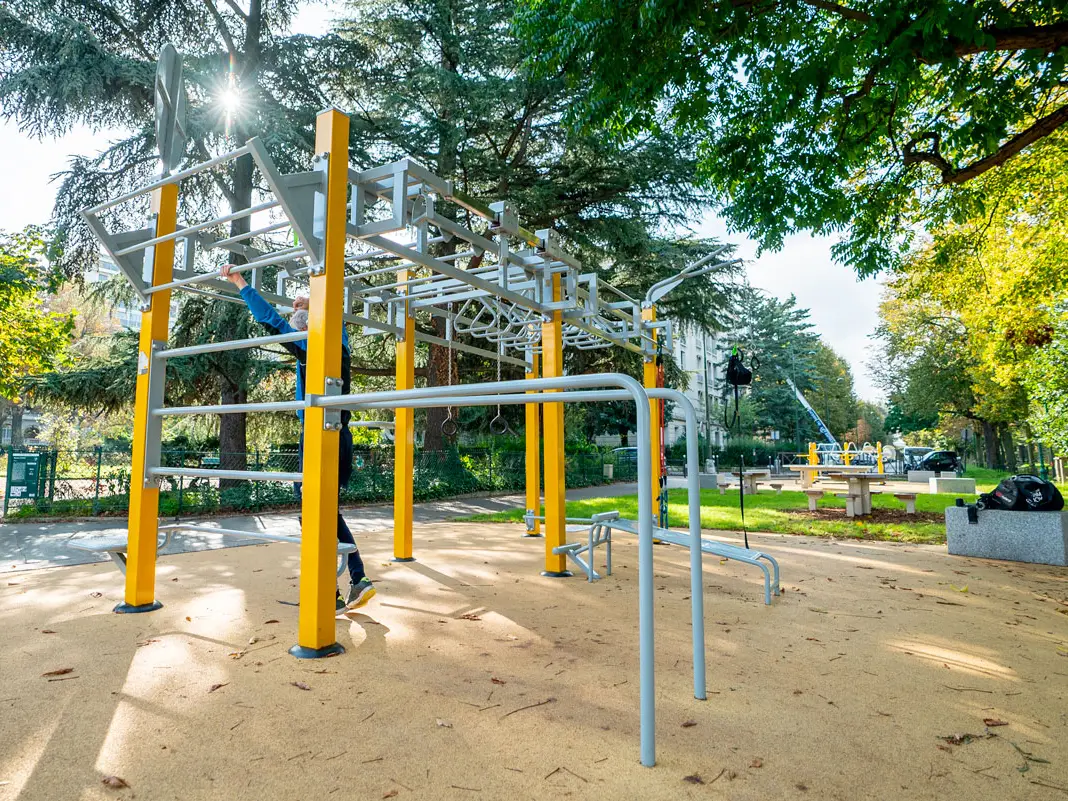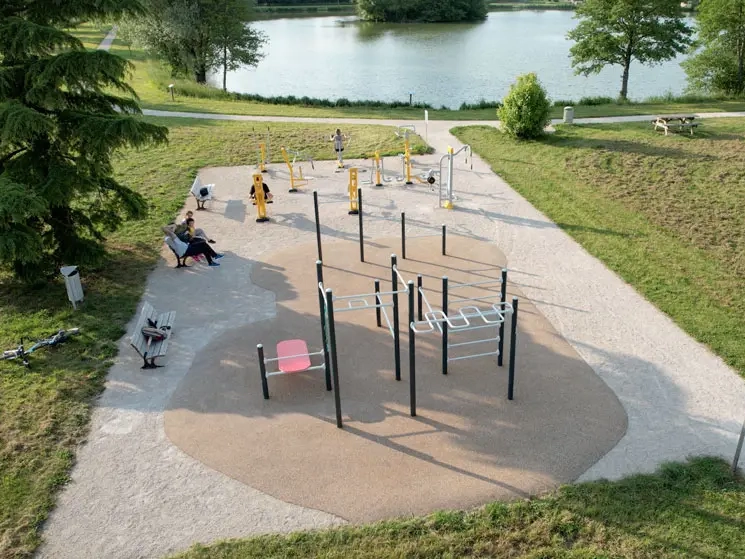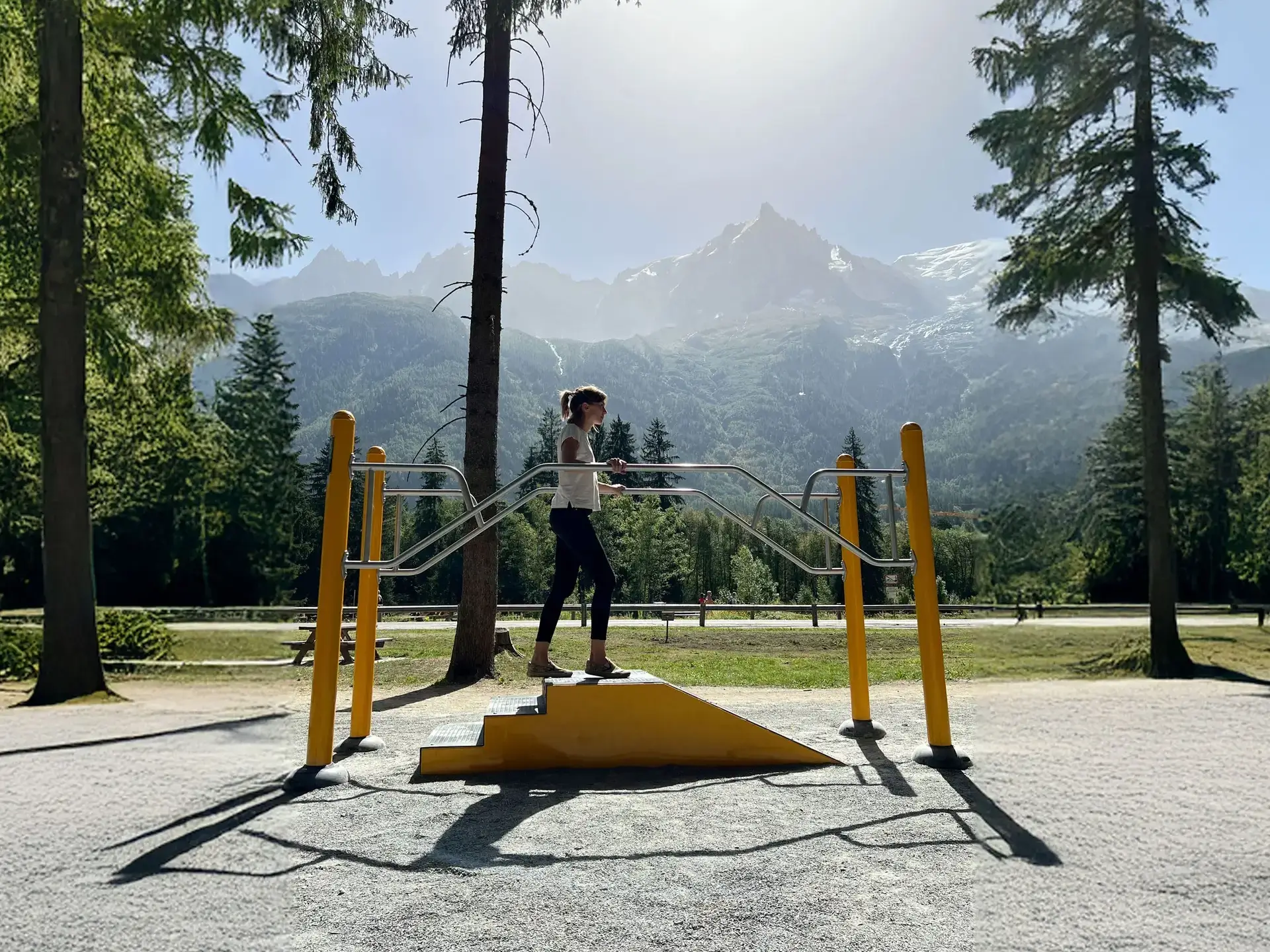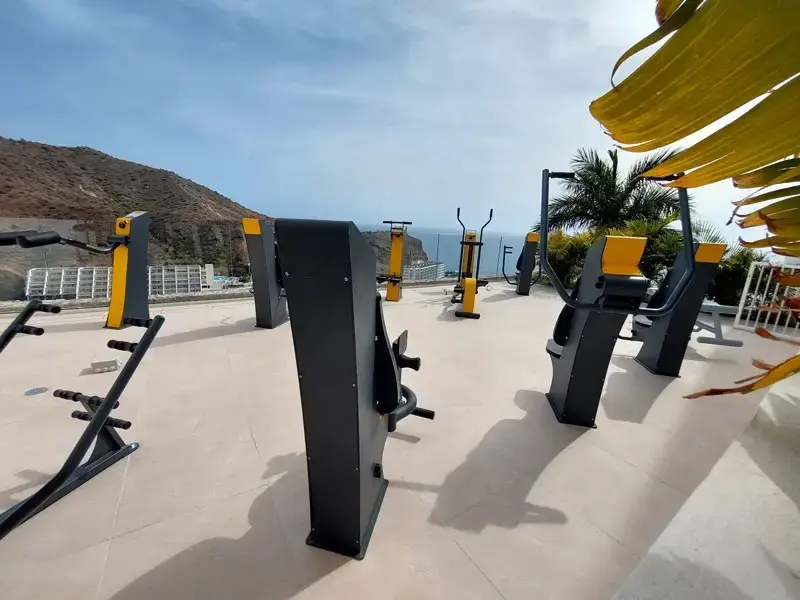

Outdoor sports facilities such as outdoor fitness equipment, fitness trails, street workout apparatus and dog play areas are subject to legal maintenance and upkeep obligations. For local authorities, town halls, public space managers and private operators, neglecting these obligations entails civil and criminal liability. This comprehensive guide sets out the regulatory framework, recommended inspection frequencies and best practices to ensure user safety.

Why is maintenance of outdoor sports equipment mandatory?
Sports equipment installed in public spaces is subject to intensive use in all weather conditions. Corrosion, mechanical wear and tear, impacts and damage can transform safe equipment into a source of danger for users.
In France, the operator of an outdoor sports facility is liable in the event of an accident due to poor maintenance. The French Code général des collectivités territoriales (CGCT) requires municipalities to ensure the safety of facilities made available to the public. In the event of failure to do so, the administrative and criminal liability of elected representatives may be directly implicated.
| 📌 Key pointNon-maintainedoutdoor sports equipment makes its manager liable in the event of an accident. The absence of a maintenance log can be accepted as proof of negligence. |
Regulatory framework and applicable standards
EN 16630: the central reference standard
European standard EN 16630 is the reference text for permanent outdoor fitness equipment. It sets out the requirements for :
– Equipment design and manufacture
– Structural and mechanical strength
– Surface and contact point safety
– Inspection and periodic maintenance
This standard distinguishes between three levels of inspection, which every manager must be familiar with and apply.
EN 1176 standard for dog runs and play areas
Dog agility equipment and children’s play areas are covered by EN 1176. It covers structural safety requirements, safety distances and inspection intervals. EN 1176-certified equipment must undergo an annual inspection by a qualified body.
The three mandatory inspection levels
Standard EN 16630 (and EN 1176 for playgrounds) defines three complementary levels of inspection. Their regular implementation is the basis of an effective and legally defensible maintenance policy.
| Type of inspection | Recommended frequency | Who makes it? |
| Routine visual inspection | Weekly to monthly | Municipal technical officer |
| Operational inspection | 1 to 3 months | Trained staff or service provider |
| Annual main inspection | At least once a year | Qualified body / certified expert |
1. Routine visual inspection
Carried out regularly by technical staff or maintenance personnel, this inspection enables visible anomalies to be detected quickly: broken parts, graffiti, waste deposits, obvious damage. It does not require advanced technical skills, but must be systematically recorded in a register.
2. Operational inspection
A more in-depth operational inspection checks that each piece of equipment is in good working order: stability, strength of fastenings, condition of surfaces, abnormal play in joints. It must be carried out by a suitably trained person. Its frequency varies according to the intensity of use of the equipment.
3. Annual main inspection
The main inspection is the most comprehensive. It covers the deep structure of the equipment, including ground anchors, internal corrosion and overall compliance with current standards. It must be carried out by a qualified expert, and result in a detailed written report. In the event of a dispute, it is this document that releases the manager from liability.
The maintenance register: an unavoidable obligation
Keeping a maintenance logbook is not only good practice, but a de facto obligation for any manager wishing to protect himself legally. This register must record :
– The date of each inspection and its type (routine, operational, main)
– Name and position of the person carrying out the inspection
– Anomalies detected and their level of seriousness
– Corrective actions taken and their completion dates
– Replaced parts with references and replacement date
– Temporary shutdowns and reasons
| ⚠️ WarningInthe event of an accident, the absence of a register, or incomplete registers, will systematically be held against the manager in legal proceedings. On the contrary, a well-kept register is proof of diligence. |
Which equipment is affected?
The regulations apply to all outdoor sports equipment available to the public, whether installed in a municipal park, a residence, a campsite or a private leisure area. These include
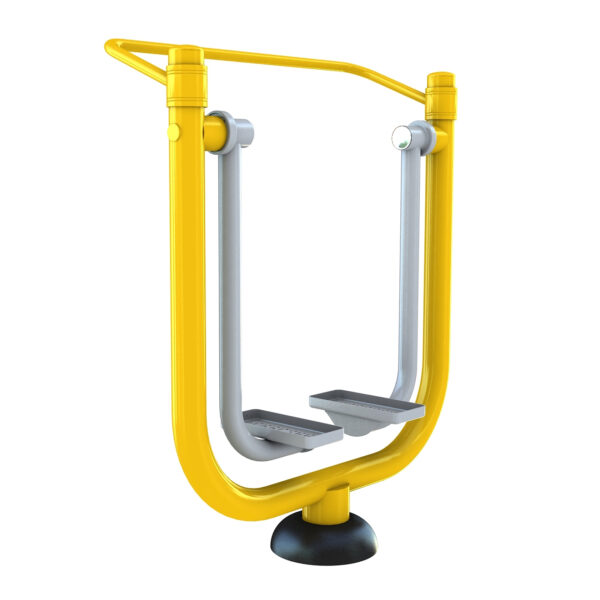
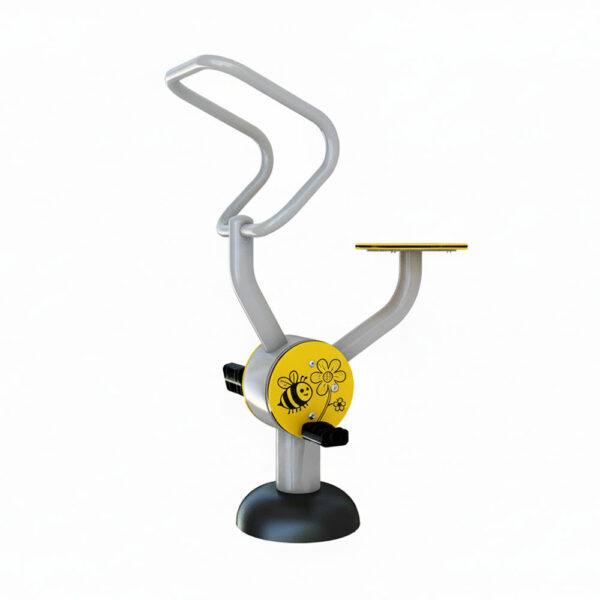
– Outdoor fitness equipment (pull-up bars, rowing machines, elliptical trainers, etc.)
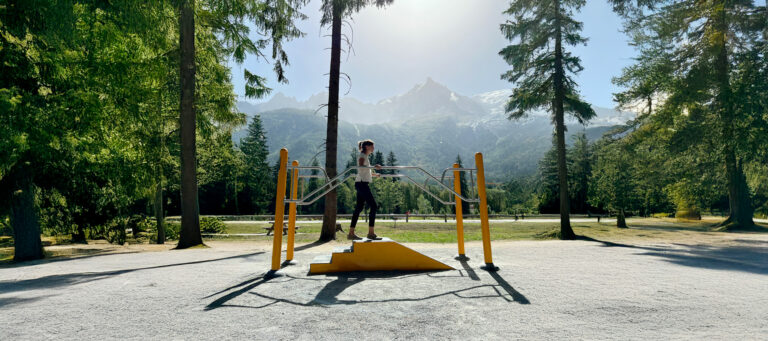
– Fitness and Nordic walking trails
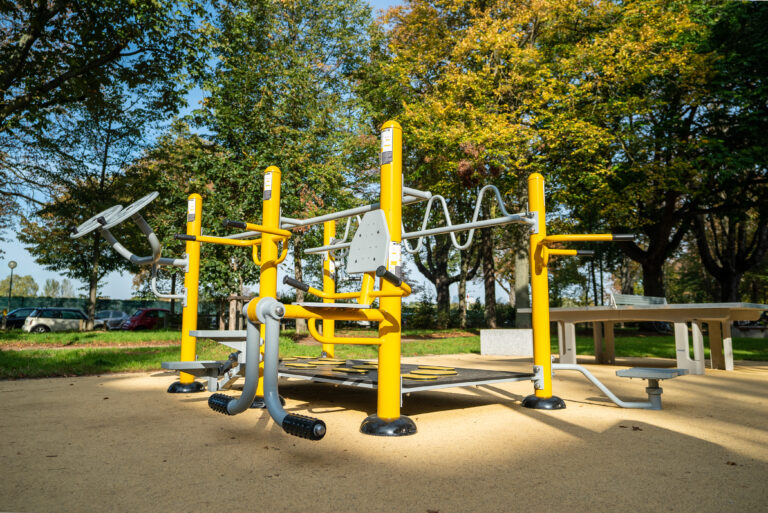
– Street workout and calisthenics equipment
– Dog agility courses and dog areas
– Outdoor cross-training facilities
– Chess or table tennis tables and outdoor team sports equipment
Maintenance operations to be carried out
Routine maintenance
Routine maintenance includes regular cleaning of surfaces, removal of dirt, algae or mould, checking that bolts and nuts are tight, and checking the condition of floor coverings around equipment. For powder-coated galvanized steel equipment, cleaning with clear water and checking the integrity of the coating are sufficient in most cases.
Preventive maintenance
Preventive maintenance involves anticipating wear and tear before it becomes dangerous. It includes lubrication of moving parts, preventive tightening of assemblies, anti-corrosion treatment of exposed areas and programmed replacement of wearing parts (cables, seals, handles).
Corrective maintenance
As soon as an anomaly is detected during an inspection, a corrective maintenance procedure must be initiated. If the anomaly presents an immediate safety risk, the equipment must be taken out of service as soon as possible, and physically sealed off until it can be repaired. Leaving dangerous equipment accessible to the public is a serious offence.
| ✅ Best practiceKeepa minimum stock of common spare parts (bolts, cables, spare handles) to reduce downtime and ensure rapid return to service when a fault is detected. |
Responsibilities and penalties in the event of non-compliance
In the event of bodily injury resulting from poor maintenance of outdoor sports facilities, liability may arise at several levels:
– Civil liability: compensation of the victim by the manager or his insurer
– Criminal liability: liability for endangering others (article 223-1 of the French Penal Code) or for unintentional injury.
– Administrative liability for public bodies (communes, EPCI)
The courts systematically examine the existence and keeping of maintenance records, compliance with applicable standards, and the manager’s responsiveness to reported anomalies. A rigorous, documented maintenance policy is therefore the best protection against these risks.
How to organize your maintenance policy?
Implementing an effective maintenance policy doesn’t necessarily require substantial resources. Here are the key steps:
– Draw up a complete inventory of equipment, including part numbers and installation dates
– Identify the standards applicable to each piece of equipment
– Define an inspection schedule according to the three levels of standard EN 16630
– Designate internal referents for routine inspections
– Contract with a qualified service provider for annual inspections
– Set up a maintenance log (paper or digital)
– Train staff in reporting and decommissioning procedures
Calling on a specialized manufacturer: an asset for maintenance
Choosing outdoor sports equipment from a specialist manufacturer is a decisive advantage for long-term maintenance. A reliable manufacturer guarantees :
– Compatible spare parts available for many years
– Precise technical documentation for every piece of equipment
– Support in implementing the maintenance plan
– Durable materials (powder-coated galvanized steel, recycled HDPE) to reduce service intervals
– Certified to EN 16630 or EN 1176 standards
Herkules Fitness offers a complete range of outdoor sports equipment in powder-coated galvanized steel, designed for intensive use in public spaces. Our teams support local authorities and managers in defining their maintenance plans and supplying spare parts.
The maintenance and upkeep of outdoor sports facilities is not an option: it is a legal obligation and a safety imperative for any responsible manager. By applying the three levels of inspection defined by standard EN 16630, keeping rigorous records and relying on qualified partners, local authorities and operators can guarantee the safety of their users while limiting their exposure to legal risks.
Would you like to find out more about sustainable, standards-compliant outdoor sports equipment? Contact our team for personalized advice and a quote tailored to your project.