
Falls are the most feared event in nursing homes, and with good reason: they are the leading cause of hospitalization among dependent elderly people, with often serious consequences (femoral neck fractures, loss of mobility, post-fall syndrome). Nearly one resident in two suffers at least one fall a year. Faced with this situation, medical-social establishments are increasingly investing in adapted sports equipment: they are no longer a “plus” in terms of comfort, but a genuine prevention tool.

This article takes a look at the equipment that needs to be integrated into a falls prevention and autonomy maintenance approach in EHPAD, by looking at three dimensions: the specific needs of each resident profile, the layout options (interior, exterior, sensory), and the financing mechanisms available. It is aimed at facility managers, coordinating physicians, psychomotricians, organizers and technical departments in charge of layout projects.
Key takeaways:
- Nearly one out of every two EHPAD residents suffers at least one fall a year: equipping the establishment with suitable equipment is one of the main prevention levers recognized by the HAS and the CNSA.
- Three families of equipment complement each other: outdoor (therapeutic garden, walking trail), indoor (psychomotor room, seated apparatus), and sensory (tactile modules, Snoezelen areas).
- The typical budget is between €20,000 and €100,000, depending on the format, with numerous specific funding schemes (CNSA, conférence des financeurs, ARS, pension funds, departmental councils).
- Equipment alone is not enough: it must be accompanied by a program of activities run by a trained professional (APA, psychomotrician, occupational therapist) to produce real benefits.
- Adapting to GIR profiles is essential: a GIR 5-6 resident (low dependency) and a GIR 1-2 resident (high dependency) do not have the same needs. A graduated offer makes all the difference.
| ⚕ WarningAny sports equipment project in EHPAD must be designed in conjunction with the establishment’s medical and paramedical team (coordinating doctor, psychomotrician, occupational therapist, physiotherapist, adapted physical activity teacher). This article proposes a general framework; it does not replace an individualized analysis of residents’ needs. |
Why equip a nursing home with adapted equipment?
The challenge of physical activity in EHPAD goes far beyond mere “entertainment”. The benefits documented in scientific literature and recognized by the French National Authority for Health are many and concrete.
– Falls prevention: regular work on balance, leg strength and coordination significantly reduces the risk of falling. Several studies have shown a 30-40% reduction in the frequency of falls among residents who take part in regular adapted physical activity.
– Maintaining independence: getting up from a wheelchair, walking to the dining room, using the toilet on your own – these are all everyday actions that depend directly on muscle strength and mobility, and that physical activity helps to preserve.
– Combating slippage syndrome: isolation and prolonged sedentary life can lead to a sometimes fatal withdrawal into oneself. Shared physical activity is one of the best documented antidotes.
– Cognitive benefits: regular physical activity slows cognitive decline and has a positive effect on behavioral disorders associated with Alzheimer’s disease (anxiety, pathological wandering, sleep disorders).
– Cohesion and quality of life: group sessions create social ties, structure the day and improve mood. They are an important lever for “ageing well” in the broadest sense of the term.
– Image and attractiveness of the establishment: increasingly demanding families now include the quality of facilities and activities in their choice of establishment. A well-equipped EHPAD attracts and builds loyalty.
Understanding needs: adapting to each resident profile
Not all EHPAD residents have the same needs or abilities. The AGGIR (Autonomie Gérontologie Groupes Iso-Ressources) grid classifies residents into six levels of dependence, from GIR 6 (autonomous) to GIR 1 (very dependent). On average, in a French EHPAD, 80% of residents fall into GIR 1 to 4, requiring a graduated range of facilities.
| GIR level | Resident profile | Adapted equipment |
| GIR 5-6 | Autonomous or slightly dependent: walks alone, performs daily activities. | Outdoor fitness equipment for senior citizens, fitness trail, standing equipment with support. |
| GIR 3-4 | Moderate dependency: difficulty walking, partial assistance required, early cognitive impairment. | Seated equipment (elliptical trainer, arm ergometer), balance modules with handrails. |
| GIR 1-2 | High dependency: bedridden or wheelchair-bound most of the time, marked cognitive impairment. | Sensory modules, passive mobilization, Snoezelen areas, therapeutic gardens. |
This segmentation is essential: a successful layout project proposes several zones or modules, accessible to different profiles. The worst mistake would be to design an “average” facility that doesn’t adequately meet the needs of any one group. It’s better to have three small, well-targeted areas than one large, poorly calibrated one.
Added to this is the cognitive dimension: according to estimates, 60-70% of EHPAD residents have cognitive disorders (Alzheimer’s disease, vascular dementia, various disorders). For them, sensory equipment and simple courses are better suited than complex equipment requiring a full understanding of instructions.
Three families of equipment to know
A complete range of sports equipment for nursing homes is based on three complementary families, each catering to different needs and target groups.
1. Outdoor facilities: therapeutic garden and fitness trail
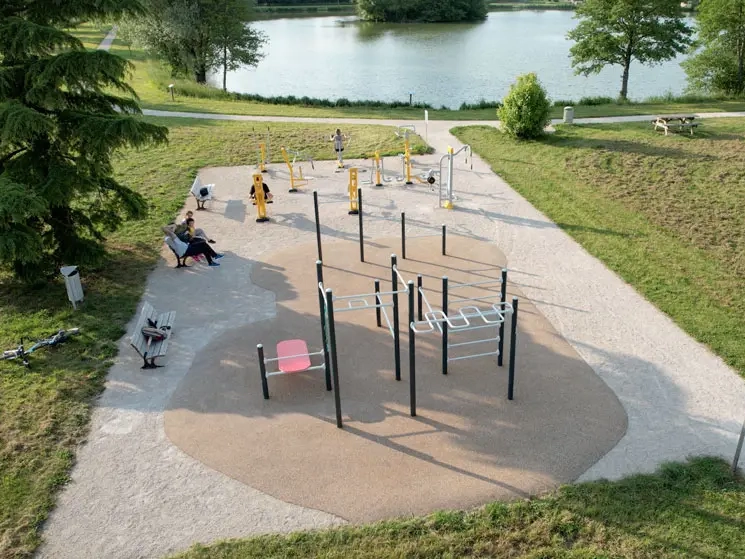
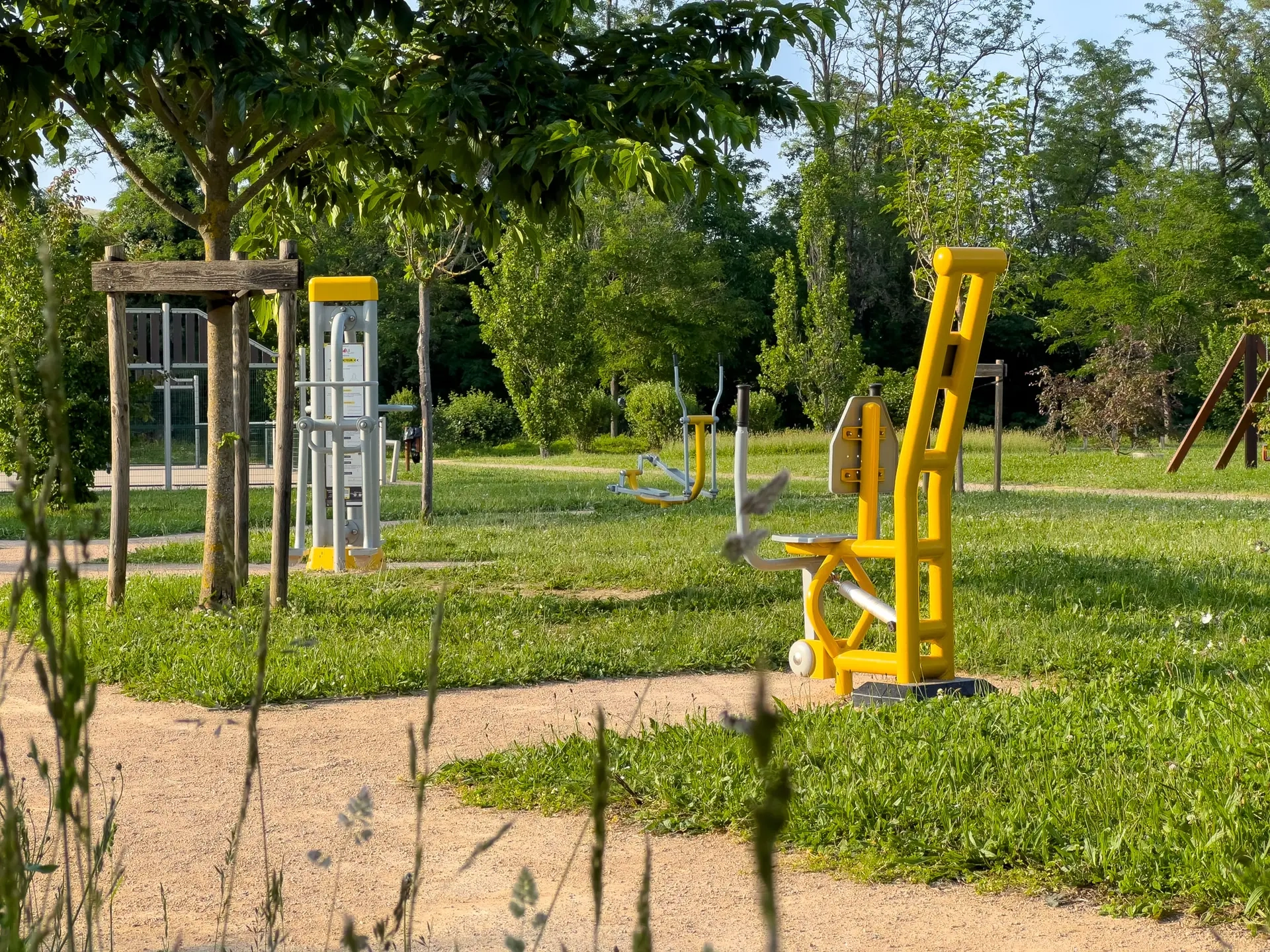
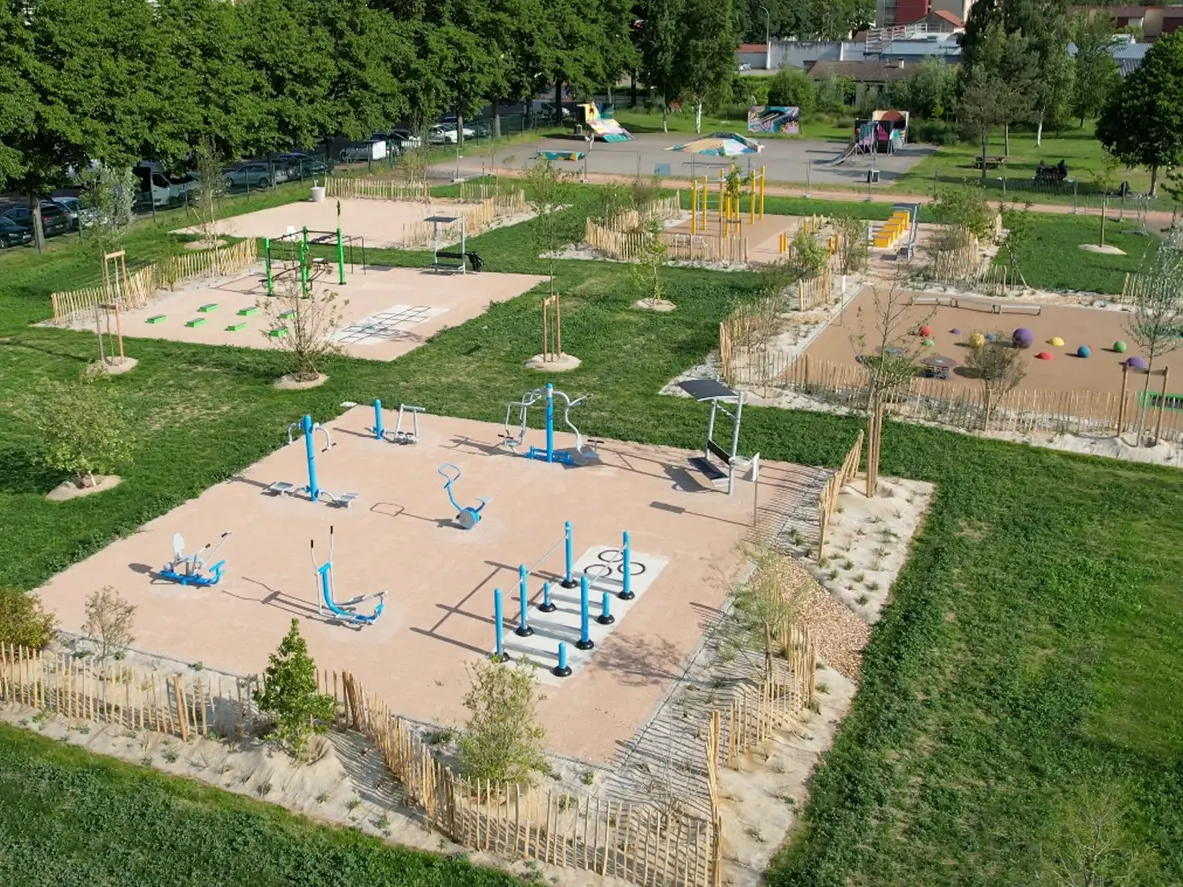
The therapeutic garden has become a standard feature of modern nursing homes. It combines several functions: safe walking, sensory stimulation (aromatic plants, varied surfaces), gentle physical exercise and social bonding. Just a few key features to consider.
– Stabilized pathways: minimum width 1.40 m, obstacle-free, with handrails on both sides in key sections. Slope ≤ 4% to facilitate movement with a walker or wheelchair.
– Regular benches: every 15 to 20 meters, with a high seat height (47-50 cm) and sturdy armrests for easy lifting.
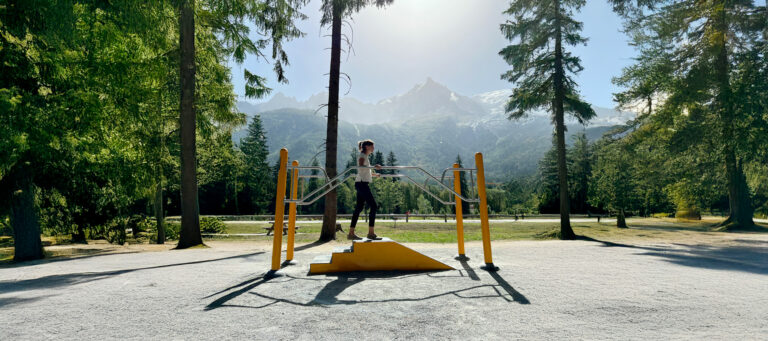
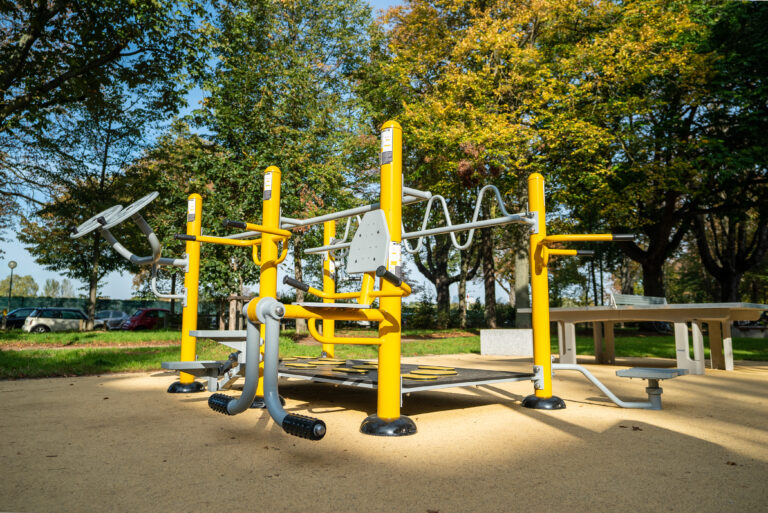
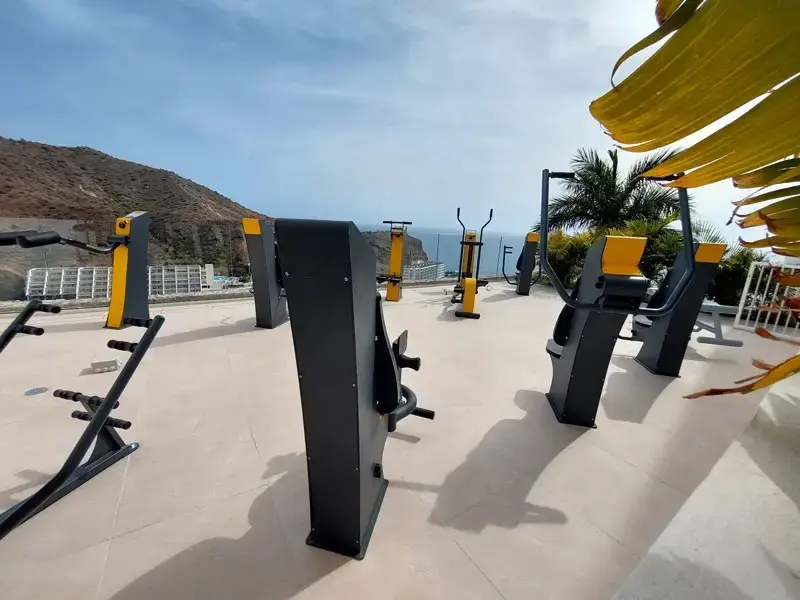
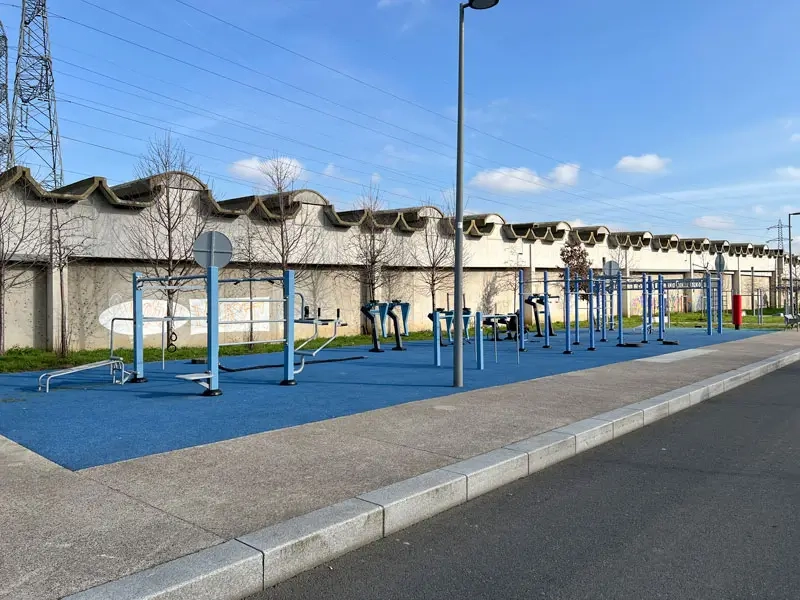
– Fitness equipment adapted for seniors: low-amplitudeelliptical, skier, twister, leg elevator, easy-access abdominal bench. Choose NF EN 16630-certified models designed specifically for seniors (limited effort, adapted ergonomics).
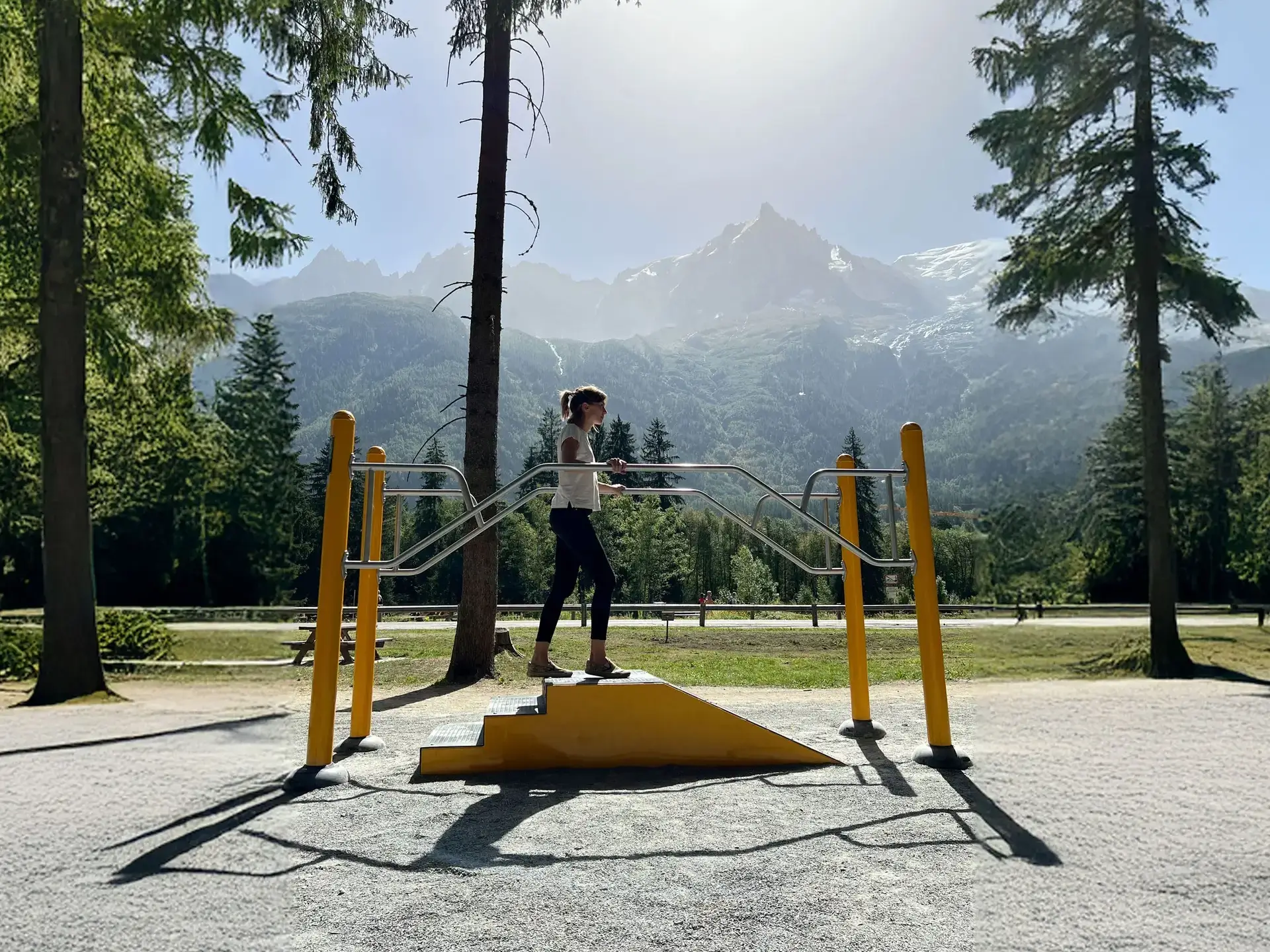
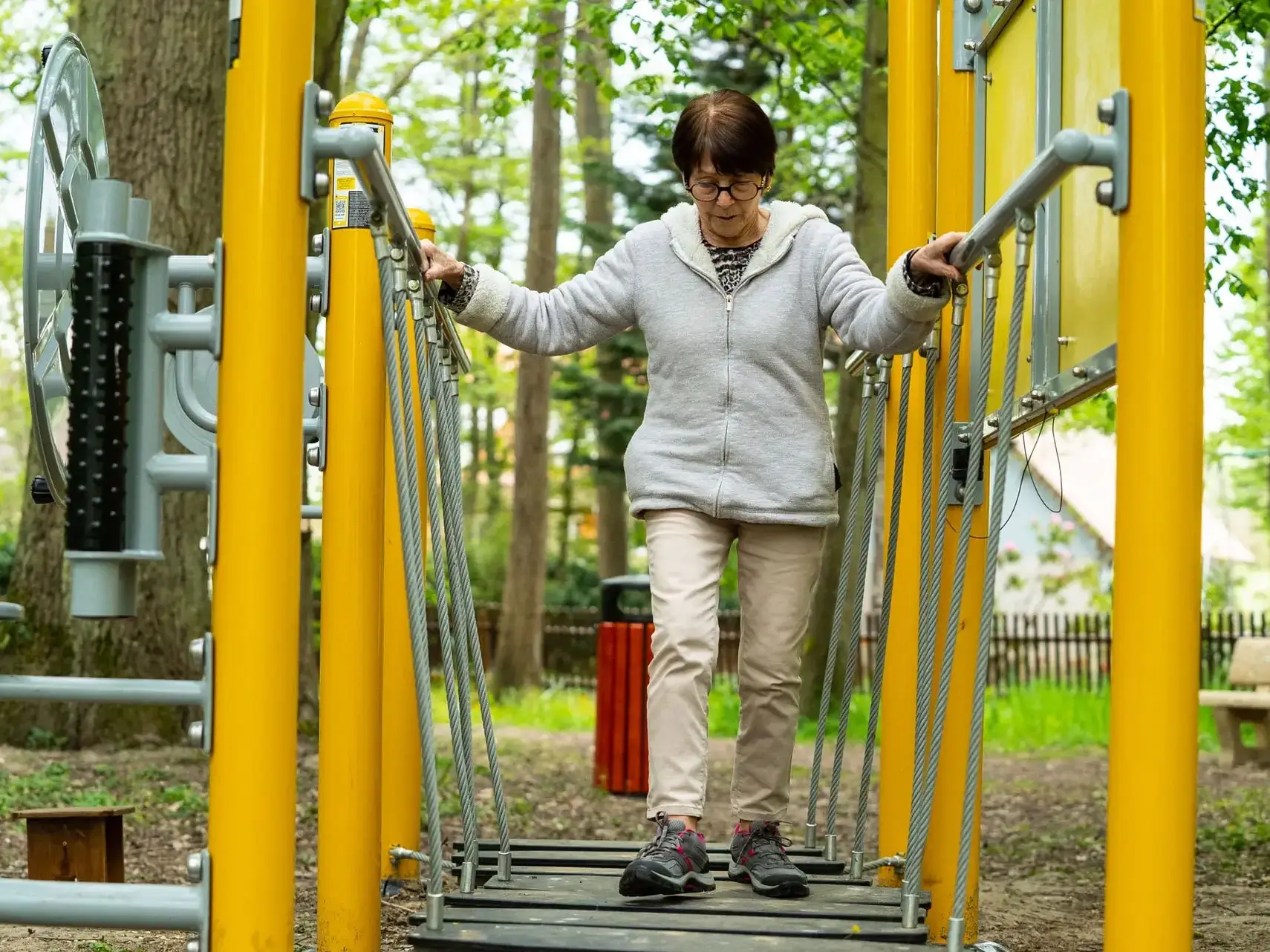
– Balance modules: gentle inclines, training steps, textured surfaces. Always with handrail and safe environment.
– Natural sensory spaces: aromatic plants accessible at wheelchair height, soothing fountain, raised planters for seated or standing gardening.
Typical budget for a complete therapeutic garden: €30,000 to €80,000, depending on the surface area (200 to 500 m²) and the quality of the landscaping. The design should involve a landscape architect familiar with gerontological issues.
2. Indoor facilities: the psychomotricity room
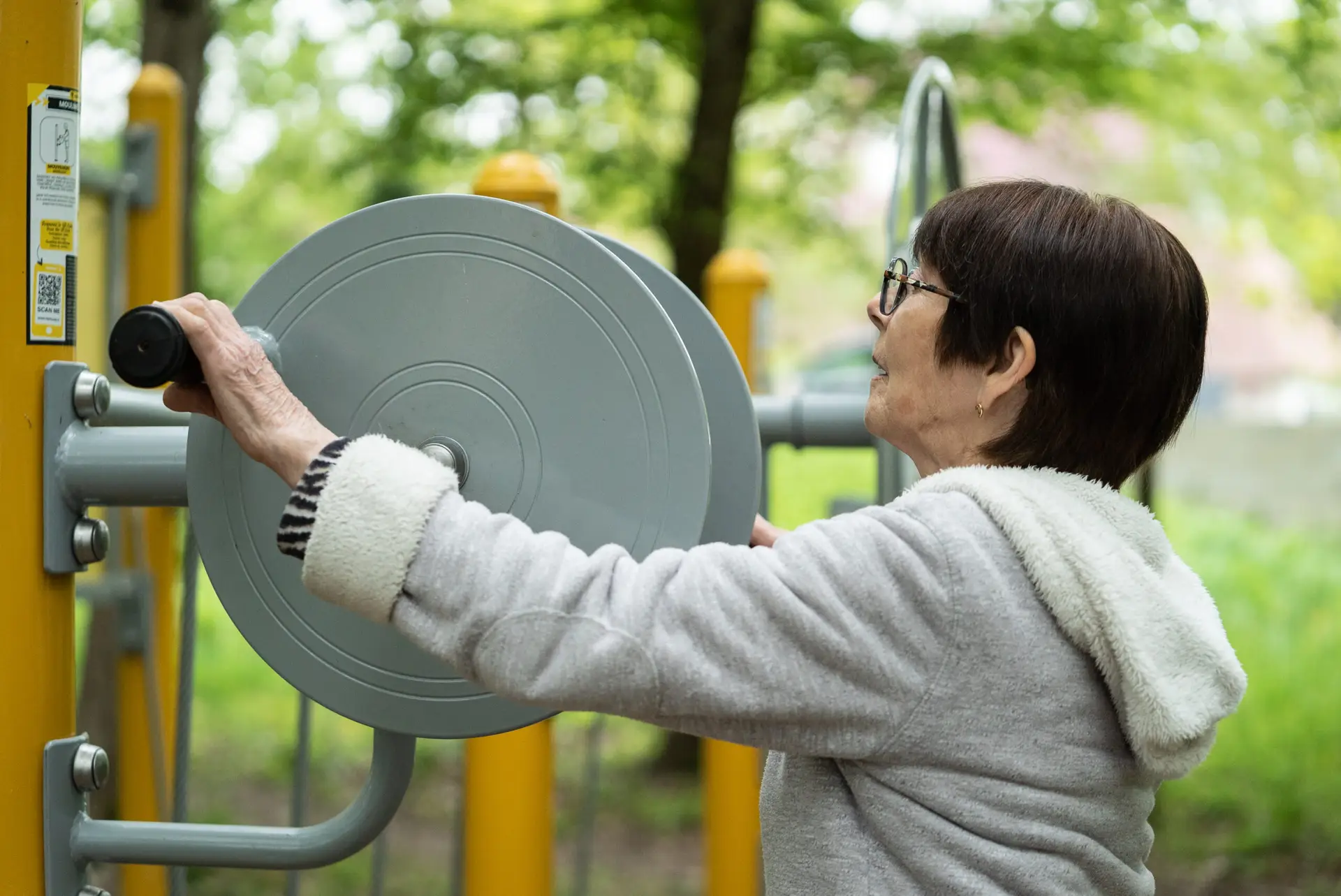
For winter periods, rainy days or residents whose mobility prevents them from going out every day, a room dedicated to physical activity is essential. It must be designed for supervised use (sessions led by a professional), unlike outdoor areas which can be freely accessible.
– Open space: at least 30 m² for group movement, with non-slip floor and natural light where possible.
– Adapted furniture: stable chairs with armrests (for seated exercises), table with castors, wall-mounted mirror for posture exercises.
– Psychomotor equipment: balls of various sizes, elastic bands of light resistance, coloured studs, modular courses, rings, hoops.
– Gentle gym equipment: exercise bike with accessible saddle and low resistance level, speed-adjustable treadmill with handrails (to be used only in the presence of a professional).
– Relaxation areas: thick carpets, ergonomic cushions, soft music. Important for the recovery phase and for anxious residents.
Typical budget: €15,000 to €40,000 for the complete equipment of a 30 to 60 m² room, excluding finishing work.
3. Sensory equipment: Snoezelen and cognitive stimulation
Particularly suited to residents with GIR 1-2, Alzheimer’s disease or advanced cognitive impairment, sensory equipment aims to soothe, gently stimulate and offer a moment of well-being to people who can no longer participate in conventional physical activities.
– Snoezelen area: room dedicated to multisensory stimulation (light, sound, touch, smell). Reduces anxiety, improves sleep, reduces behavioral problems. Budget: €15,000 to €30,000 for a complete space.
– Wall-mounted tactile modules: panels with various textures, manipulators (buttons, levers, zippers), sounds and lights. Can be used standing up or in a wheelchair.
– Passive mobilization activity tables: allow stimulation of the upper limbs in a seated position, without cardiovascular effort. Invaluable for highly dependent residents.
– Aquariums, fountains, sound furniture: atmospheric elements that contribute to general calm and quality of daily life.
Safety and standards: a demanding framework
Equipment for nursing homes has to meet more stringent requirements than conventional public fitness equipment, due to the fragility of the users.
– NF EN 16630 standard : applies to outdoor fitness equipment, but specialized EHPAD manufacturers go further (limited efforts, elimination of possible pinches, adapted heights).
– PMR accessibility: law of February 11, 2005, applicable to all establishments open to the public. Pathways, flooring, signage: all these elements need to be designed right from the planning stage.
– Certified shock-absorbing floors (NF EN 1177) under any equipment presenting a risk of falling. Prefer compacted floors compatible with wheelchairs and walkers.
– HAS and ANESM recommendations : the Agence nationale de l’évaluation médico-sociale has published a number of guidelines on quality of life in EHPAD, including physical adaptations.
– Internal procedures: any use of equipment must be governed by an internal protocol validated by the coordinating doctor, specifying who can use what, under what conditions, and with what level of supervision.
Costs and financing: what you need to know
The overall budget for a sports equipment project in EHPAD typically varies between €20,000 (modest project, simple psychomotricity room) and €150,000 (complete project: therapeutic garden + dedicated room + Snoezelen space). The good news is that EHPADs benefit from a particularly rich funding ecosystem, dedicated to the prevention of loss of autonomy.
| Device | Typical rate | Conditions |
| Conference of funders (CNSA) | Up to 100%. | Projects to prevent loss of autonomy for the over-60s |
| Investment Assistance Plan (PAI) – CNSA | 30 à 50 % | Structural investments in nursing homes |
| ARS – non-renewable credits | Variable | Innovative projects in line with the school project |
| County Council | 20 à 50 % | Traditional co-financing for nursing homes eligible for social assistance |
| Pension funds (CARSAT, MSA) | Variable | Social action dedicated to prevention among retirees |
| Patronage / endowment funds | 10 à 30 % | Highly effective for projects with a high human impact |
The key role of the Conférence des financeurs
Created by the 2015 law on adapting society to ageing, the Conférence des financeurs de la prévention de la perte d’autonomie brings together, in each département, the main public players involved in financing prevention (CNSA, département council, ARS, pension funds, mutual insurance companies, complementary protection organizations). It has a substantial annual budget, dedicated in particular to individual assistance, collective prevention initiatives and investment in prevention equipment. For many EHPADs, this is the first port of call for financing adapted sports equipment.
PAI Ségur de la santé
As part of the Ségur de la santé program, a specific investment aid plan has been deployed to modernize nursing homes. It can finance not only structural work, but also the development of areas dedicated to residents’ quality of life, including adapted sports facilities. Contact your local ARS for specific details.
Seven best practices for a successful project
1. Build the project with the multidisciplinary team: coordinating doctor, psychomotor therapist, occupational therapist, coordinating nurse, activity leader, technical staff. Without this collaboration, the equipment is technically correct but clinically unsuitable.
2. Involve residents and families: the Conseil de la vie sociale (CVS) is the ideal forum for presenting the project, gathering expectations and explaining the benefits. A participative approach considerably improves acceptance.
3. Hire or contract an adapted physical activity (APA) teacher: this is probably the most profitable investment of the project. A non-animated facility is used at 20% of its potential; with an APA, attendance and profits triple.
4. Phasing the project: start with the most accessible and most-used area (e.g., the therapeutic garden), then build up gradually. This allows you to smooth out the budget and adjust according to feedback.
5. Take care with maintenance: like all public equipment, the equipment must be inspected (annually by an approved body for outdoor equipment). Anticipate the maintenance budget, generally 5 to 10% of the initial cost per year.
6. Staff training: staff working with residents need to be made aware of how to use the equipment safely, how to help without taking over, and what the warning signals are. One day’s training is enough, but it changes everything.
7. Evaluate the benefits: before/after commissioning, monitoring the number of falls, measuring attendance, resident and family satisfaction. This data is invaluable for justifying investment and renewing subsidies.

Mistakes to avoid
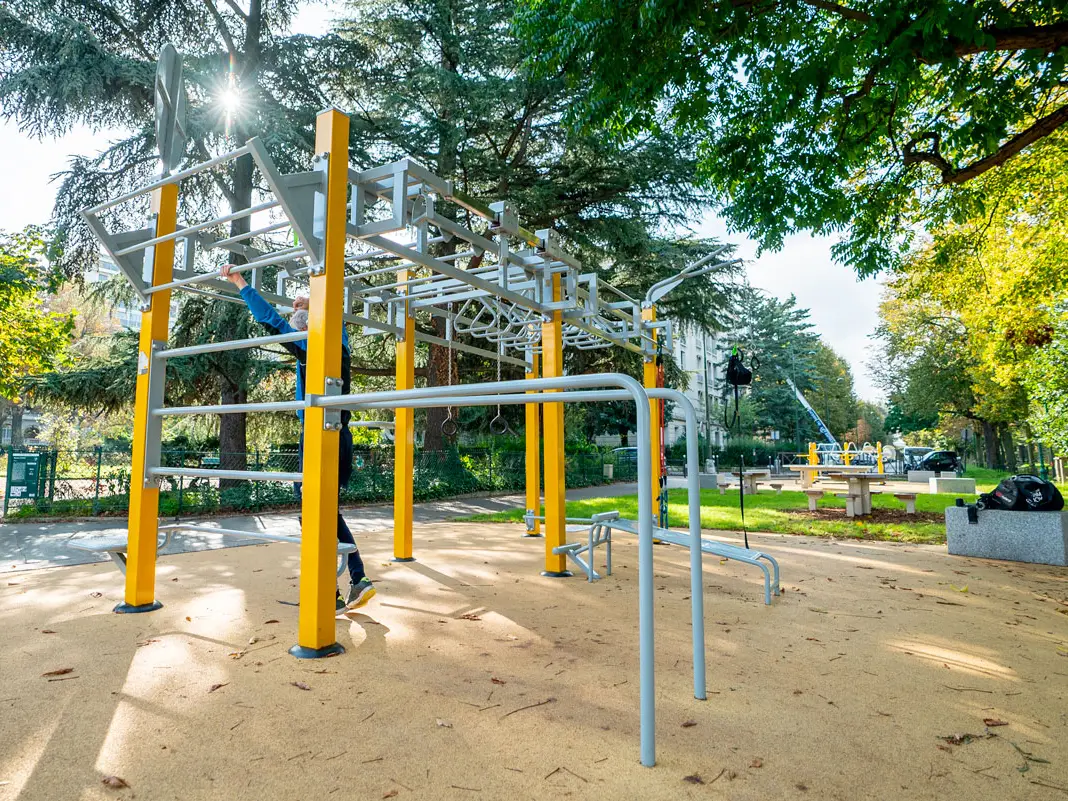
– Confusing nursing homes with public fitness areas: conventional street workout equipment is totally unsuitable for the majority of residents. Always choose manufacturers specialized in gerontology.
– Oversize in relation to activity capacity: 3 regularly-used fixtures are better than 10 that are never used due to lack of supervision. The limiting factor is almost always people, not equipment.
– Neglecting access conditions: a magnificent therapeutic garden inaccessible to wheelchairs is a total failure. Accessibility must take precedence over aesthetics.
– Forget about GIR 1-2 residents: they represent a significant proportion of the population and have specific needs. Setting aside part of the project for sensory modules is not a luxury, it’s an ethical obligation.
– Underestimating legal responsibility: as with public areas, the EHPAD is responsible for the safety of its equipment. Documentation, controls, maintenance records: these fundamentals must be in place from the moment the facility opens.
– Don’t evaluate after commissioning: without evaluation, it’s impossible to adjust. And without adjustment, the equipment gradually loses its relevance.
Equipping a nursing home with adapted sports equipment is not a project like any other. It affects physical safety (falls prevention), psychological well-being (social bonding, motivation, sense of usefulness), residents’ dignity (preserving autonomy for as long as possible), and the establishment’s image in the eyes of families and financial backers. Properly designed, this type of layout transforms the day-to-day life of a nursing home.
For managers and teams committed to this approach, the ingredients for success are now well identified: a multi-disciplinary approach right from the design stage, a graded offering according to GIR profiles, certified and adapted equipment, human support from a trained professional, properly stacked funding, and regular evaluation. With these fundamentals in place, the substantial initial investment is more than offset by the documented reduction in falls, improved quality of life and enhanced attractiveness of the facility. More than an expense item, it’s a real lever for transforming the support model.