
Against a backdrop of tight public finances, those involved in sport – local authorities, clubs, federations, associations – are increasingly seeking to diversify their sources of funding. Public subsidies remain the dominant pillar, but they are no longer always sufficient, and it takes a long time to obtain them. Corporate philanthropy and endowment funds are emerging as attractive complementary levers: tax advantages for the donor, positive communication for the recipient, agility of use.

But are these schemes really an alternative to public subsidies, or rather a complement? This article reviews the tax, legal and operational framework applicable to sports sponsorship and endowment funds, addressing both project sponsors (clubs, associations, municipalities) and potential donors (companies, individuals, foundations).
Key takeaways:
- Sports sponsorship and endowment funds are a credible complement to public subsidies, but rarely a real alternative on their own for projects over €100,000.
- The tax framework is attractive: tax reduction of 60% for companies (up to €2 million in donations, 40% above that), 66% for individuals, up to the legal limit.
- The endowment fund is a tool created by the law of August 4, 2008: flexible structure, minimum initial endowment of €15,000, ability to receive donations, legacies and sponsorship with tax benefits.
- The best strategy is to combine public subsidies (ANS, DETR, regional funds), local corporate sponsorship, and private fundraising via an endowment fund.
- Structuring and communication are the real keys to success: without a well-publicized project, without guidance and without symbolic compensation for donors, sponsorship doesn’t take off.
| ⚖ Tax and legal disclaimerThis article provides an educational summary of the schemes in force in France and constitutes neither tax nor individual legal advice. The thresholds, ceilings and rates mentioned may change; consult a chartered accountant, a tax lawyer or the DGFiP services before setting up any scheme. The examples given are indicative. |
Understanding the tools: patronage, endowment funds, sponsorship
These three concepts are often confused, even though they have totally different legal and tax implications. Before adopting any strategy, it is essential to distinguish between them.
Sponsorship
According to the decree of January 6, 1989, patronage is defined as material support given, without direct counterpart on the part of the beneficiary, to a work or person for the exercise of activities of general interest. In practical terms, it’s a donation with no equivalent commercial consideration. In this way, a company can support an amateur sports club, a socially useful sports association, or a municipal sports development project, and benefit from a tax reduction provided for by the French General Tax Code (CGI).
Patronage can take three forms: financial (cash donations), in-kind (materials, equipment), or in-kind (provision of employees). All three are eligible for the same tax benefits, provided they are properly valued.
The endowment fund
Created by the French law of August 4, 2008 (article 140), the endowment fund is a non-profit legal entity under private law, designed to receive and redistribute donations for the benefit of works or missions of general interest. It lies halfway between an association and a foundation: simpler to create than the latter, but with a strong legal legitimacy.
The creation of an endowment fund requires a minimum initial endowment of €15,000 (since the 2014 reform), a declaration to the prefecture, and the drafting of articles of association. Once in place, it can receive tax-free donations, redistribute its income to identified beneficiaries, and even retain its capital to grow over time.
Sponsorship
Sponsorship is radically different from patronage. It is a commercial contract in which the company pays a sum in exchange for clear advertising (logo on shirts, pitch-side display, mention in communications). From a tax point of view, sponsorship is treated as a deductible operating expense (at the company’s tax rate, generally 25%), and not as a tax-deductible donation.
Confusing sponsorship with patronage is one of the most frequent and riskiest mistakes. Excessive sponsorship benefits (e.g. highly visible logo on a jersey, advertising inserts, VIP access) can lead the tax authorities to reclassify the operation as sponsorship, which cancels out the tax advantage and may result in a tax reassessment.
The tax framework for sports sponsorship
In France, sports sponsorship benefits from one of the most advantageous tax frameworks in Europe. Three regimes coexist, depending on the nature of the donor.
| Donor | Discount rates | Ceiling | Reference text |
| Corporate (up to €2 million donation) | 60 % | 0.5% of sales excluding VAT or €20,000 | Article 238 bis of the CGI |
| Company (over €2m) | 40 % | Ditto | Article 238 bis of the CGI |
| Individual (income tax) | 66 % | 20% of taxable income | Article 200 of the CGI |
| Individual (IFI) | 75 % | 50,000 discount | Article 978 of the CGI |
Corporate sponsorship
Governed by article 238 bis of the French General Tax Code, this scheme allows companies to deduct 60% of the amount of the donation from their income tax, up to the annual limit of between 0.5% of sales excluding VAT and €20,000. This double limit is invaluable for VSEs and SMEs: even if 0.5% of sales is less than €20,000, the company can still benefit from the advantage on €20,000 of donations. Any surplus can be carried forward to the next 5 years.
Since the 2020 Finance Act, the 60% rate applies up to 2 million euros of donations per year. Beyond that, the rate is reduced to 40%. This modulation targets very large donors and remains rarely applicable to amateur sport.
Individual philanthropy
For individuals, article 200 of the CGI provides for an income tax reduction of 66% of the amount of the donation, up to a limit of 20% of taxable income. In concrete terms, a €100 donation to a sports endowment fund really only “costs” a taxpayer €34. This fiscal power is under-utilized in the sports sector, which has historically favored subsidies and sponsorship.
For taxpayers liable for the IFI (impôt sur la fortune immobilière), article 978 of the CGI provides for a reduction of 75% of the amount of the donation, capped at €50,000. This is an extremely powerful lever for mobilizing the patronage of wealthy individuals around large-scale projects.
Conditions to be met
To qualify for these tax benefits, the beneficiary must fall into one of the following categories: association recognized as being in the public interest, approved sports association, public authority, foundation or endowment fund. The donor must receive a tax receipt (Cerfa form n° 11580*04 for individuals, n° 11580*04 or free certificate for companies). The disinterested nature of the donation must be genuine: the rewards granted may not exceed a “marked disproportion” with the value of the donation, generally assessed at 25% of the amount.
Patronage versus public subsidies: strengths and weaknesses
The question posed by this article, the alternative, deserves a nuanced response. In reality, sponsorship and subsidies are not in the same league, and their opposition is less head-on than it might seem.
| Criteria | Public subsidies | Patronage / endowment funds |
| Source | State, local authorities, agencies (ANS, DETR…) | Business and private customers |
| Coverage rate | Often 30-80%. | Variable, rarely more than 30%. |
| Deadlines | 6 to 18 months (instruction) | 1 to 6 months |
| Tax benefits | None for the beneficiary | 60 to 66% for the donor |
| Structuring efforts | Administrative file | Communication strategy, counterparties |
| Stability | Possible recurrence | Highly variable |
The conclusion is clear: for projects over €100,000, sponsorship alone almost never covers the entire requirement. On the other hand, it can finance 10-30% of the financing package, making it easier to obtain public subsidies (which often require a minimum level of self-financing). For more modest projects (equipping a club, purchasingoutdoor sports equipment, financing an event), sponsorship can indeed be the main source of funding.
Endowment funds in practice: how to set them up?
The endowment fund is the most appropriate tool for structuring donations over the long term. Here are the key stages in its creation.
1. Define the project and purpose: draw up the articles of association, specifying the public-interest purpose, possible beneficiaries and governance (minimum 3-member board of directors). Have a lawyer or notary assist you at this stage.
2. Raise the initial endowment: minimum €15,000, to be paid into a dedicated bank account.
3. Register with the prefecture: file including articles of association, declaration by founders, proof of endowment payment.
4. Publication in the Journal Officiel: the declaration gives the fund legal personality.
5. Establish governance: board of directors, internal rules, commitment committee.
6. Organize accounting: compulsory annual accounts, statutory auditor above €10,000 in annual income.
The total set-up time is typically 3 to 6 months, depending on the complexity of the project. Once operational, the endowment fund can start raising funds immediately, with tax receipts issued.
Typical use cases where patronage works well
Not all projects are equally conducive to patronage. Here are the configurations in which this resource works best.
– Emotionally charged projects: renovating the equipment of a historic club, supporting a local athlete on his way to the championships, adapted equipment for disabled sports. Storytelling is a powerful driver of giving.
– Projects with a strong social impact: sport and inclusion, sport for people with disabilities, sport for disadvantaged groups. These dimensions enhance the donor’s CSR profile.
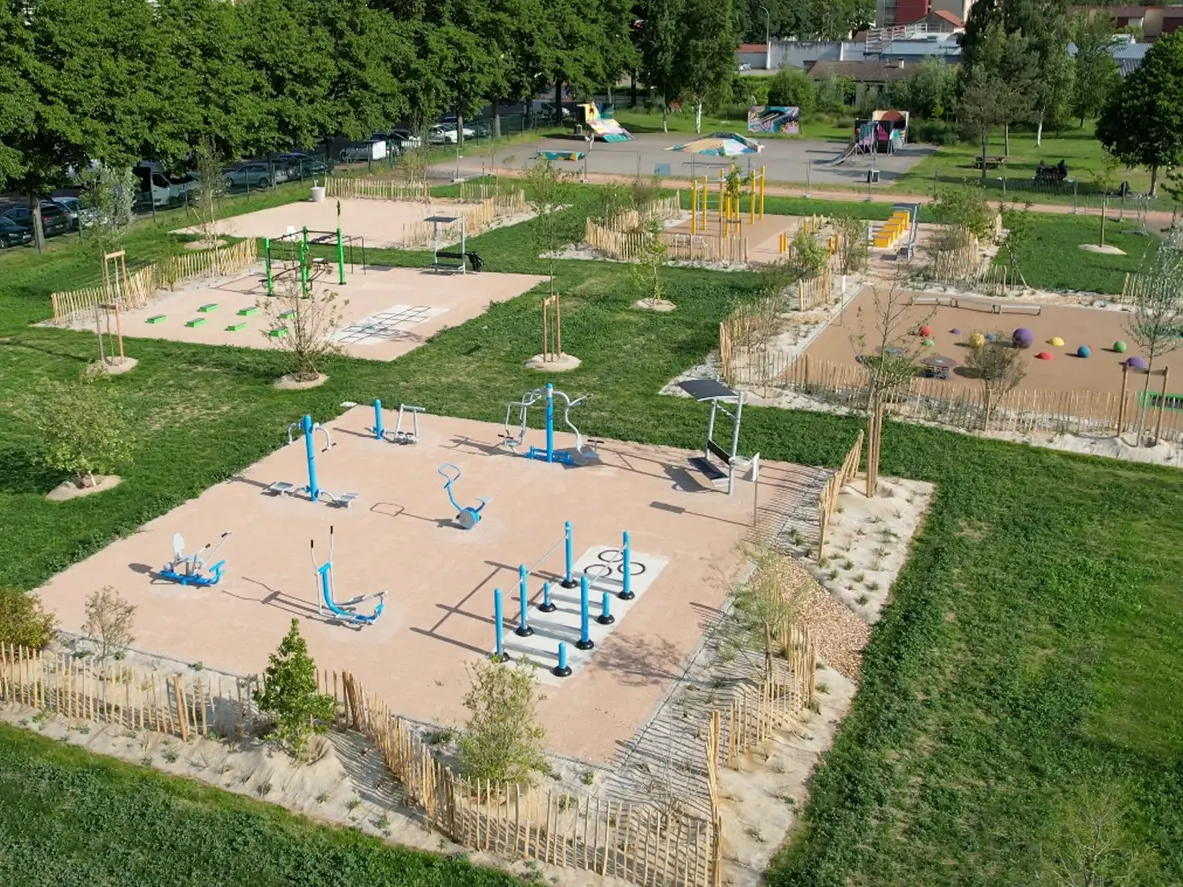
– Locally-anchored projects: building a fitness area in a local neighborhood, equipping a school field. This is a natural way for local companies to support their ecosystem.
– Visible and identifiable projects: a piece of equipment named after the patron, a thank-you plaque, inauguration in the presence of donors. Symbolic rewards are authorized and powerful.
– Projects co-constructed with champions or celebrities: the presence of a recognized sponsor (sportsperson, elected official, manager) boosts fundraising.
On the other hand, sponsorship is less effective for purely operational projects (routine maintenance, administration, payroll costs) that do not generate a compelling narrative. For these items, public subsidies remain the natural tool.
How to combine patronage and public subsidies
The most effective strategy is to stack rather than stack funding sources. Here’s a typical project for a municipal fitness area costing €100,000 excluding VAT.
– ANS grant (“5,000 equipment” plan): 30% of cost, i.e. €30,000.
– DETR grant (prefecture): 25%, i.e. €25,000.
– Regional subsidy: 15%, i.e. €15,000.
– Sponsorship from local companies (via municipal or EPCI endowment funds): 10%, i.e. €10,000.
– Individuals (participative financing campaign supported by the endowment fund): 5%, i.e. €5,000.
– Municipality self-financing: 15%, i.e. €15,000.
With this arrangement, the commune bears only 15% of the initial cost. Sponsorship covers a further 15%, partially replacing the municipal share, which is invaluable when budgets are tight. Above all, sponsorship creates links with the local economic fabric, which goes far beyond the financial dimension of the project.
Mistakes to avoid
– Confusing sponsorship with patronage: offering massive commercial benefits to a patron leads to reclassification as sponsorship and loss of tax benefits.
– Start fund-raising without a structured project: donors respond to a clear narrative, concrete amounts and an identified timetable. Without this, fund-raising quickly reaches a plateau.
– Underestimating structuring costs: setting up an endowment fund entails legal, accounting and communication costs (€5,000 to €15,000 to get started) that need to be budgeted for upstream.
– You have to maintain the relationship, keep them informed of progress, thank them publicly and invite them to special events.
– Neglecting tax eligibility: a strictly amateur sports club cannot always receive tax-exempt donations directly. Check your status with the tax authorities (rescrit fiscal mécénat) before advertising your tax benefits.
– Overestimating potential: all other things being equal, amateur sports sponsorship represents a minority share of funding. Never build a budget on sponsorship that is not already committed on paper.
The answer to the initial question is mixed. Sports sponsorship and endowment funds do not replace public subsidies for the vast majority of projects: their average amounts, volatility and complexity of structuring limit their scope. On the other hand, they are excellent complements, capable of covering 10 to 30% of a round of financing, creating lasting links with the local economic fabric, and giving the project a civic dimension that public subsidies alone cannot offer.
For sports players wishing to diversify their resources, the steps to follow are clear: structure the project, check its tax eligibility with the authorities, choose the right legal vehicle (endowment fund, public-interest association, foundation), draw up a motivating narrative, and intelligently combine public and private sources. With this discipline, sponsorship is no longer an idealistic alternative: it’s an operational, complementary and sustainable tool at the service of sport for all.