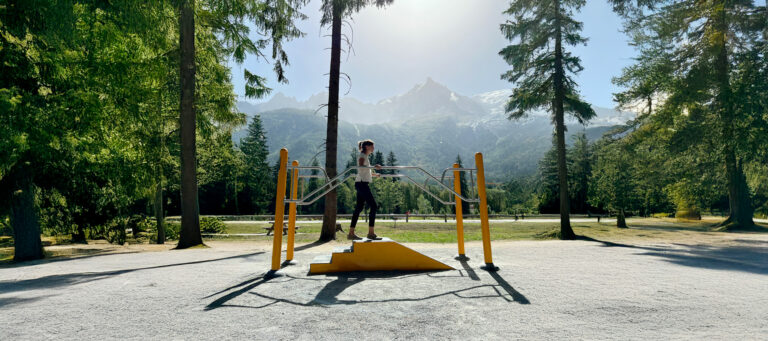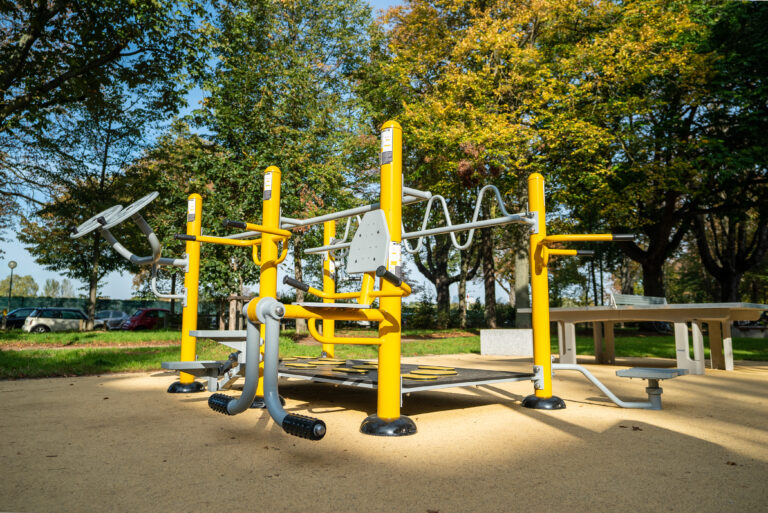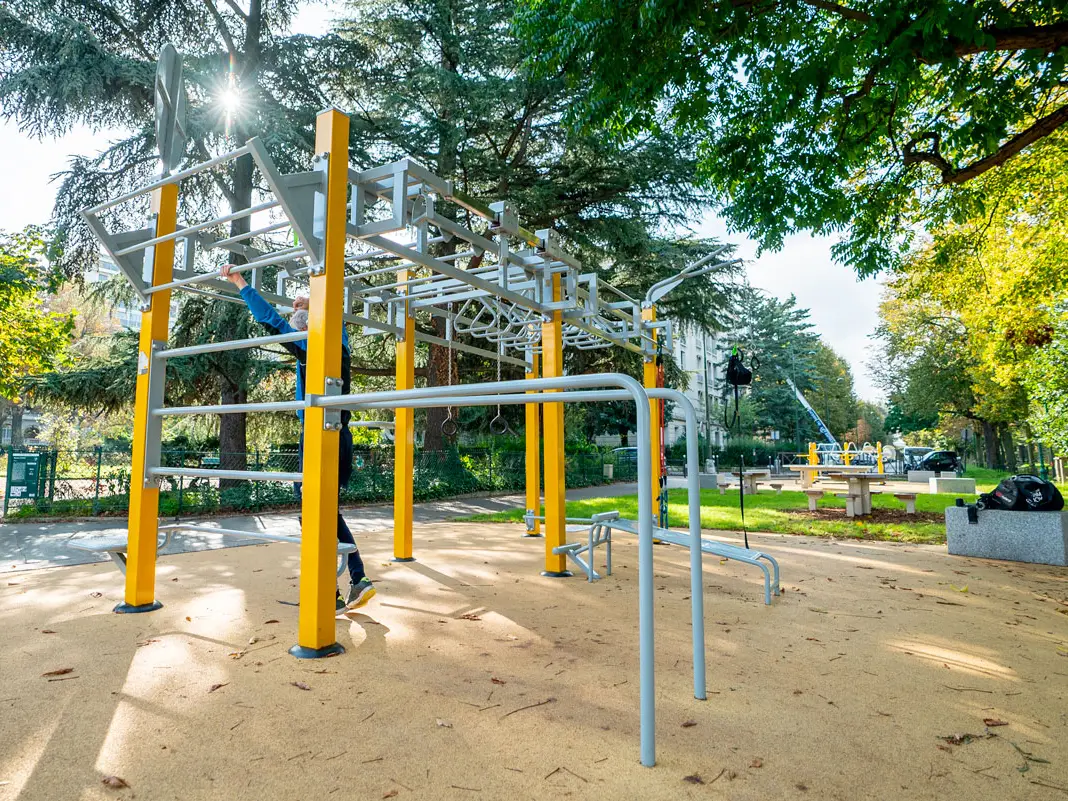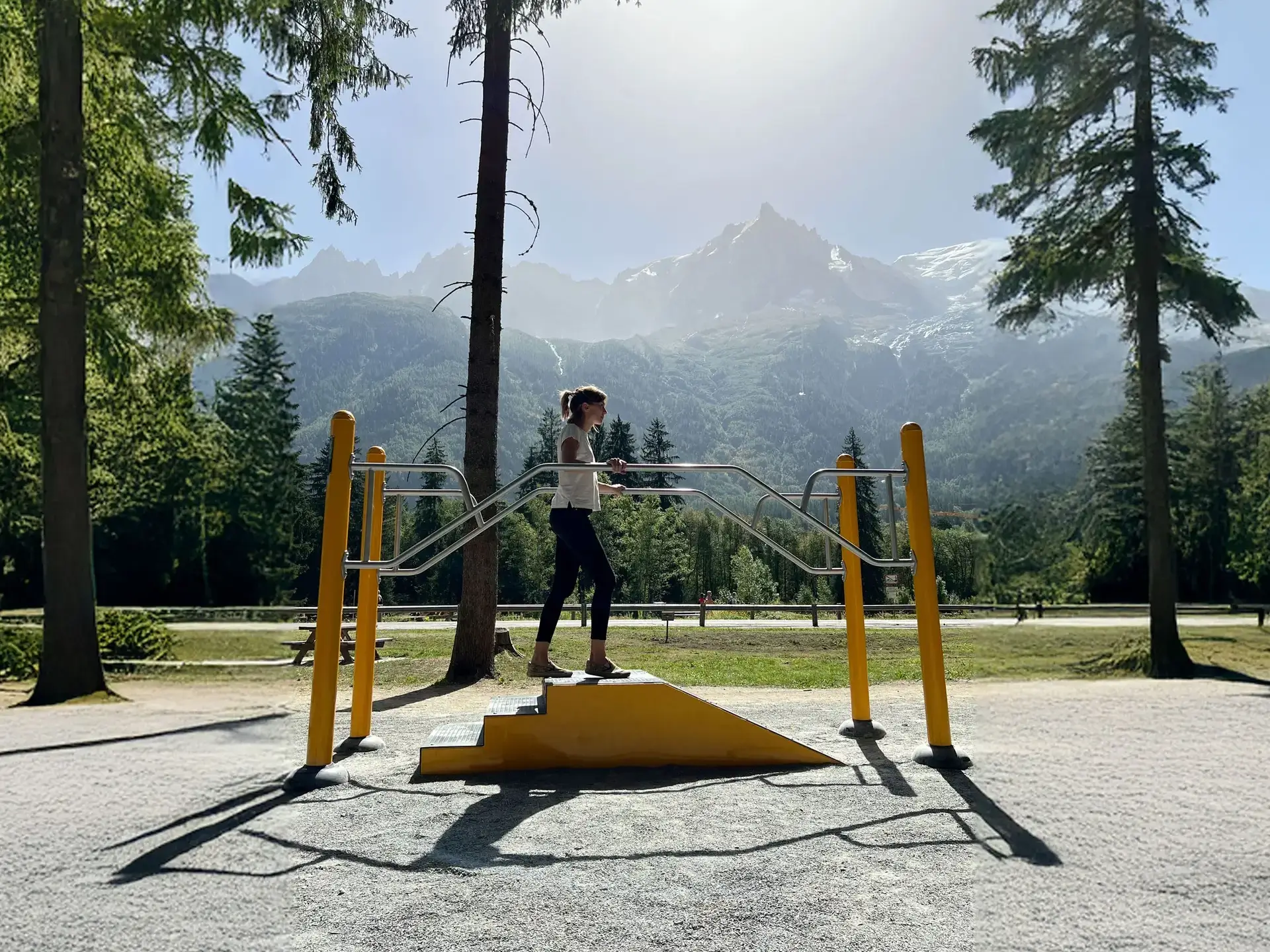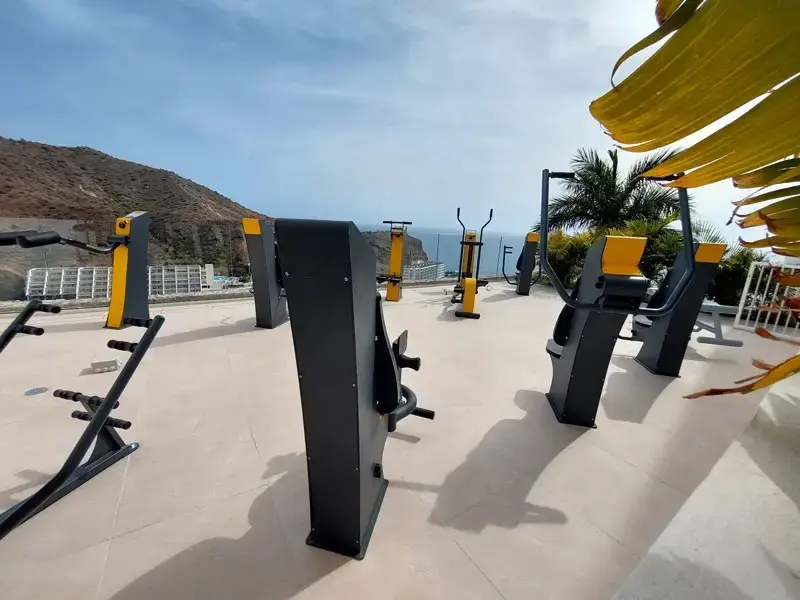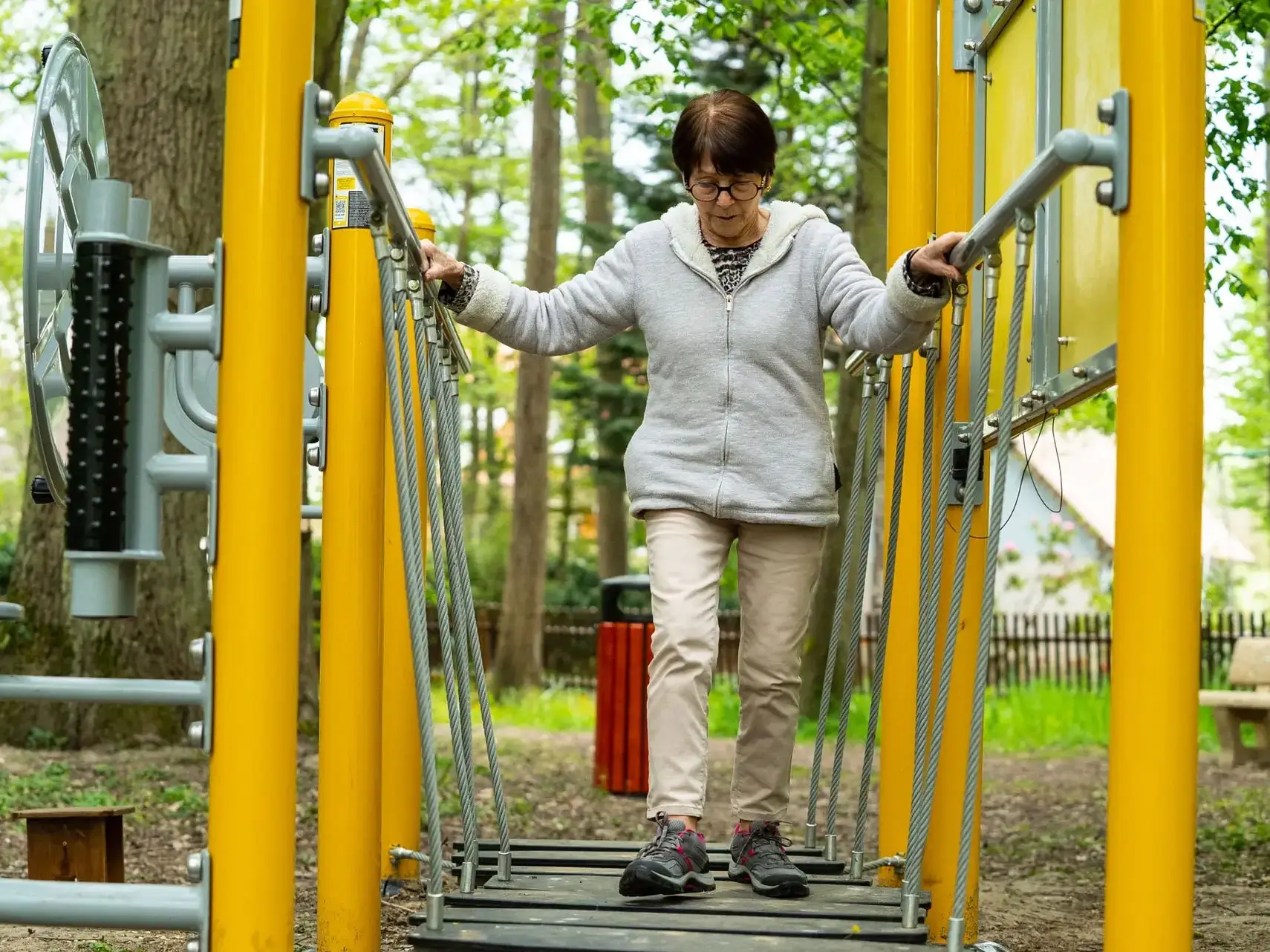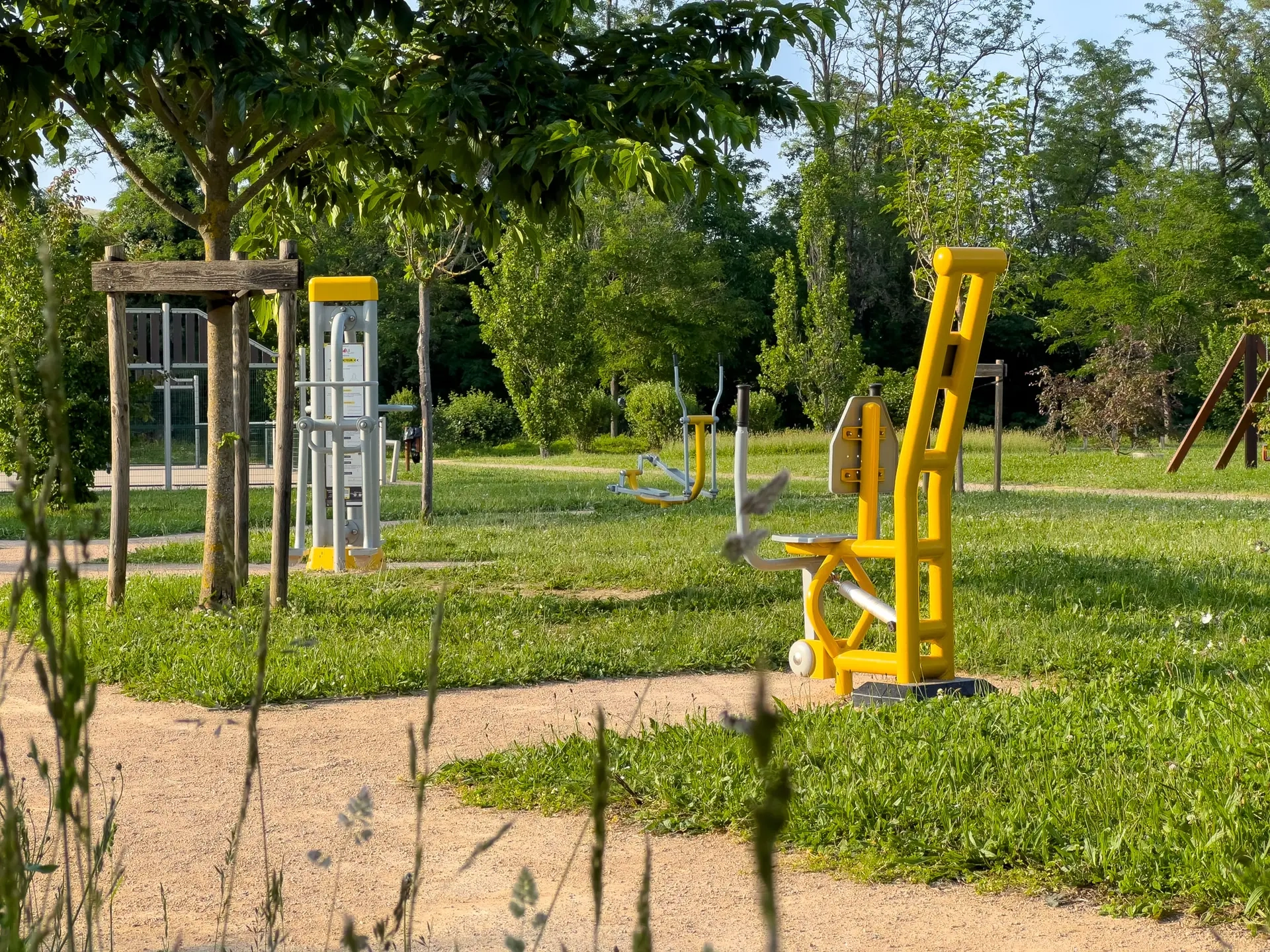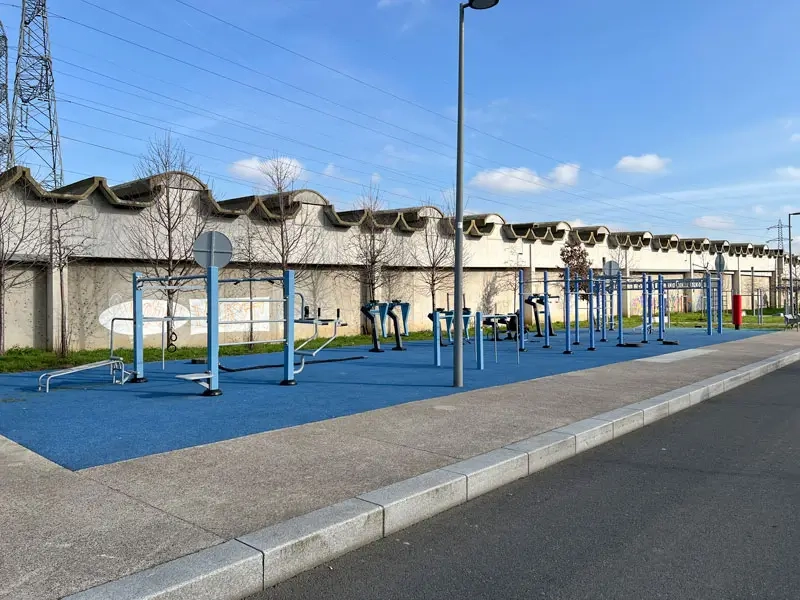

HIIT — High Intensity Interval Training — is one of the best documented training methods for improving cardiovascular capacity, body composition and functional muscular strength all at once. And contrary to what you might think, it needs neither a gym nor sophisticated equipment. A well-equipped outdoor fitness area offers exactly the setting you need to get the most out of it.
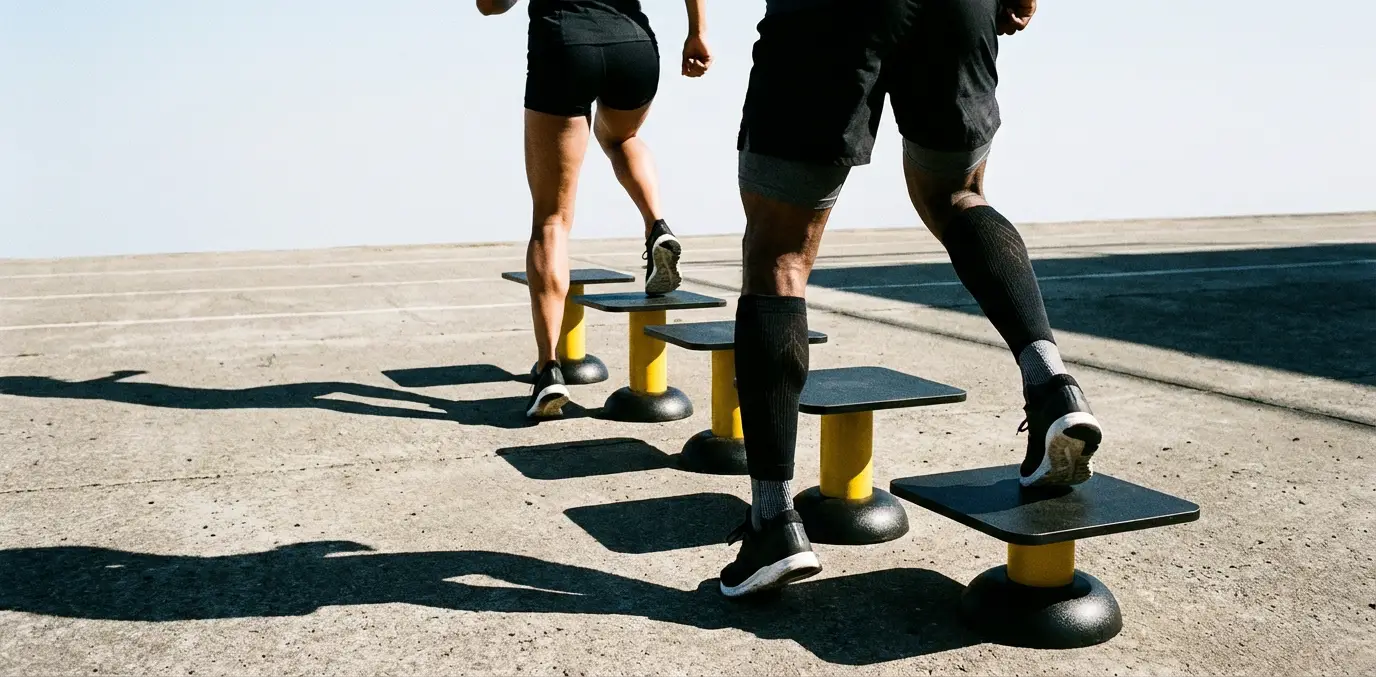
This guide explains how to structure a HIIT session on an outdoor fitness area: the physiological principles that make it work, the protocols suited to your level, the exercises to combine depending on the equipment available, and the mistakes that cancel out the benefits.
Key takeaways from this article :
- HIIT alternates intense efforts with short recoveries to improve endurance, fitness and body composition at the same time.
- An effective HIIT session on a fitness area follows a precise structure: warm-up, main block, active recovery and cool-down.
- The choice of protocol (30/30, 40/20, Tabata, EMOM and so on) must match the user’s level and goals.
- Alternating muscle groups (legs, upper body, core, cardio) keeps intensity high throughout the session.
- To avoid injury and keep progressing, stick to 2 or 3 HIIT sessions a week with enough recovery time in between.
What HIIT really is and why it works
HIIT is built on a structured alternation of intense effort phases and active or passive recovery phases. It is not simply “training hard” intermittently; it is a precise methodology whose effectiveness rests on two complementary physiological mechanisms.
The EPOC effect: burning after the effort
During a HIIT session, oxygen demand momentarily exceeds what the cardio-respiratory system can supply. This oxygen debt produces excess post-exercise oxygen consumption (EPOC), which can keep the metabolism elevated for 14 to 48 hours after the session. In practice: a 25-minute HIIT session generates significantly higher post-exercise calorie expenditure than a continuous cardio session of the same length.
Accelerated cardiovascular adaptation
High intensity intervals push the cardiovascular system to heart rates close to VO2max, driving adaptations — increased stroke volume, greater muscular capillary density, an improved lactate threshold — normally associated with far higher training volumes in continuous endurance work.
HIIT is not for everyone
HIIT is contraindicated in cases of unstable cardiovascular disease, severe hypertension, acute joint injury or pregnancy. Medical advice is recommended before starting for sedentary people over 45 or anyone with cardiovascular risk factors.
For beginners, a base of 4 to 6 weeks of continuous moderate training is advisable before introducing HIIT protocols.
HIIT protocols: choosing the right work-to-rest ratio
HIIT is not a single protocol. Several work/rest structures coexist, each producing different priority physiological adaptations. The protocol you choose should match your level, your goal and the equipment available on the area.
| Protocol | Work/rest ratio | Total duration | Level required | Main objective |
| Tabata | 20 sec work / 10 sec rest × 8 rounds | 4 min per exercise | Intermediate to advanced | VO2max, anaerobic power |
| 30/30 | 30 sec work / 30 sec rest | 15 to 20 min | Beginner to intermediate | Cardiovascular endurance |
| 40/20 | 40 sec work / 20 sec rest | 20 to 25 min | Intermediate | Strength endurance, body composition |
| EMOM (Every Minute On the Minute) | X reps to complete each minute, rest for the remainder | 20 to 30 min | Intermediate to advanced | Pacing, density |
| Pyramid | 20/10, 30/15, 40/20, 30/15, 20/10 | 25 to 30 min | Advanced | Progression, maximum endurance |
Rule of thumb: the higher the rest-to-work ratio (the longer the recovery relative to the effort), the more you train alactic anaerobic qualities (maximum power, speed). The lower it is, the more you load endurance and the aerobic system.
Mapping the equipment on the area: the basis of any outdoor HIIT session
Before building your session, take a quick inventory of the machines available. Outdoor fitness machines fall into four functional families, each bringing a specific dimension to a HIIT session.
| Equipment family | Typical machines | What it brings to HIIT |
| Cardiovascular | Elliptical bike, rower, stepper, cross-country ski | Pure cardio work phases, warm-up, active recovery |
| Lower body | Leg press, leg extension, leg curl, press | Strength and muscular endurance in the lower chain |
| Upper body | Pull-up bars, dips, horizontal push, row | Strength and muscular endurance in the upper chain |
| Core and functional | Balance beams, boards, rings, frames | Stabilisation, coordination, trunk work |
An area with at least one machine per family lets you build complete, balanced HIIT sessions. If some families are missing, bodyweight exercises (burpees, jump squats, mountain climbers) fill the gaps.
How to build a HIIT session on a fitness area
An effective outdoor HIIT session is not just a string of exercises done as fast as possible. It follows a precise architecture that determines the quality of the physiological adaptations you get.

The fixed structure of a session
1. Progressive warm-up (8 to 10 min): joint mobility plus light cardio on an elliptical or rower at low resistance, gradually raising the intensity
2. Main HIIT block (15 to 25 min): a series of rounds following the chosen protocol, alternating muscle groups to limit localised fatigue
3. Active recovery between blocks (1 to 2 min): light walking or very slow pedalling; never sit down or come to an abrupt stop
4. Cool-down (5 to 8 min): very light decreasing cardio plus static stretches for the muscle groups worked
The muscle rotation principle
The secret to a quality HIIT session on a fitness area is rotating muscle groups between successive exercises. By alternating lower body, upper body and core, each group recovers while another works, which keeps intensity high across the whole session without exhausting any single group prematurely.
Example of a four-exercise rotation: leg press (lower body) → pull-up (upper body) → dynamic core work (trunk) → rower (whole-body cardio). This rotation keeps you at 85 to 90% of maximum heart rate without hitting localised muscular failure.
Target heart rate
During the HIIT work phase, target heart rate sits between 80 and 95% of theoretical maximum heart rate (220 − age). During recovery it should come back down to between 60 and 70% before the next effort. If your heart rate does not drop enough during recovery, that is a sign the rest period is too short or the work intensity is too high for your current level.
3 complete HIIT sessions on a fitness area, by level
Beginner session: 30/30 protocol, 20 min
Goal: introduction to interval work, improving baseline cardiovascular capacity. Recommended frequency: twice a week, with at least 48 hours of recovery.
| Order | Exercise / machine | Work time | Rest time | Key points |
| Warm-up | Elliptical bike or brisk walking | 8 min progressive | — | Raise the cadence gradually |
| Round 1 | Outdoor rower (moderate pace) | 30 sec | 30 sec | Straight back, coordinated arm and leg pull |
| Round 2 | Bodyweight squats on the ground | 30 sec | 30 sec | Knees in line with the feet, controlled descent |
| Round 3 | Dips on parallel bars (reduced range) | 30 sec | 30 sec | Elbows back, no locking out at the top |
| Round 4 | Mountain climbers on the ground | 30 sec | 30 sec | Core braced, hips stable |
| Repeat | 3 to 4 full rounds | — | 2 min between rounds | Active recovery: slow walking |
| Cool-down | Quadriceps, hamstring and shoulder stretches | 6 min | — | Static, 40 sec per position |
Intermediate session: 40/20 protocol, 25 min
Goal: developing strength endurance and body composition. Recommended frequency: 2 to 3 times a week, never on consecutive days.
| Order | Exercise / machine | Work time | Rest time | Key points |
| Warm-up | Elliptical + dynamic mobility | 10 min | — | Reach 70% of max heart rate by the end |
| Round 1 | Leg press (maximum controllable load) | 40 sec | 20 sec | Full range, 2 sec eccentric phase |
| Round 2 | Pull-ups on the bar (or assisted row) | 40 sec | 20 sec | Start with arms straight, chin above the bar |
| Round 3 | Stepper or fast high knees | 40 sec | 20 sec | High cadence, arms active |
| Round 4 | Dips on parallel bars (full range) | 40 sec | 20 sec | Full descent, full extension |
| Round 5 | Alternating side planks (ground) | 40 sec | 20 sec | 15 sec right side, switch, 15 sec left |
| Repeat | 4 full rounds | — | 90 sec between rounds | Active recovery required, never a full stop |
| Cool-down | Decreasing cardio + stretches | 8 min | — | 3 min decreasing on the elliptical, then 5 min stretching |
Advanced session: Tabata + EMOM protocol, 30 min
Goal: developing maximum power, VO2max and training density. Recommended frequency: twice a week maximum, with 48 to 72 hours of recovery essential.
| Order | Exercise / machine | Protocol | Rest | Key points |
| Warm-up | Rower + full mobility | 10 min | — | Finish at 75–80% of max heart rate |
| Tabata block 1 | Outdoor rower, sprint | 20 sec max / 10 sec × 8 | 1 min after the block | Maximum effort on every interval |
| Tabata block 2 | Burpees with jump (on the ground) | 20 sec max / 10 sec × 8 | 1 min after the block | Frequency > range when fatigued |
| EMOM block | Pull-ups + dips (alternating each minute) | EMOM 10 min: 5 pull-ups on odd minutes, 8 dips on even minutes | The rest of the minute | If you cannot hold it, cut the reps, not the cadence |
| Finisher | Leg press 15 reps + jump squats 10 reps × 3 | No rest between leg press and squat | 90 sec between sets | Controlled descent on the leg press, soft landing on the squat |
| Cool-down | Walking + full stretching | 8 min | — | Priority: quadriceps, hamstrings, lats, pecs |
Adapting the HIIT session to the equipment actually available
Not every fitness park is equipped the same way. Here is how to substitute exercises depending on what you find on site.
| Ideal exercise | If missing: bodyweight substitute | Equivalent intensity? |
| Outdoor rower | Sprints on the spot with active arms, or jumping jacks | Similar at maximum cadence |
| Leg press | Jump squats or alternating jump lunges | Yes, harder on the joints |
| Pull-ups on the bar | Decline press-ups (feet raised) or explosive press-ups | Lower for the back, similar for the chest |
| Dips on parallel bars | Close-grip press-ups (elbows tucked in) | Similar for the triceps |
| Leg extension | Isometric holds against a wall (wall sit) | Lower, but VMO targeting is possible |
| Elliptical | Skipping rope or high knees at maximum cadence | Similar if the target heart rate is held |

The mistakes that cancel out the benefits of outdoor HIIT
Mistake 1: skimping on the warm-up
The warm-up is not optional in HIIT. Going straight into high intensity work on cold muscles triples the risk of muscle injury (partial tear, strain) and lowers the quality of the first reps, compromising the whole session. An 8 to 10 minute warm-up with a gradual rise in intensity is non-negotiable.
Mistake 2: confusing speed with intensity
Intensity in HIIT is measured by heart rate, not by how fast you move. Rushing technique to go faster does not produce a more intense effort; it produces an injurious one. On outdoor fitness machines, a movement performed quickly but incorrectly generates abnormal joint forces. Speed must always stay within the limits of technical control.
Mistake 3: doing HIIT too often
HIIT is an intense training stimulus that requires suitable recovery. Two to three sessions a week at most, with 48 hours of recovery between each, is the optimal frequency for most people. Beyond that, signs of overtraining appear quickly: stagnating performance, chronic fatigue, disturbed sleep, irritability. Daily HIIT is a common mistake among enthusiastic beginners.
Mistake 4: stopping completely during rest phases
Total passive recovery (sitting or lying down) between efforts slows the clearance of blood lactate and compromises the quality of the following efforts. Active recovery — slow walking, pedalling with no resistance — maintains muscular blood flow and speeds up the return to a state where you can produce another quality effort.
Mistake 5: ignoring the body’s warning signs
Acute joint pain, chest tightness, dizziness, persistent nausea: these signals mean stopping the session immediately. HIIT pushes the limits of cardiovascular and muscular effort, but joint pain is not part of the normal adaptation process. Telling it apart from physiological muscle burn (normal) is a skill every HIIT practitioner needs to develop.
Muscle burn vs joint pain
Muscle burn (normal): a sensation of heat and cramping in the belly of the muscle, appearing at the end of an intense set. It fades quickly with rest.
Joint pain (warning sign): pain localised on a joint (knee, shoulder, elbow), sometimes with a click or swelling. Stop, and see a doctor if it persists.
Frequently asked questions about outdoor HIIT
How long is an effective HIIT session on a fitness area?
Between 20 and 35 minutes of actual work (excluding warm-up and cool-down) is enough to produce the documented cardiovascular and muscular adaptations. A longer session does not mean a more effective one: beyond 40 minutes of real HIIT, interval quality degrades and injury risk rises. With warm-up and cool-down, allow 40 to 55 minutes in total.
Is HIIT suitable for people who are overweight?
HIIT can suit people who are overweight, provided the intensity and exercise selection are adapted. High joint impact exercises (jumps, high-speed running) should initially be replaced with low impact alternatives (rower, elliptical, supported exercises). A 4 to 8 week progression with moderate intensity 30/30 protocols builds the cardiovascular base needed before stepping things up.
Can you do HIIT alone or do you need a partner?
HIIT on a fitness area works perfectly well solo, with a watch or a timer app. That said, a training partner can improve motivation and consistency: behavioural studies show that training socially increases long-term adherence by 30 to 50% compared with training alone.
Should you eat before a morning outdoor HIIT session?
For sessions under 30 minutes, training fasted in the morning is manageable for most people and can increase fat mobilisation. For sessions of 35 to 55 minutes (including warm-up), a light snack rich in fast carbohydrates (banana, cereal bar) within the 30 minutes before the session prevents performance dropping at the end. Avoid full meals in the 2 hours before a HIIT session.
How do you progress when your usual HIIT becomes too easy?
Four progression levers are available without changing equipment: shorten the rest periods (move from 30/30 to 40/20), increase the number of rounds, add an extra exercise to the rotation, or introduce a more demanding protocol (move from 30/30 to Tabata). Progression should stay gradual: change only one variable per session and hold it for two weeks before changing another.