
Do you want to start exercising without paying a gym membership, and are you attracted by the idea of training outdoors in the fresh air? Callisthenics is undoubtedly the discipline for you. Accessible, economical and formidably effective, it relies solely on bodyweight and a handful of apparatus found in most city parks. But you need to know where to start, so you don’t get discouraged after just two sessions.

In this guide, we review everything a beginner needs to know to start callisthenics outdoors: the definition of the discipline, its benefits, the (very limited) equipment required, the fundamental exercises to master, a turnkey program for the first few weeks, and the mistakes to avoid for lasting progress.
Key takeaways:
- Outdoor callisthenics requires virtually no equipment: a park with a fixed pull-up bar and parallel bars is all you need to get started.
- Five fundamental movements form the basis: push-ups, pull-ups (assisted at the start), dips, squats and sheathing.
- Progression is based on variations (inclined → classic → declined push-ups) rather than on adding load.
- Three sessions of 30 to 45 minutes a week are all it takes to achieve visible results in 6 to 8 weeks.
- Warm-up and technique take precedence over volume: better 5 clean reps than 15 sloppy ones.
What exactly is callisthenia?
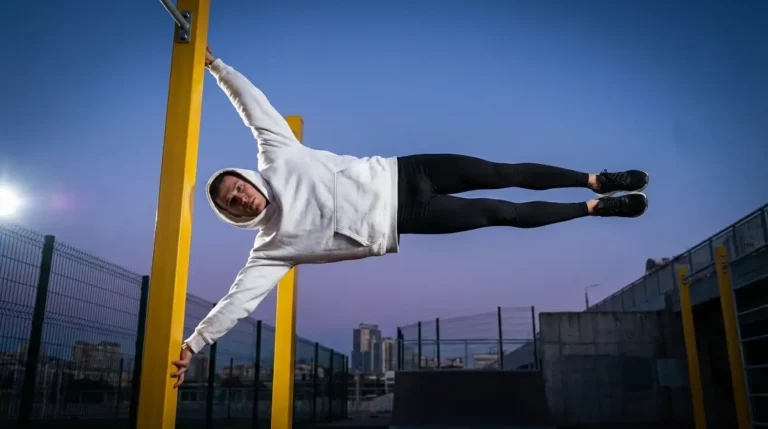
Callisthenics, sometimes called street workout, is a training method that uses body weight as the only resistance. The word comes from the Greek kallos (beauty) and sthenos (strength): literally, the art of developing a strong, harmonious body. In concrete terms, you work with movements such as push-ups, pull-ups, dips, squats or sheathing, without dumbbells or machines.
Unlike traditional bodybuilding, which isolates muscles, callisthenics favours polyarticular movements, which call on several muscle groups at the same time. The result: you gain in strength, mobility, coordination and gainage, all while improving your power-to-weight ratio. It’s also a discipline that lends itself particularly well to outdoor training, where street workout spaces are springing up in most French cities.
Why train outdoors rather than indoors?
Practicing callisthenics outdoors offers several concrete advantages for beginners. First, the cost: it’s totally free. No membership, no equipment to buy, just a good pair of shoes and motivation. Secondly, availability: most major cities now have public street workout areas, accessible at all hours.
The open air also offers a stimulating environment: exposure to daylight (and therefore to vitamin D), a variety of landscapes, a feeling of freedom, and often a community of exercisers ready to share their tips. Finally, the outdoors imposes a certain humility: without mirrors or guided machines, you have to learn to move properly, which develops real body awareness from the very first sessions.
The equipment you need to get started outdoors
Good news: callisthenics is probably one of the least expensive disciplines available. To get you started, here’s a minimalist checklist.
– A comfortable outfit: shorts or leggings, a technical T-shirt, and above all a pair of flat shoes (running shoes or multi-purpose sports shoes).
– A water bottle: essential, especially in summer, to keep hydrated between sets.
– A towel: useful for sitting on a bench, toweling off or resting on the floor during muscle-building exercises.
– Resistance elastic (optional): very useful for assisting your first pull-ups or dips. Expect to pay €10-20 for a complete kit.
– Gloves or chalk (optional): to limit blisters on the bars at the start.
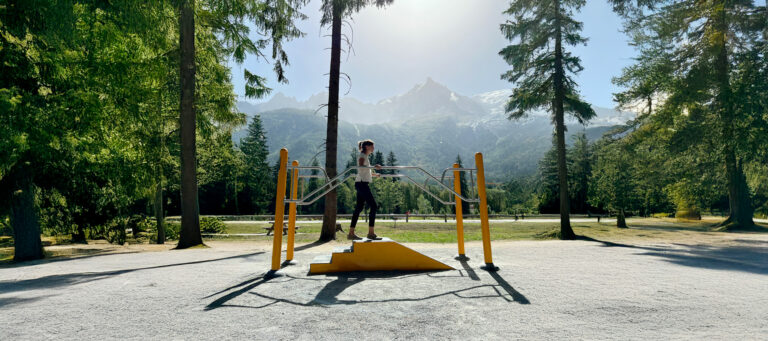
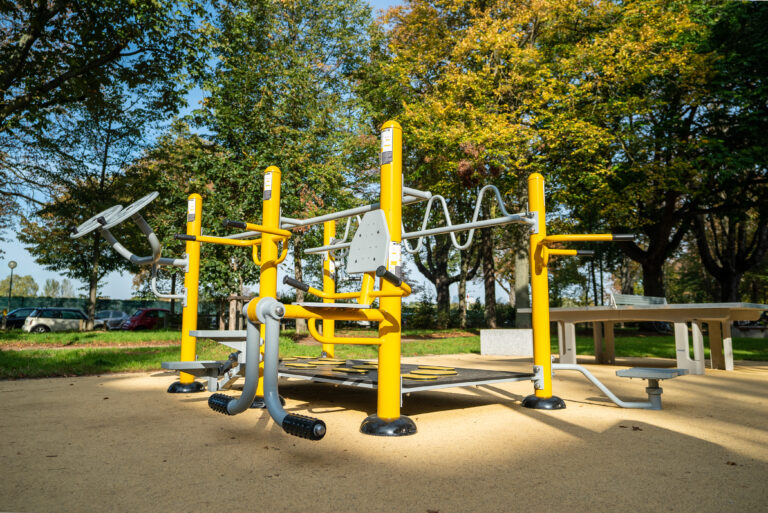
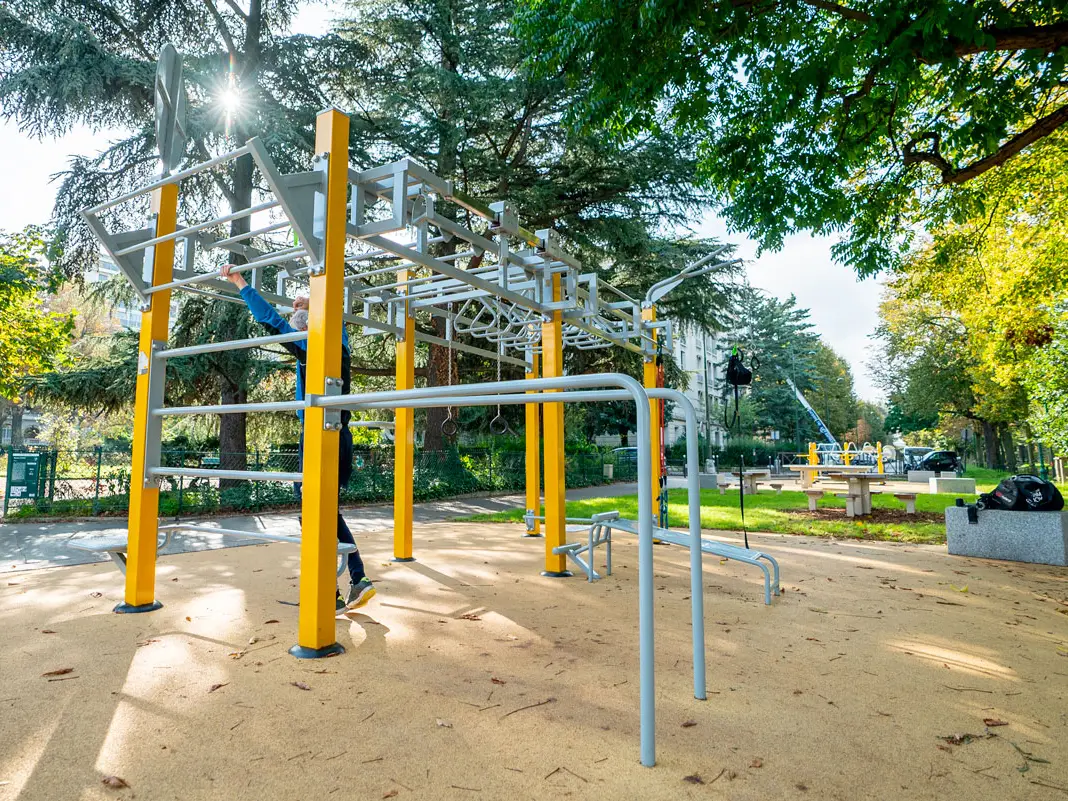
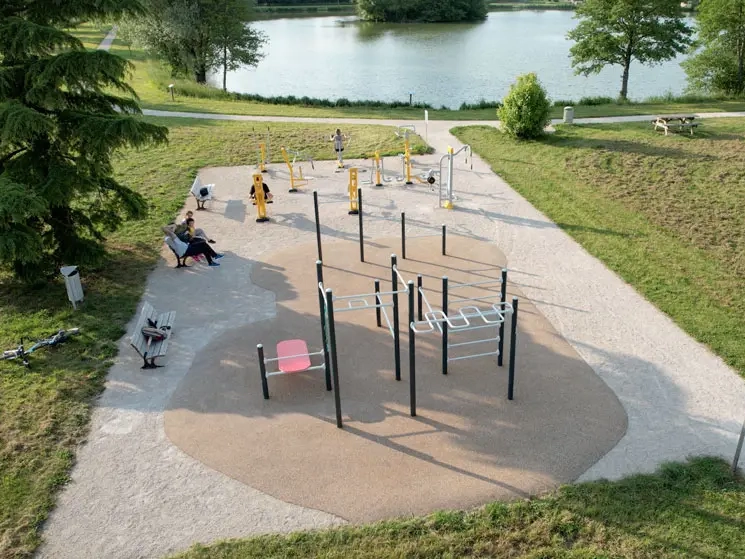
As for location, find the street workout area nearest you. A simple search on an online map using the keywords “street workout” or “fitness park” will give you several options. Failing that, a park with a simple pull-up bar or even a sturdy bench may suffice for the first few weeks.
The 7 fundamental exercises to master when starting out
Before aiming for spectacular figures like the muscle-up or the plank, you need to build a solid foundation. Here are the seven basic moves to integrate into your routine.
1. Push-ups
The king of movements for developing chest, shoulders and triceps. If the classic push-up is too difficult, start with the inclined version, hands resting on a bench or low bar. Then progress to the floor, followed by the declined pump (feet raised). Aim for 3 sets of 8 to 12 repetitions.
2. Pull-ups
The flagship exercise for callisthenics. It involves the back, biceps and forearms. If you can’t do a full pull-up (which is normal at first), start with Australian pull-ups (body horizontal under a low bar) or assisted pull-ups with a rubber band. Aim for 3 sets of 5 to 8 repetitions, even partial ones.

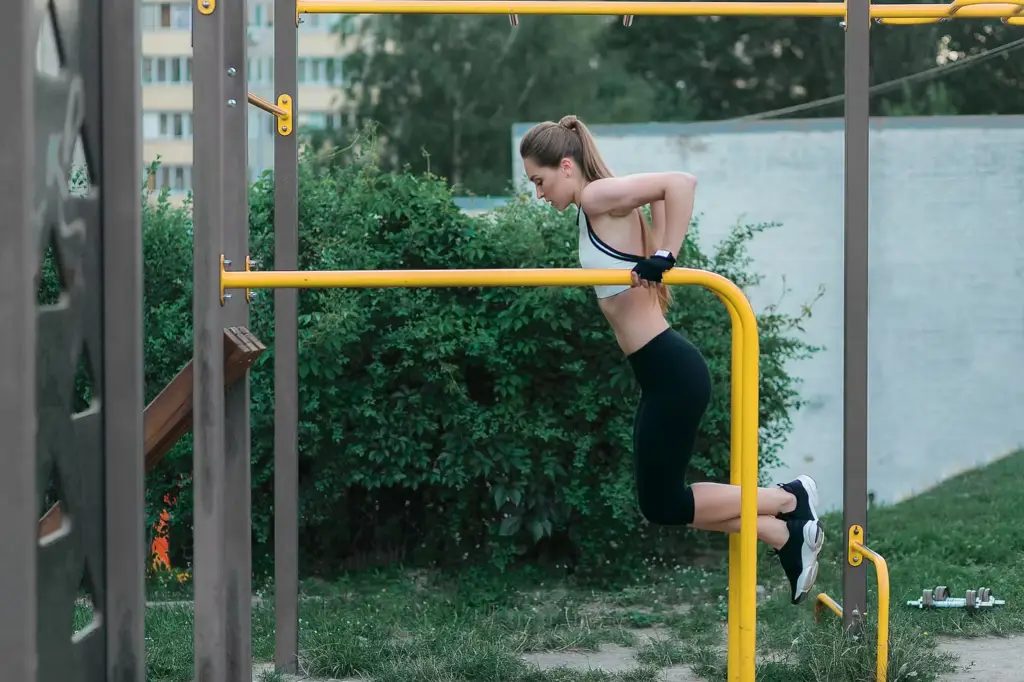
3. Dips
Performed on parallel bars, dips develop the lower chest, triceps and shoulders. Beginners can start with dips on the bench, with hands on the edge and feet on the floor. Once you’re comfortable, move on to the parallel bars, using an elastic band if necessary. Aim for 3 sets of 6 to 10 repetitions.
4. Bodyweight squats
Essential for legs and buttocks. Stand with your feet shoulder-width apart, and lower yourself as if you were sitting down, keeping your back straight and your knees in line with your feet. Aim for 3 sets of 15 to 20 repetitions. Later, you can progress to Bulgarian squats or pistol squats.
5. Lunges
An excellent complement to squats, lunges work on balance and each leg individually. Moving forwards or backwards, lower until the back knee touches the floor. Aim for 3 sets of 10 repetitions per leg.
6. The plank/sheathing
To develop strong abdominal muscles, essential for all advanced figures. Hold the position on your forearms and tiptoes, with your body perfectly aligned and without digging into your lower back. Start with 3 sets of 20 to 30 seconds, then gradually increase.
7. Mountain climbers
In a pump position, alternately bring your knees towards your chest, at a steady pace. This exercise combines muscle-strengthening and cardiovascular work, making it the perfect end to a workout. Aim for 3 sets of 30 seconds each.
4-week starter program
Here’s a simple program to follow three times a week (e.g. Monday, Wednesday, Friday), alternating with days of rest or active walking. Allow 30 to 45 minutes per session, including warm-up.
Warm-up (5 to 10 minutes)
Start each session with 5 minutes of brisk walking or light jogging around the park, followed by a few joint rotations (shoulders, wrists, hips, ankles) and 2-3 dynamic exercises such as jumping jacks or trunk rotations.
Beginner session
1. Push-ups (on bench if necessary): 3 sets of 8 to 10 repetitions
2. Australian or assisted pull-ups: 3 sets of 6 to 8 repetitions
3. Bodyweight squats: 3 sets of 15 repetitions
4. Bench dips: 3 sets of 8 repetitions
5. Alternating lunges: 3 sets of 10 repetitions per leg
6. Plank: 3 sets of 20 to 30 seconds each
7. Mountain climbers: 3 sets of 30 seconds
Between each set, allow yourself 60 to 90 seconds of recovery. Drink regularly, and don’t force yourself if joint pain appears: progress will come with regularity, not with suffering.
How to progress from week to week
The principle of progression in callisthenics is not based on adding load but on movement difficulty and volume. First increase the number of repetitions (e.g. 8 → 10 → 12), then the number of sets, and finally move on to a more demanding variant (bench pump → floor pump → declined pump). Allow around 6 to 8 weeks to see visible results if you stay regular.
Practical tips for staying motivated and making progress
– Film yourself: there’s nothing like video to help you spot posture faults and see your progress as the weeks go by.
– Keep a training log: note down each session, the repetitions you do and how you feel. It’s an excellent motivator.
– Join a community: join groups of practitioners on social networks or in your local callisthenics park. Emulation is a powerful driving force.
– Take care of your recovery: sleep 7 to 8 hours a night and allow yourself at least one day of complete rest between two intense sessions.
– Eat in line with your goals: a balanced diet rich in proteins and vegetables will accelerate your results.
Mistakes to avoid when starting callisthenics
Some classic pitfalls can slow your progress, or even lead to injury. Here are the main things to avoid.
– Skipping the warm-up: this is the number-one cause of joint injury, especially to the shoulders.
– Wanting to go too fast: trying a muscle-up before you’ve got 10 strict pull-ups is exposing yourself to tendonitis.
– Neglecting the legs: many beginners focus on the upper body. Yet balanced training is the key to a harmonious physique.
– Prioritize quantity over quality: better 5 perfect push-ups than 15 botched ones with a hollowed back.
– Lack of regularity: three sessions a week for three months will give much better results than one big weekly session.
Outdoor callisthenics is without doubt the simplest, most economical and most versatile way to get back into the sport. By concentrating on the seven basic movements, following a structured program over a few weeks and avoiding classic mistakes, you’ll lay a solid foundation for lasting progress. The hardest part is not the training itself, but the first trip to the park. Once you’ve taken that step, you’ll soon discover that this discipline offers a unique satisfaction: that of becoming master of your own body, in the open air, without spending a thing.
So locate your nearest callisthenics park, put on your sneakers and get started this week. Your future will thank you.