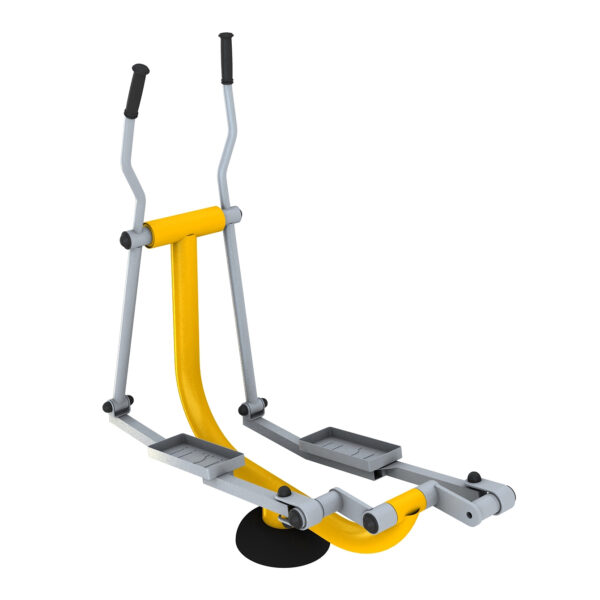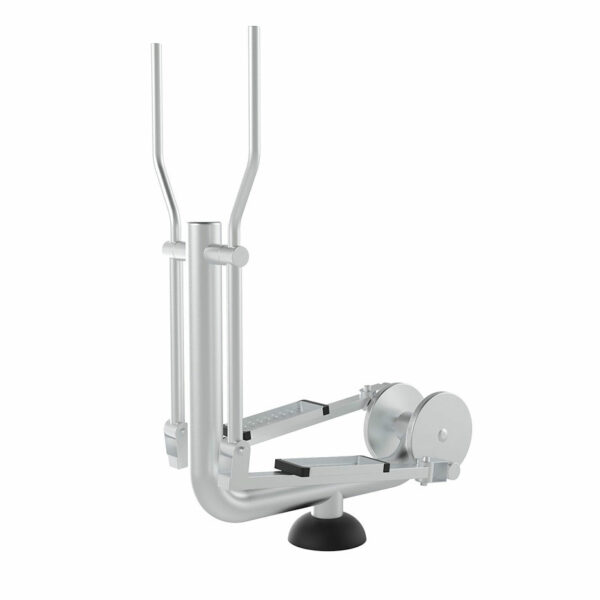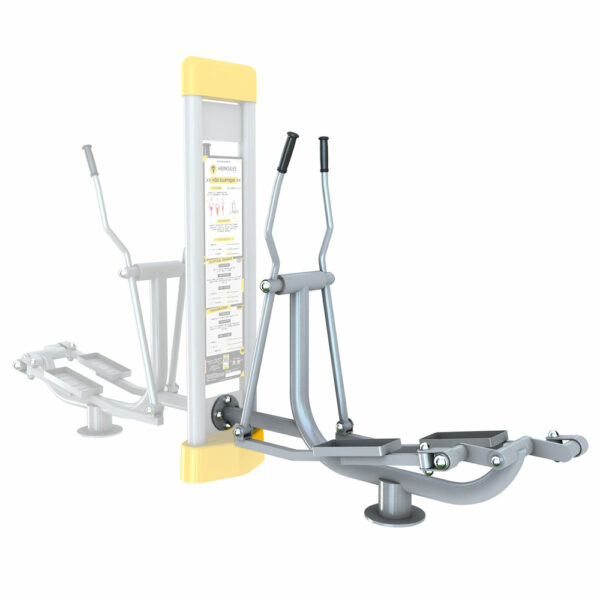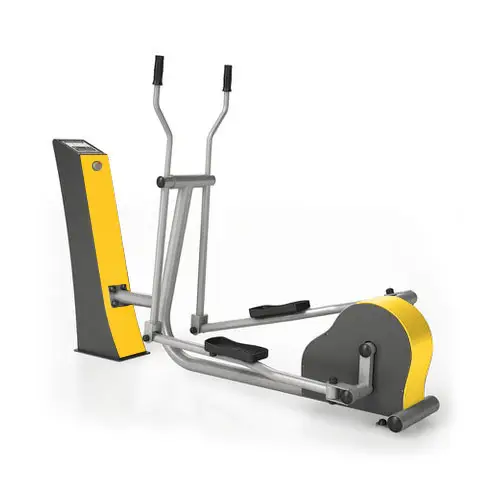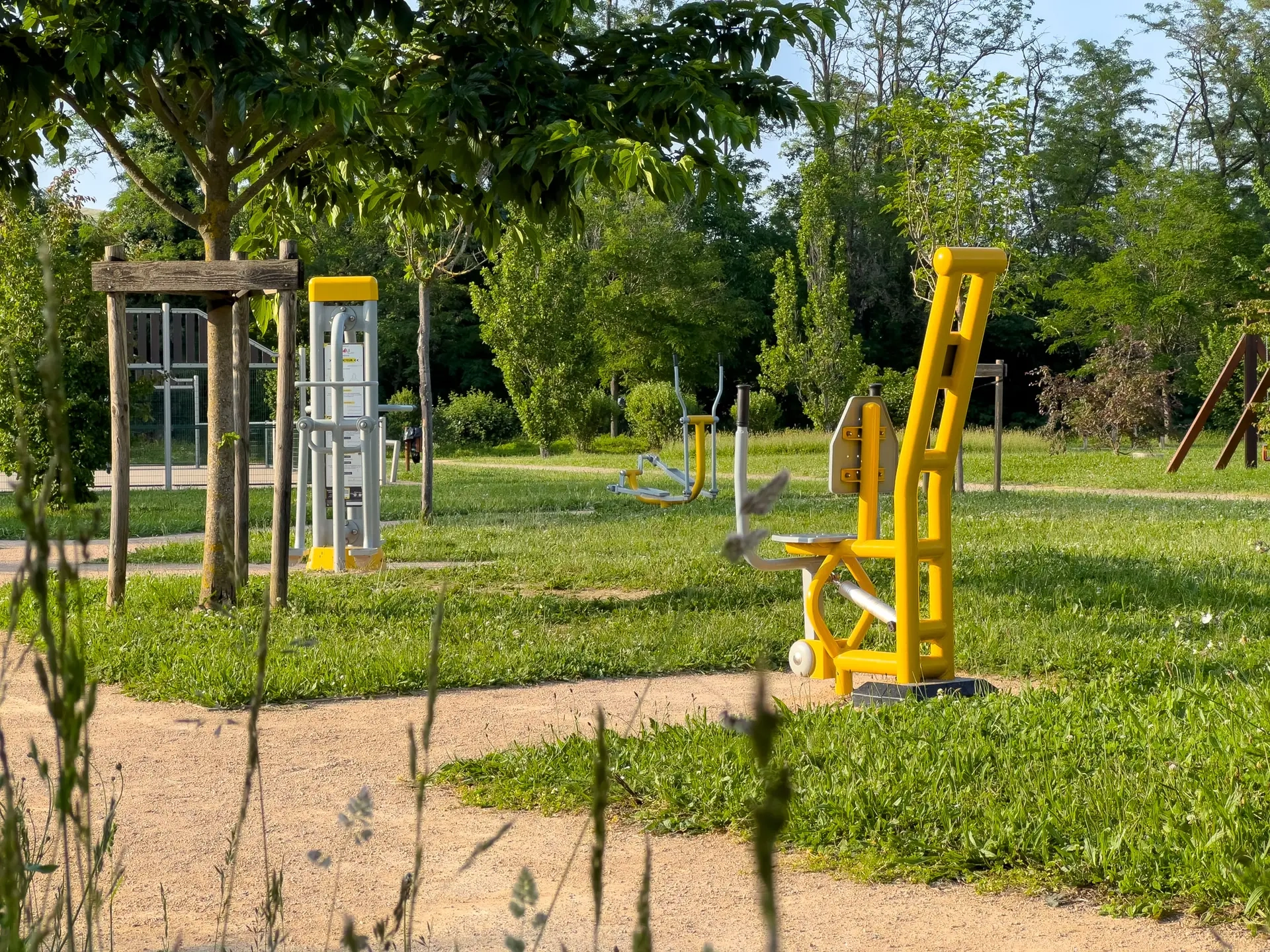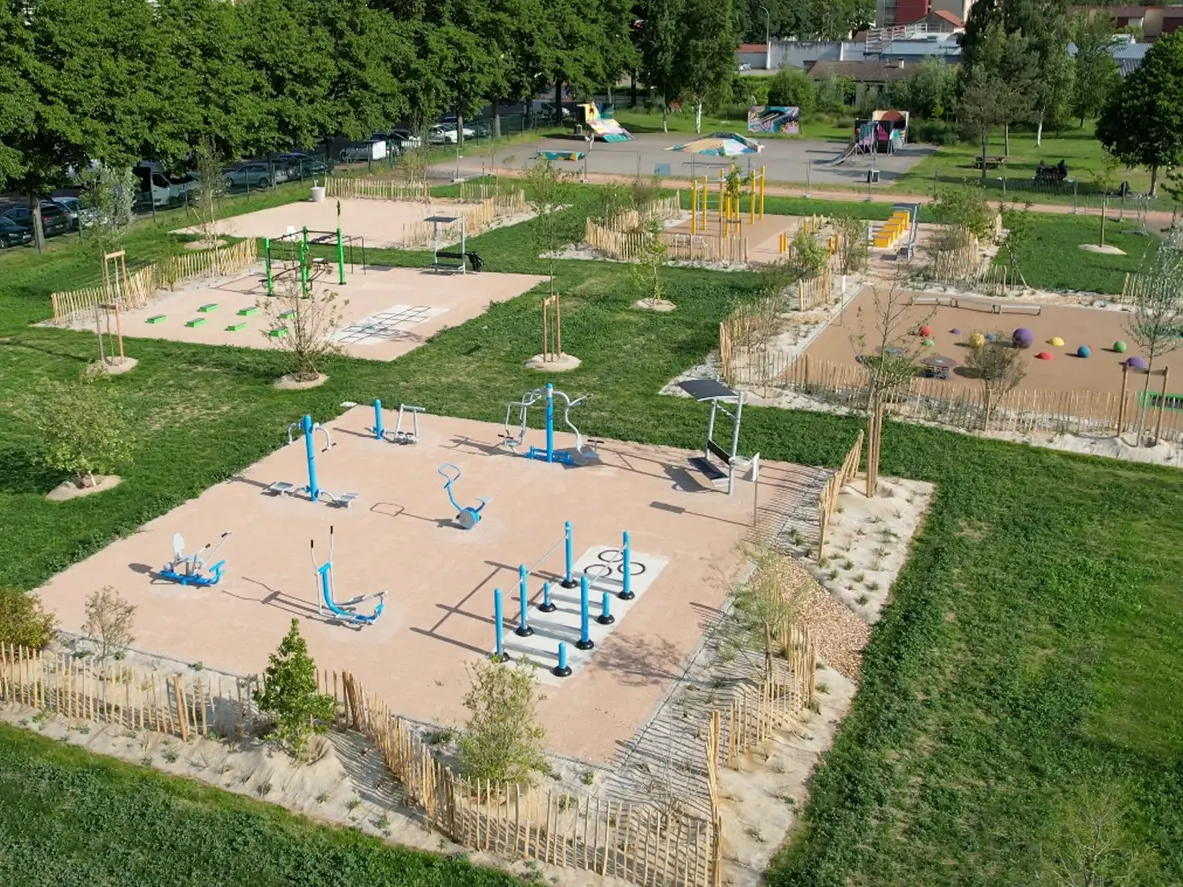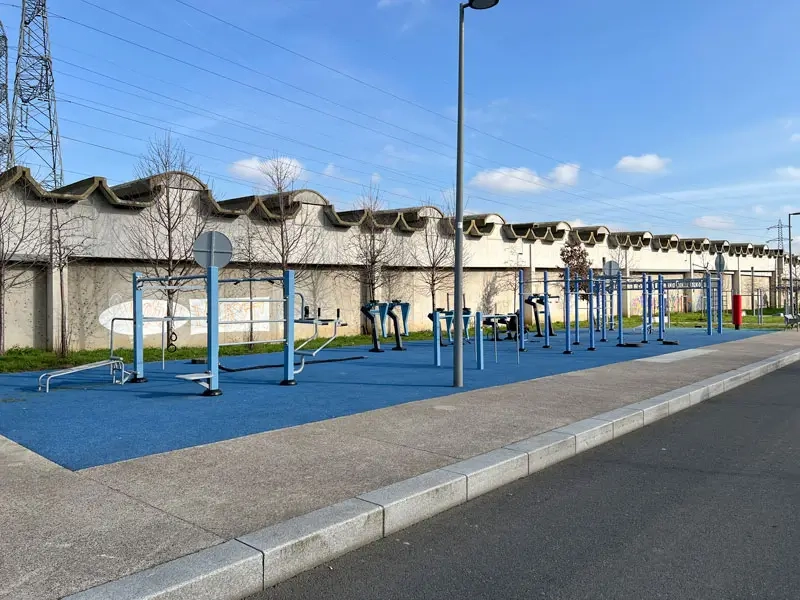

The outdoor elliptical is one of the most versatile and accessible pieces of outdoor fitness equipment . Its elliptical motion, combining the actions of cycling, cross-country skiing and walking, stimulates the whole body without any joint impact. Whether you’re a beginner looking to get back into gentle exercise, or an experienced sportsman looking to vary your outdoor workouts, the outdoor elliptical can be adapted to your level. This guide will show you the muscles involved, the correct technique to use and practical training programs to help you progress at your own pace.
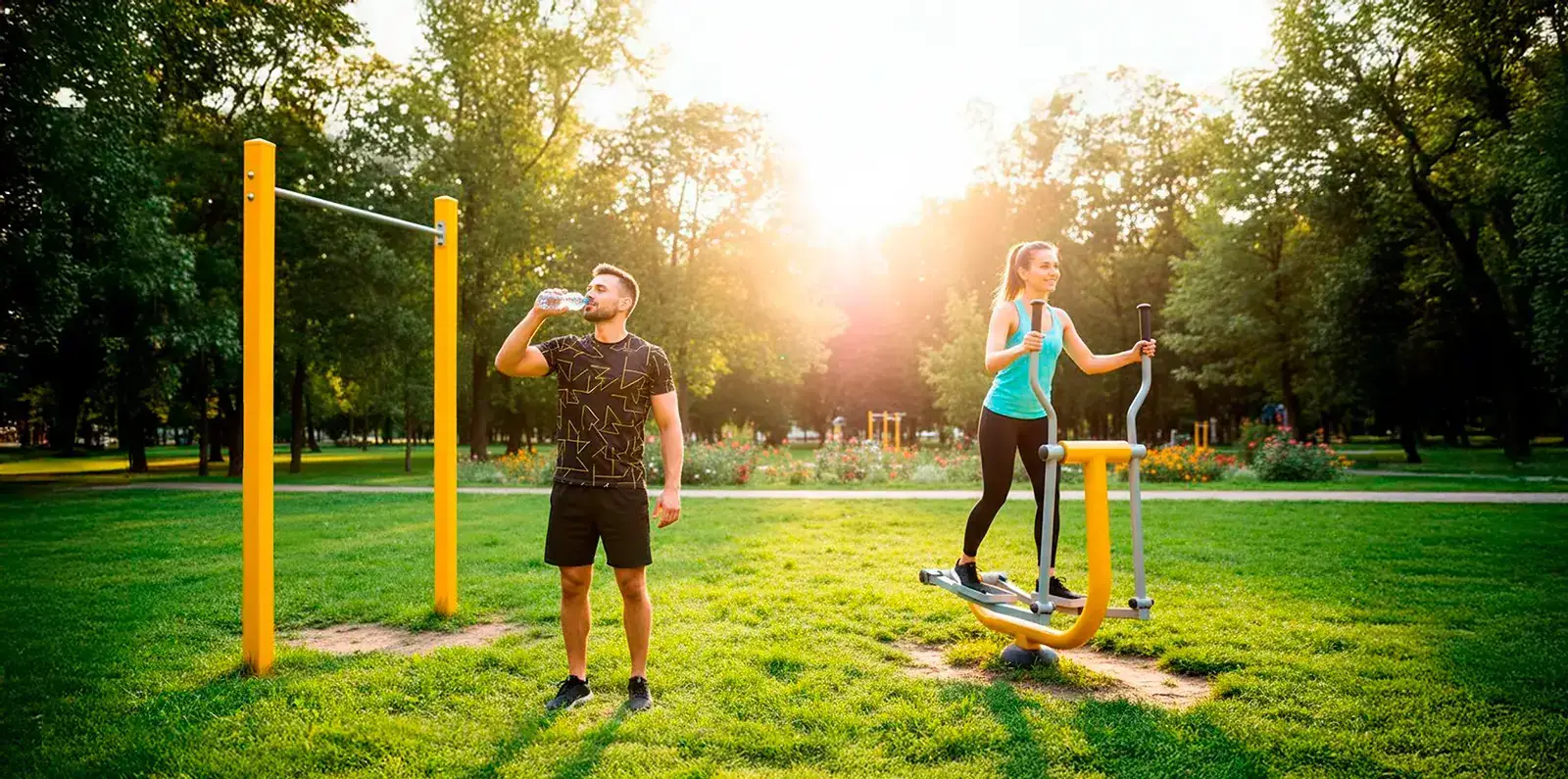
What is an outdoor elliptical trainer?
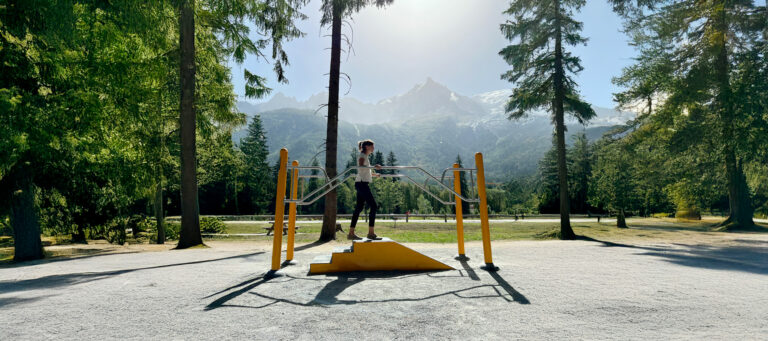
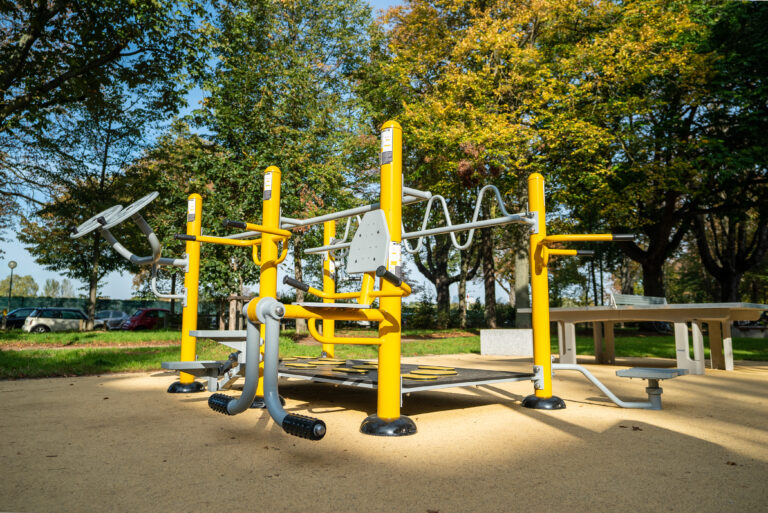
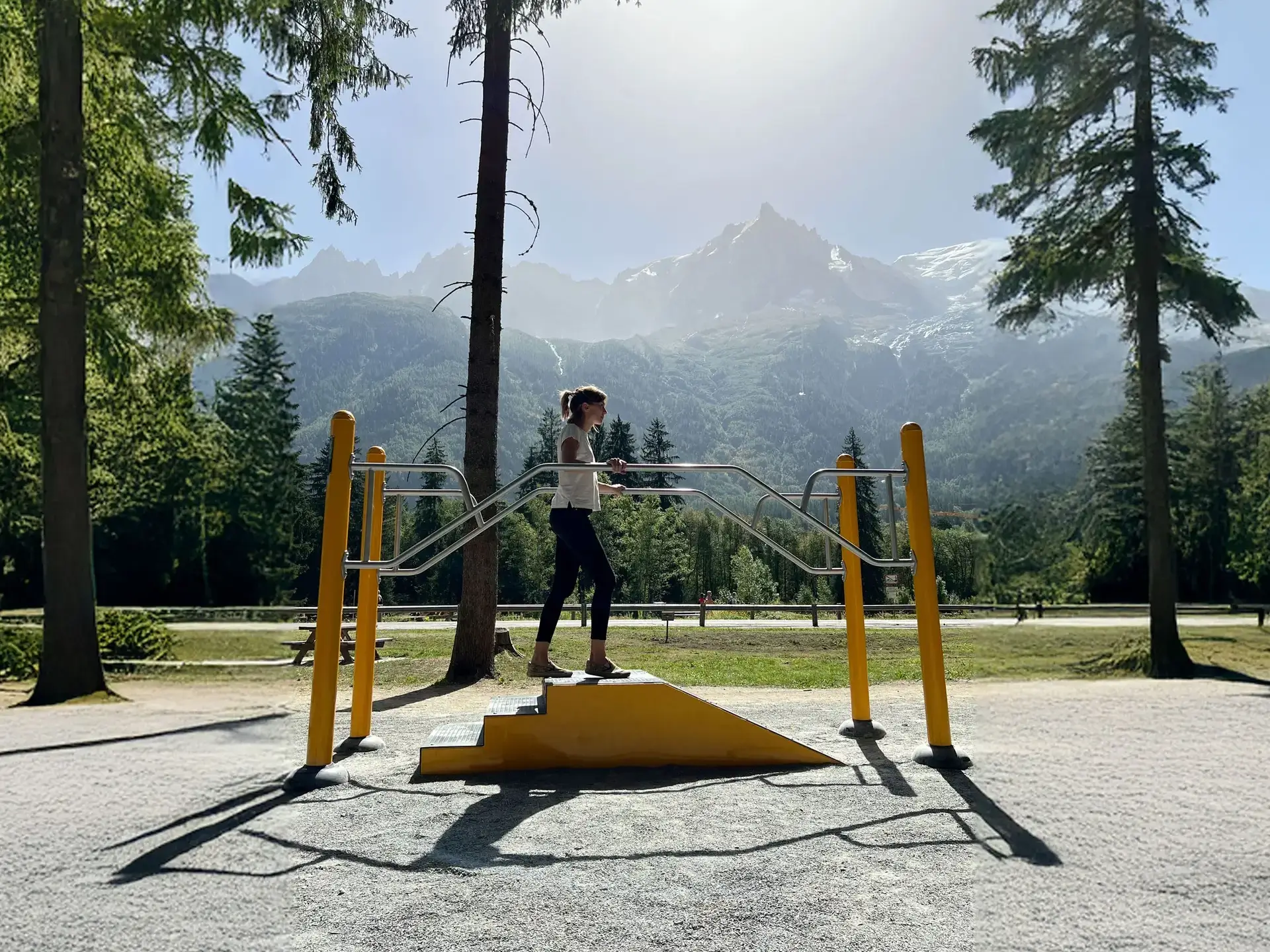
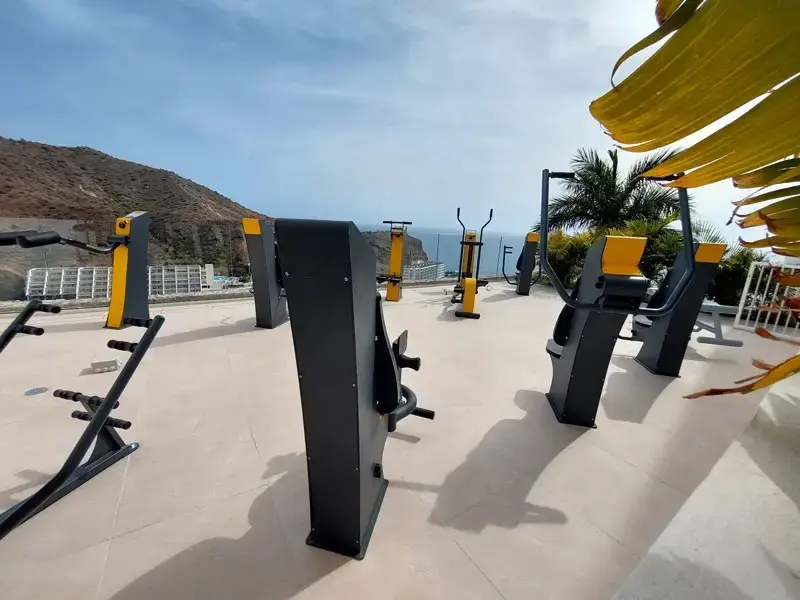
The outdoor elliptical is the outdoor, permanent version of the indoor elliptical. Designed for outdoor installation in parks, residences, rest areas or communal sports areas, it is made from weather-resistant materials, mainly galvanized steel, and requires no electrical power.
Its mechanism is based on pedals that describe an oval (elliptical) trajectory rather than the circular path of a conventional bicycle. This trajectory reproduces the natural movement of walking or running by eliminating the impact phase on the ground, thus protecting knee, hip and ankle joints. Outdoor models generally feature movable handles for simultaneous arm and trunk work, transforming exercise into a full-body workout.
What muscles does the outdoor elliptical work?
The outdoor elliptical is a complete cardio-training machine that simultaneously mobilizes the lower limbs, upper limbs and trunk. The distribution of muscular work varies according to the posture adopted and the intensity of traction exerted on the handles.
| Muscle group | Main muscles involved |
| Lower limbs: front | Quadriceps (knee extensors), tibialis anterior |
| Lower limbs: rear | Hamstrings, calves (gastrocnemius, solea) |
| Buttocks | Gluteus maximus, gluteus medius (pelvic stabilization) |
| Upper limbs | Biceps and triceps brachii, deltoids |
| Back | Latissimus dorsi, rhomboides (when pulling handles) |
| Abdominals and sheathing | Transverse, rectus abdominis, obliques (trunk stabilization) |
Adapting the distribution of muscular work
The great strength of the outdoor elliptical lies in its ability to direct effort according to the user’s objectives. Pushing mainly on the pedals targets the lower limbs (quadriceps, glutes). By accentuating traction and thrust on the movable handles, the arms, shoulders and back are more strongly solicited. By adopting a slightly forward-leaning posture and actively engaging the abdominals, you significantly strengthen your abdominal muscles.
Application techniques: the basics
Correct posture
Good posture is the basis of an effective, injury-free workout. On an outdoor elliptical, adopt the following points:
– The back is straight, tilted slightly forward, in the natural extension of the spine.
– The shoulders are relaxed, away from the ears, and do not rock back and forth.
– The knees remain in line with the feet throughout the movement, without moving inwards or outwards.
– The gaze is fixed straight ahead, not down.
– The abdominal muscles are slightly contracted to stabilize the trunk at all times.
– Feet remain entirely on the pedals, without lifting on the toes
| ⚠️ Common mistakeDon‘t let the arms do all the work at the expense of the legs, or vice versa. The effectiveness of the elliptical relies on the simultaneous coordination of all four limbs. A dissociated movement (passive arms or passive legs) reduces the benefits of the exercise and can create muscular imbalances. |
Rhythm and cadence
Unlike other cardio machines, outdoor elliptical trainers generally don’t have digital displays. Intensity is therefore set by feel, by modulating pedal speed and the force exerted on the handles. A speech test is a simple and reliable indicator of effort level:
– Light effort (warm-up or cool-down): you can speak in complete sentences without difficulty
– Moderate effort (ideal aerobic zone): you can talk, but prefer short sentences
– Intense effort (anaerobic zone): you’re out of breath and can only utter a few words
Beginner program: a gentle return to sport
The beginner’s program is designed for people with little or no exercise who wish to resume regular physical activity, as well as for active seniors, people recovering from illness or overweight people looking for gentle, low-impact exercise. The aim is to gradually build cardiovascular endurance and strengthen stabilizing muscles without overloading the joints.
| 📋 Before you startIfyou haven’t been physically active for more than 6 months, if you have a history of heart or joint problems, or if you’re pregnant, consult your doctor before starting this program. The elliptical trainer is a very safe piece of equipment, but it’s essential to make sure that your progress is adapted to your state of health. |
Weeks 1 and 2: Getting started and basic stamina
| Beginner program : Weeks 1 & 2 (3 sessions per week) | |||
| Exercise / Phase | Duration | Intensity | Objective |
| Warm-up | 5 min | Very light | Muscle and joint activation |
| Regular continuous effort | 10 min. | Light | Getting used to elliptical motion |
| Back to calm | 5 min | Very light | Recovery and light stretching |
| Total duration | 20 min | – | 3 times a week, 1 day’s rest in between |
Weeks 3 and 4: Progressive lengthening
| Beginner program : Weeks 3 & 4 (3 sessions per week) | |||
| Exercise / Phase | Duration | Intensity | Objective |
| Warm-up | 5 min | Very light | Cardiovascular activation |
| Regular continuous effort | 15 min | Light | Building basic endurance |
| Active pause | 2 min | Very light | Partial recovery |
| Continuous effort | 5 min | Light | Strengthening endurance |
| Back to calm | 5 min | Very light | Return to resting heart rate |
| Total duration | 32 min | – | 3 times a week |
Weeks 5 and 6: Introduction to variations
| Beginner program : Weeks 5 & 6 (3-4 sessions per week) | |||
| Exercise / Phase | Duration | Intensity | Objective |
| Warm-up | 5 min | Very light | Muscle activation |
| Regular effort | 10 min. | Light | Basic endurance |
| Short acceleration | 1 min | Moderate | Introduction to moderate effort |
| Active recovery | 2 min | Light | Recovery |
| Repeat x3 (acceleration + recovery) | 9 min | Variable | Progression through gentle intervals |
| Back to calm | 5 min | Very light | Recovery and stretching |
| Total duration | 32 min | – | 3 to 4 times a week |
| ✅ Beginner’s tipRegularityis more important than intensity. Three 20-minute sessions a week, consistently practiced over six weeks, produce far better cardiovascular and muscular results than a single long weekly session. Don’t skip cool-down sessions: they speed up recovery and prevent muscle soreness. |
Intermediate program: consolidating and progressing
This program is designed for people who already exercise regularly, but who want to progress on the outdoor elliptical or diversify their training. The aim is to improve fundamental endurance, introduce split sessions and work on muscle power in the lower limbs.
Type A session: Long endurance (45 minutes)
| Intermediate session A: Long endurance | |||
| Exercise / Phase | Duration | Intensity | Objective |
| Progressive warm-up | 10 min. | Light to moderate | Gradual rise in heart rate |
| Effort continues steady state | 30 min. | Moderate and regular | VO2max and endurance development |
| Back to calm | 5 min | Very light | Cardiac recovery |
| Total duration | 45 min. | – | 1 to 2 times a week |
Type B session: Short split (35 minutes)
| Intermediate session B: Short fraction | |||
| Exercise / Phase | Duration | Intensity | Objective |
| Warm-up | 8 min | Light | Muscular and joint preparation |
| Elliptical sprint | 30 sec. | Intense | Power and anaerobic system training |
| Active recovery | 1 min | Very light | Partial return to calm |
| Repeat x8 (sprint + recovery) | 12 min | Variable | HIIT session adapted to the elliptical trainer |
| Moderate continuous effort | 8 min | Moderate | Building stamina |
| Back to calm | 7 min | Light | Complete recovery |
| Total duration | 35 min | – | 1 time per week |
Session type C: Arm and back work (30 minutes)
This session specifically targets the upper limbs, accentuating traction and thrust on the mobile handles. It is particularly useful for rebalancing muscle groups and strengthening the shoulder girdle.
| Intermediate Session C: Focus on upper limbs | |||
| Exercise / Phase | Duration | Intensity | Objective |
| Warm-up | 5 min | Light | General activation |
| Elliptical trainer with active arms | 15 min | Moderate | Strong traction on handles, legs for support |
| Elliptical arms/legs balance | 5 min | Moderate | Symmetrical work on all 4 limbs |
| Intense effort priority arms | 3 min | Supported | Peak effort targeting the dorsalis major and biceps |
| Back to calm | 7 min | Very light | Recovery and stretching shoulders and back |
| Total duration | 35 min | – | 1 time per week in addition to sessions A and B |
Confirmed program: performance and intensity
This program is designed for regular athletes who have mastered the elliptical movement and want to optimize their physical performance. It incorporates high-intensity sessions, power endurance work and coordination exercises to exploit the machine’s full potential.
Type D session: Power endurance (55 minutes)
| Confirmed Session D: Power Endurance | |||
| Exercise / Phase | Duration | Intensity | Objective |
| Dynamic warm-up | 10 min. | Light to moderate | Complete neuromuscular preparation |
| Power blocks | 5 min | Intense | Sustained effort close to anaerobic threshold |
| Active recovery | 3 min | Light | Maintaining metabolic activity |
| Repeat x4 (block + recovery) | 32 min | Variable | Development of lactic threshold |
| Moderate continuous effort | 5 min | Moderate | Complementary endurance work |
| Return to complete calm | 8 min | Very light | Active recovery and stretching |
| Total duration | 55 min | – | 1 time per week |
Session type E: Advanced HIIT (40 minutes)
| Confirmed E session: Advanced HIIT | |||
| Exercise / Phase | Duration | Intensity | Objective |
| Intensive warm-up | 10 min. | Light to moderate | Full activation of the cardio system |
| Maximum sprint | 20 sec | Maximal | Explosive effort at maximum speed |
| Complete recovery | 40 sec | Very light | 1:2 ratio for optimum recovery |
| Repeat x10 | 10 min. | Variable | Tabata protocol adapted to the elliptical trainer |
| Long recovery | 5 min | Light | Transition to the second series |
| Repeat x10 (sprint 20s / recovery 40s) | 10 min. | Variable | Second series to optimize spending |
| Back to calm | 5 min | Very light | Cardiac and muscular recovery |
| Total duration | 40 min | – | Maximum 2 times a week, non-consecutive |
Session type F: Coordination and technique (30 minutes)
This session focuses on movement quality rather than raw intensity. It improves inter-muscular coordination, proprioception and the efficiency of the elliptical movement, which translates into better performance in all other sessions.
– 5 min: forward elliptical, slow cadence, focus on heel thrust
– 5 min: backward elliptical (reverse pedaling), enhanced activation of hamstrings and glutes
– 5 min: arms alone (keep leg movement very light, pull and push with arms)
– 5 min: legs alone (hold fixed handles, all effort on lower limbs)
– 5 min: alternating cross-coordinations (left accent then right accent every 30 seconds)
– 5 min: return to calm and complete stretching
| ✅ Confirmed tipIncludethe technique session (type F) once every two weeks. It may not seem very intense, but it produces significant performance gains over power sessions. Also remember to vary the direction of pedaling: backward pedaling is often neglected, even though it is highly effective in targeting the hamstrings and glutes, areas often underdeveloped in athletes who mainly practice running. |
The benefits of an outdoor elliptical: why choose one?
Joint-impact-free cardio training
The main advantage of the outdoor elliptical over other cardio machines is the total absence of joint impact. The elliptical motion generates no impact on knees, hips or ankles, making it ideal for people suffering from osteoarthritis, chronic pain or rehabilitation after lower-limb injury.
High energy expenditure
Despite its gentle nature, the elliptical is an excellent calorie burner. A 30-minute session at moderate intensity burns between 250 and 400 kilocalories, depending on body weight and intensity of effort. This expenditure is comparable to that of running, without the associated joint constraints.
Complete muscle strengthening
By simultaneously exercising the lower limbs, upper limbs and core, the outdoor elliptical offers all-round muscle strengthening in a single exercise. It’s a great asset for people with limited time or who want to simplify their outdoor training routine.
Accessible in all seasons
Professional outdoor elliptical trainers are designed to work in all weather conditions. Their mechanisms are protected against moisture and frost, their non-slip surfaces guarantee safe use in wet weather, and their materials resist extreme temperature variations. They enable you to maintain a regular exercise routine all year round.

The outdoor elliptical trainer in a group fitness area
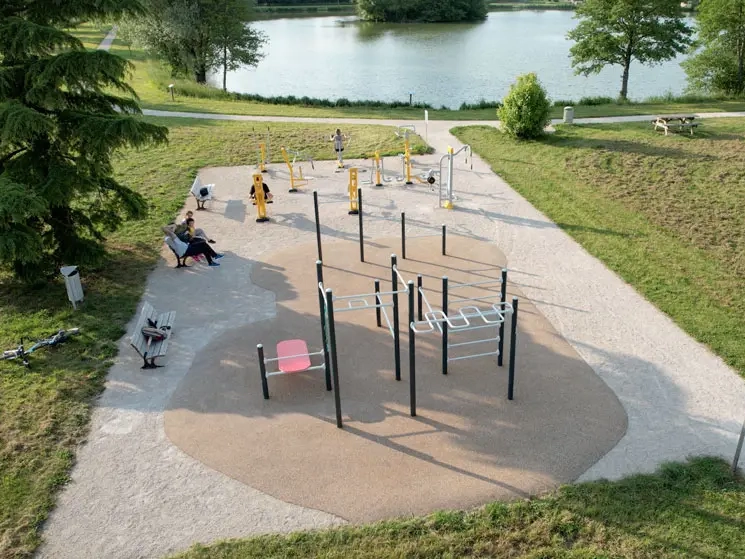
For local authorities, residential property managers and developers of outdoor sports facilities, the elliptical trainer is one of the most appropriate pieces of equipment to integrate into a collective fitness area. Its versatility makes it popular with all user profiles, from children to senior citizens, from beginners to experienced athletes. Its low noise level makes it compatible with residential environments. Its low maintenance and long service life make it a particularly profitable long-term investment.
Herkules Fitness offers a range of EN 16630-certified outdoor elliptical trainers, manufactured in powder-coated galvanized steel and available in a wide range of colors to suit any environment. Our teams will support you from the 3D design of your fitness area to turnkey installation, including the choice of equipment best suited to your target audience and site constraints.
The outdoor elliptical is a complete piece of fitness equipment, gentle on the joints and adaptable to all levels of fitness. Whether you want to return to the sport gradually, improve your cardiovascular endurance or intensify your training with advanced split sessions, the programs presented in this guide will enable you to progress in a structured and effective way. The key to success: regularity, quality of movement and progress in line with your current abilities.