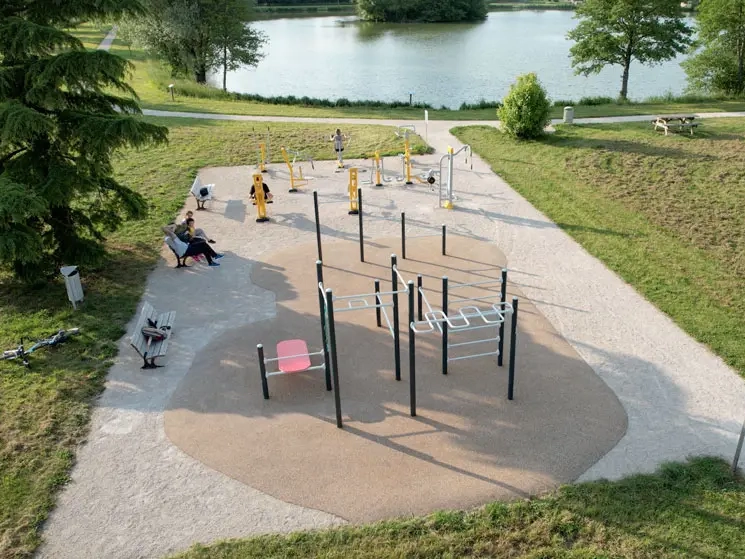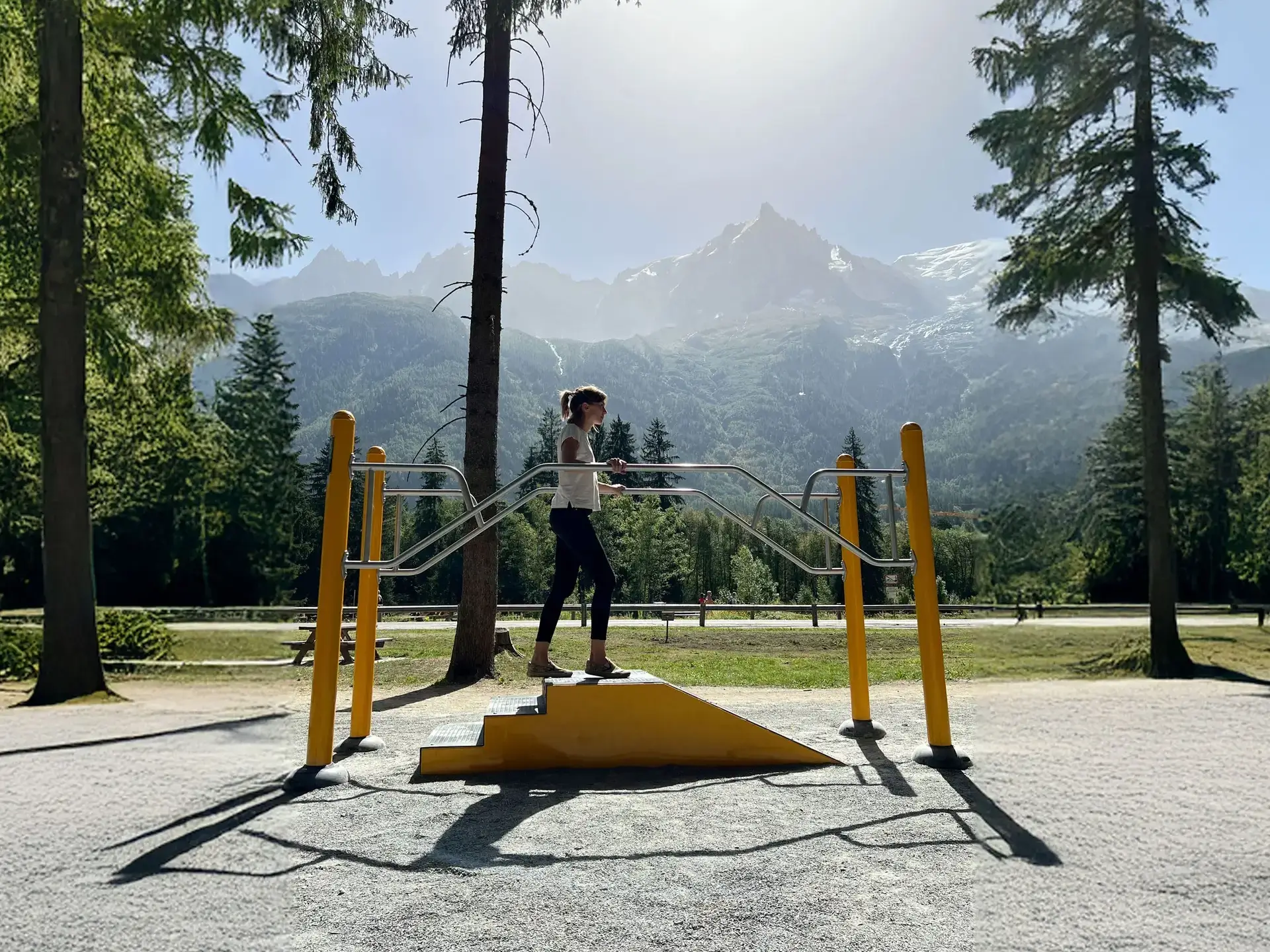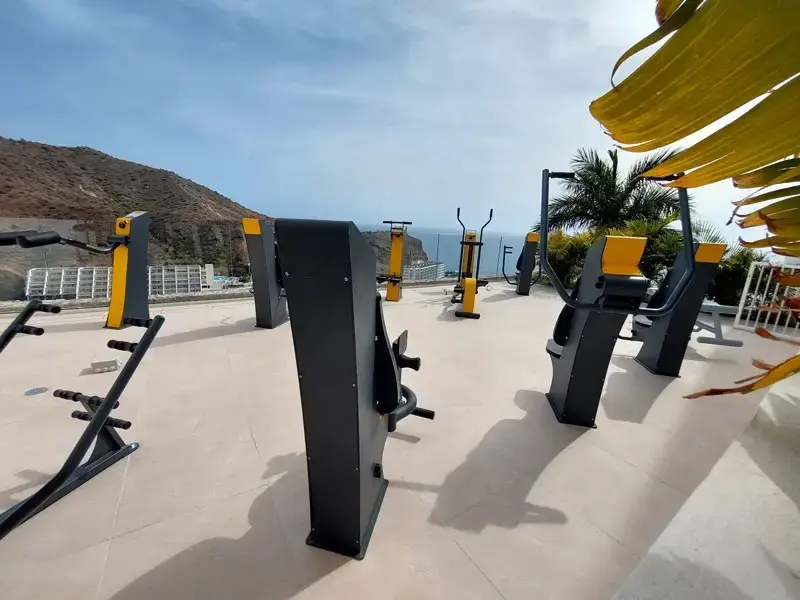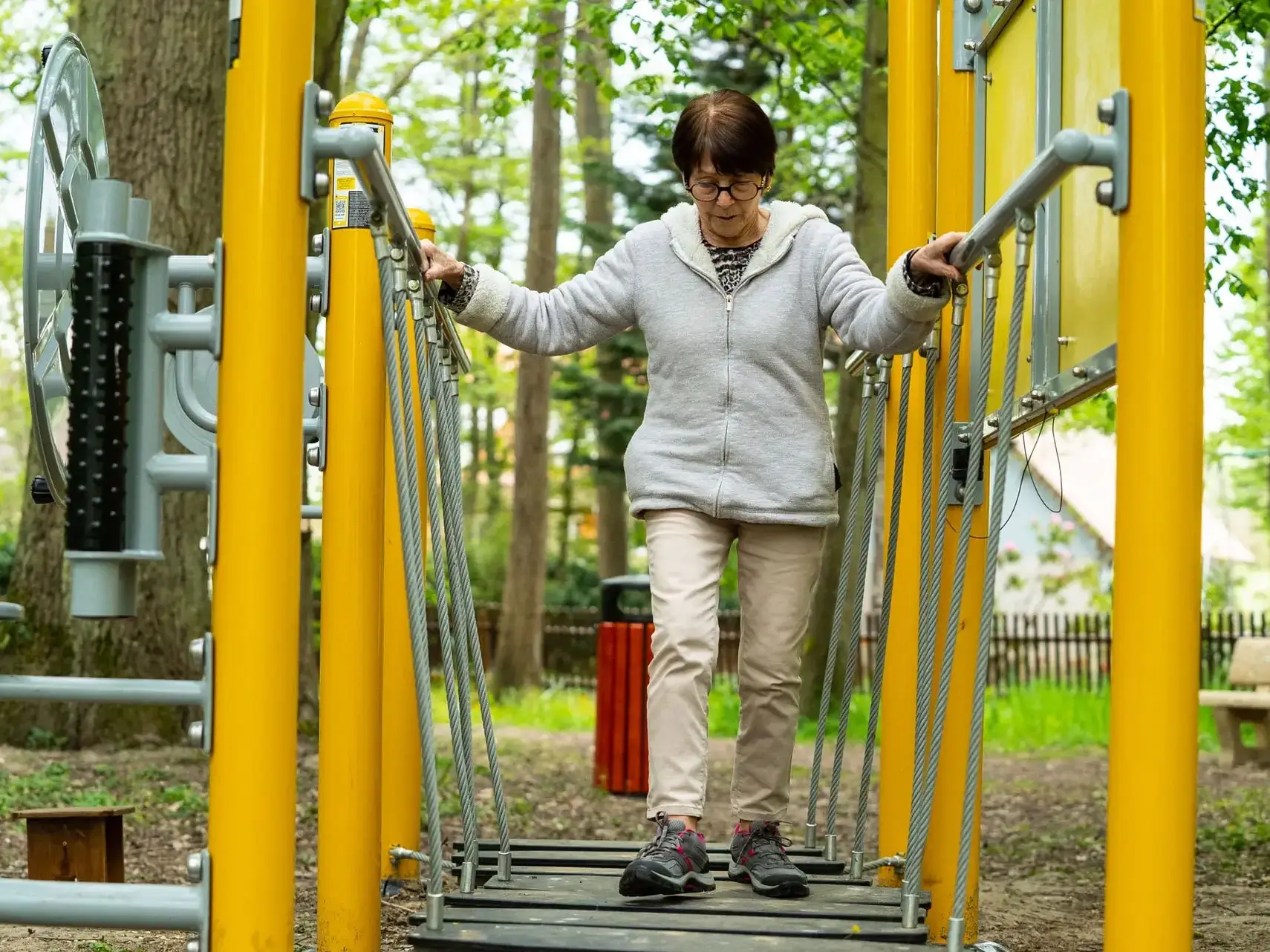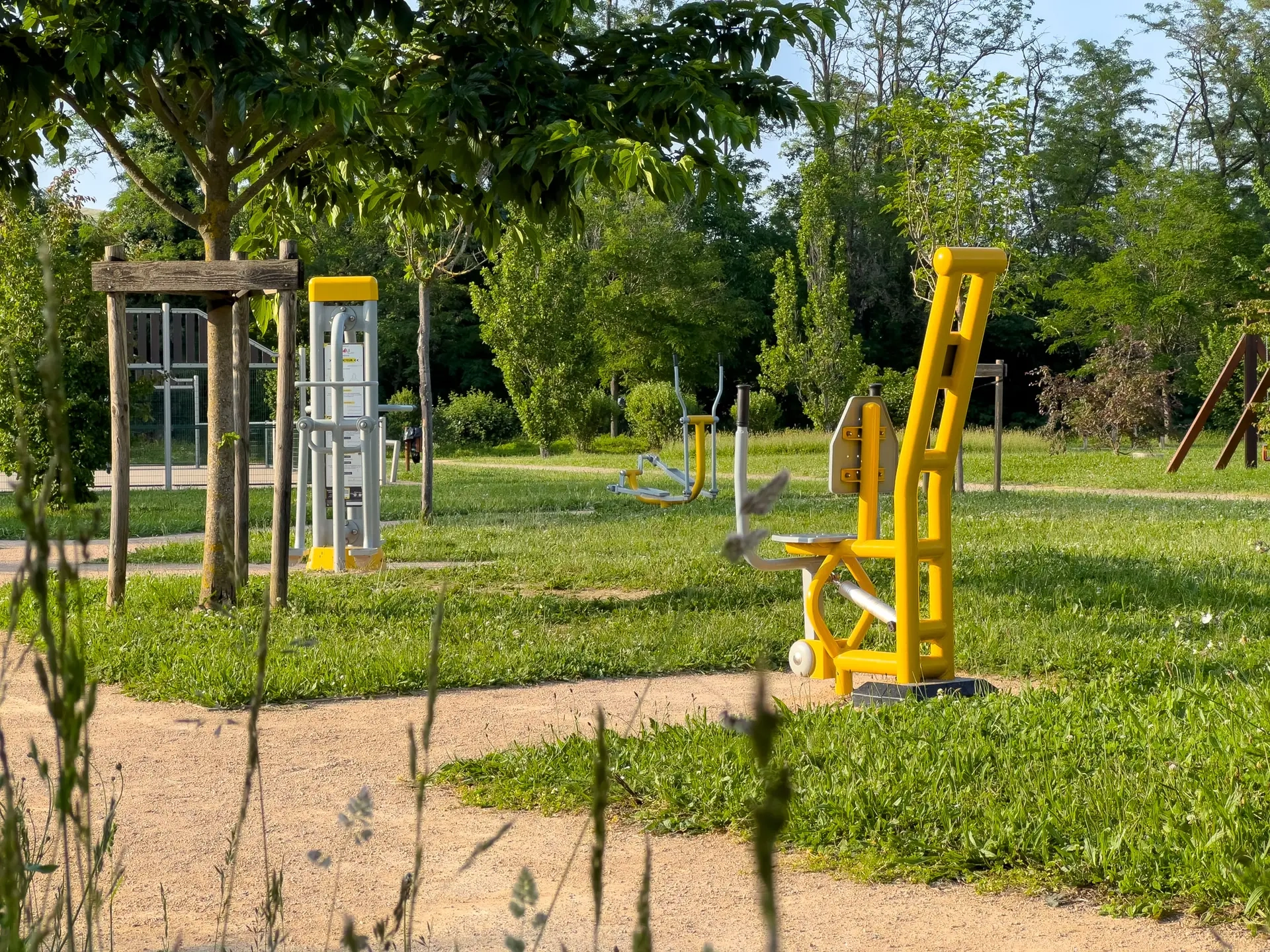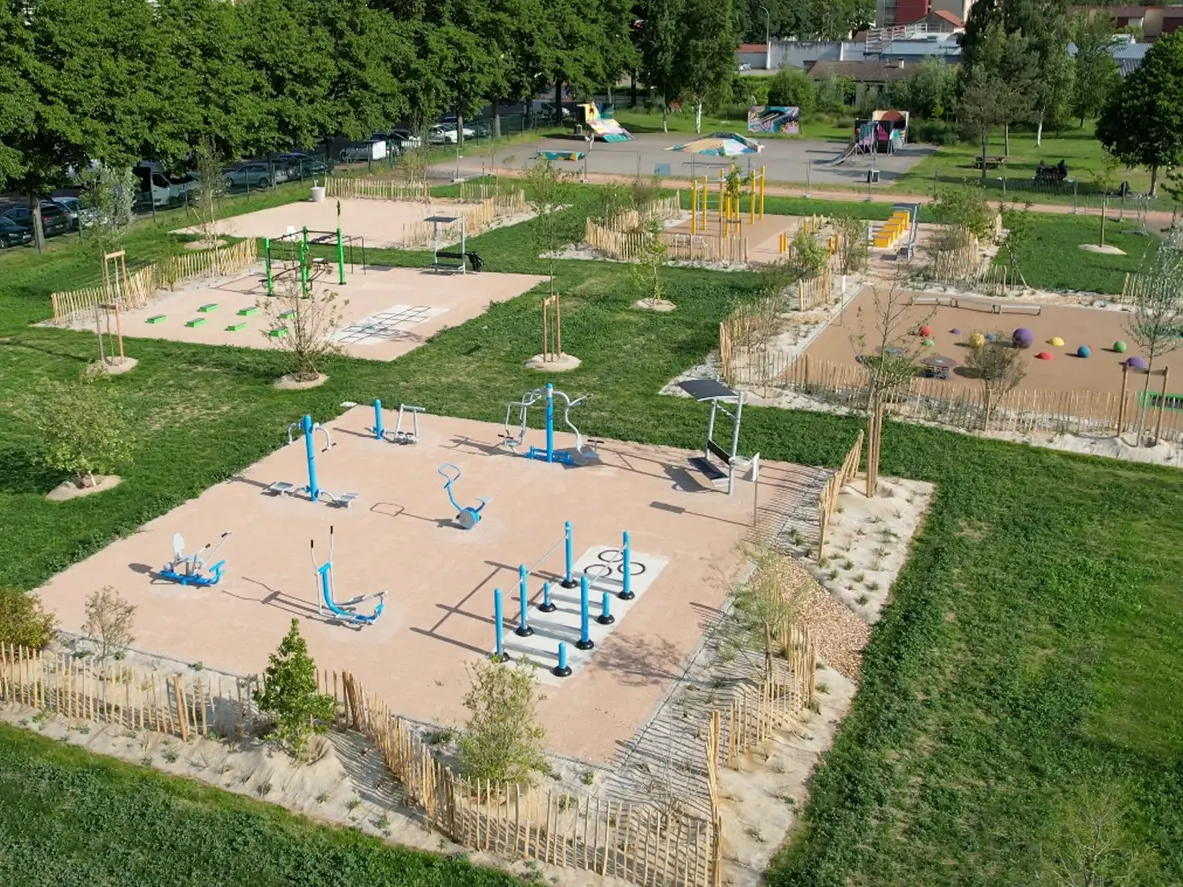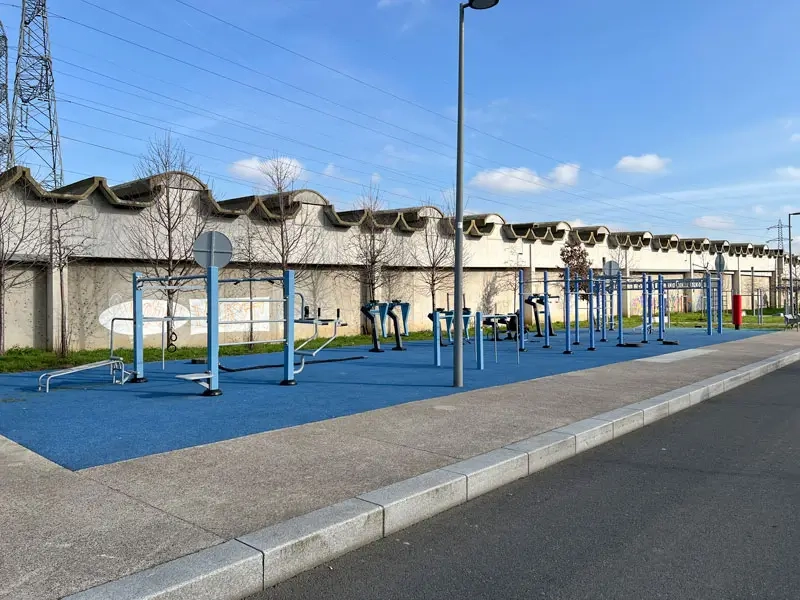

The floor covering is one of the most structuring elements of an outdoor fitness area. It determines user safety, comfort, durability and aesthetics. Yet it is often the least well thought-out component of outdoor sports projects, relegated to an end-of-project decision when it should be integrated right from the design stage. This comprehensive guide presents the main types of surfacing available, their technical characteristics, their advantages and disadvantages, and the criteria for making the right choice for your context.

Why is flooring so important?
Safety: the top priority
The primary function of outdoor sports flooring is to ensure user safety. This covers two complementary dimensions: anti-slip safety, where the floor must remain passable in rain, frost or after a shower, and shock absorption for areas where falls are possible (around pull-up bars, dips or street workout structures). Standard EN 1177, which governs floor coverings for playgrounds, defines shock absorption thresholds (HIC: Head Injury Criterion) that all coverings under fall-risk equipment must meet.
A slippery floor, or one poorly adapted to local climatic conditions, is the number one source of accidents on an outdoor fitness area. This risk directly engages the manager’s civil liability in the event of injury.
Comfort and performance
In addition to safety, the surface has a direct influence on comfort and the quality of training. A floor that’s too hard transmits vibrations and impacts to the user’s joints, aggravating fatigue and the risk of long-term injury. A floor that’s too soft lacks stability and makes it difficult to perform exercises requiring firm support. The ideal surface for an outdoor fitness area offers a compromise between firmness (stability during support) and resilience (partial shock absorption).
Durability and maintenance
Outdoor flooring is exposed to weather, UV rays, freeze-thaw, repeated mechanical loads from equipment and heavy user traffic. Its lifespan and maintenance requirements determine the area’s total cost of ownership over the long term. Some surfacings are economical to purchase, but can prove very costly over time due to frequent maintenance or premature replacement.
| 📌 Golden ruleNevertreat flooring as a residual expense after you’ve budgeted for the equipment. It generally represents 20-35% of the total cost of an outdoor fitness area, and conditions the success of the whole project. Good equipment on a bad floor loses much of its value. |
Essential selection criteria
Before comparing materials, it’s important to define your project requirements precisely, based on a number of parameters.
| Criteria | Questions to ask yourself | Impact on choice |
| Intended use | Fitness, street workout, free-fall zone, mixed? | Determines required thickness and impact strength |
| Target audience | Adults, seniors, children, people with reduced mobility? | PMR accessibility, EN 1177 standards for children |
| Investment budget | Total cost including installation and earthworks? | Directs to rubber tiles, stabilizes or coats |
| Climate context | Rainy area, frequent frost, intense sun exposure? | Drainage, freeze-thaw, priority UV resistance |
| Aesthetic constraints | Graphic design, landscape integration, colors? | Some materials offer a wider choice of colors |
| Maintenance available | In-house technical team or external service provider? | Low-maintenance materials vs. regular sweeping |
| Environment | Coastal, urban, natural, business? | Chloride resistance, drainage, integration |
The main floor coverings for outdoor fitness areas
1. Recycled rubber tiles
Recycled rubber tiles, made from shredded used tires and bound with a polyurethane binder, are the benchmark solution for outdoor fitness areas in public spaces. They combine excellent resilience, good durability and relatively simple installation.
| Recycled rubber tiles | |
| Available thickness | 20 mm (gentle fitness), 30-40 mm (street workout), 45-65 mm (fall zone under pull-up bars) |
| Anti-slip | Excellent: maintained even when wet, granular surface treatment |
| Shock absorption | Very good: conforms to EN 1177 depending on thickness. Recommended under all equipment at risk of falling. |
| Service life | 15 to 20 years with minimal maintenance |
| Maintenance | Wash with water, no special products required. Joints to be inspected every 3 to 5 years. |
| Benefits | Maximum safety, eco-friendly material (recycled), good thermal insulation, available in several colors. |
| Disadvantages | More expensive than stabilizer. Can give off a rubbery odour in warm weather (diminishes with age). |
| Recommended contexts | Street workout areas, pull-up bar areas, senior citizen areas, public parks, businesses |
2. Porous asphalt (draining resin floor)
Porous asphalt or porous resin is a mineral surfacing bonded with a polyurethane resin that allows water to pass through its structure. This is the most aesthetically pleasing option, perfectly suited to high-end environments such as corporate campuses, premium residences or upgraded urban parks.
| Porous asphalt / drainage resin | |
| Laying thickness | 3 to 5 cm on a suitable drainage base |
| Anti-slip | Good: textured surface. Check specific texture according to use |
| Shock absorption | Low to moderate: insufficient only under equipment at risk of falling. To be combined with rubber tiles locally. |
| Service life | 10 to 15 years depending on laying quality and traffic |
| Maintenance | Leaf blowing, annual high-pressure cleaning. Micro-cracks filled as required. |
| Benefits | Excellent drainage, wide range of colors, very aesthetic appearance, permeability compliant with PLU regulations in impervious areas |
| Disadvantages | High cost, requires rigorous soil preparation, sensitive to roots of nearby trees, insufficient shock absorption on its own. |
| Recommended contexts | Corporate campuses, premium residences, upgraded urban parks, connecting zones between facilities |
3. Reinforced stabilized soil (compacted gravel)
Stabilized mix is a mixture of limestone or silica aggregates of varying grain sizes which, once compacted and moistened, forms a firm, relatively flat surface. This is the most economical solution for large surfaces, widely used in natural parks and municipal green spaces.
| Stabilizes reinforces (compacted gravel) | |
| Thickness | 10 to 15 cm of compacted gravel on geotextile and drainage sub-layer |
| Anti-slip | Correct in dry weather. Can become slippery or muddy in heavy rain. |
| Shock absorption | Low: insufficient under equipment at risk of falling. Requires the addition of rubber slabs at the foot of equipment. |
| Service life | 8 to 12 years with periodic reprofiling (every 3 to 5 years) |
| Maintenance | Reprofiling after erosion, weeding (risk of weeds), refilling with aggregate if hollow. |
| Benefits | Very low cost, excellent natural drainage, blends in well with natural green spaces, maximum permeability |
| Disadvantages | Not very durable under heavy use, rutting possible, regular maintenance, less careful appearance, mud accumulation in wet weather. |
| Recommended contexts | Health trails in natural environments, connecting areas between park facilities, contexts with limited budgets |
4. Draining artificial turf
Artificial turf is becoming an increasingly popular solution for outdoor fitness areas that wish to offer a high level of comfort in a visually pleasing environment. Models developed specifically for sports (high-strength fibers, optimized drainage) differ significantly from decorative or ornamental turf.
| Draining sports turf | |
| Total thickness | 20 to 40 mm of fiber depending on use + recommended cushioning underlay (10-20 mm of rubber) |
| Anti-slip | Very good: stable surface, good performance in the rain with integrated drainage |
| Shock absorption | Good with rubber underlay, moderate on its own. Suitable for floor exercises (yoga, sheathing, stretching). |
| Service life | 8 to 12 years depending on traffic and fiber quality (minimum 12,000 dtex for intensive use) |
| Maintenance | Periodic brushing to remove fibers, annual high-pressure cleaning, inspection of seals and planet. |
| Benefits | Very attractive, warm appearance for floor exercises, high level of comfort, well integrated into the landscape. |
| Disadvantages | High heat in hot weather (can reach 60-70 degrees on the surface in the sun), synthetic fiber (questionable ecological balance), medium to high cost |
| Recommended contexts | Corporate fitness areas, residences, stretching and yoga zones, mixed fitness and leisure areas |
5. Deactivated or printed concrete
Deactivated concrete (surface roughened by washing off the surface cement before complete drying) and printed concrete (decorative imprints) are durable mineral solutions offering a stable, low-maintenance surface. They are rarely the first choice for a pure fitness area, but can be a robust solution for traffic areas or connections between equipment.
| Deactivated or printed concrete | |
| Thickness | 10 to 15 cm with appropriate reinforcement depending on load |
| Anti-slip | Good on deactivated concrete (rough surface). Insufficient on smooth or printed concrete in rainy conditions. |
| Shock absorption | None: must be completed with rubber slabs under all equipment |
| Service life | 20 to 30 years with minimal maintenance |
| Maintenance | Annual high-pressure cleaning, anti-foam treatment in shaded areas. Repairs to cracks where necessary. |
| Benefits | Extremely durable, virtually maintenance-free, very good stability for equipment, wide range of colors for printed concrete. |
| Disadvantages | No clean shock absorption, very hot in summer and cold in winter, susceptible to freeze-thaw cracks without adequate expansion joints |
| Recommended contexts | Traffic areas, access aisles, areas under equipment not subject to the risk of falling (bicycles, seated rowers) |
Synthetic comparison table
This table summarizes the performance of the five main surfacings on the key criteria of an outdoor fitness area.
| Coating | Anti-slip safety | Shock absorption | Service life | Investment cost |
| Recycled rubber | Excellent | Excellent | 15-20 years | Medium to high |
| Draining resin | Good | Insufficient alone | 10-15 years | Student |
| Stabilized reinforced | Good in dry weather | Insufficient | 8-12 years | Low |
| Synthetic turf | Excellent | Good with undercoat | 8-12 years | Medium |
| Deactivated concrete | Good | Insufficient | 20-30 years | Medium |
The differentiated zone strategy: the best approach
In the majority of large outdoor fitness area projects, the optimum solution is not a single surfacing for the entire area, but a combination of surfacings adapted to each usage zone. This zone-based approach optimizes safety, comfort and budget, depending on the nature of the activities carried out in each area.
| Area zone | Recommended coating | Justification |
| Under tension bars and drop structures | Rubber tiles 45-65 mm (EN 1177) | Mandatory shock absorption, EN 1177 standard |
| Cardio-training area (bike, rowing machine, elliptical trainer) | Rubber tiles 20-30 mm or draining resin | Firm, stable ground, low risk of falling |
| Stretching zone, yoga, floor exercises | Synthetic turf with 20 mm underlay | Comfortable, pleasant-looking floor practice |
| Aisles and connections | Draining resin or stabilized | Durability and control, drainage |
| Perimeter and boundaries of the area | Concrete curb or rubber curb | Visual delineation and separation of materials |
| ✅ Design tipDefinethe flooring zoning plan before finalizing the equipment layout plan. The two are interdependent: the position of fall-risk equipment determines the areas where thick rubber flooring is mandatory, impacting budget and space organization. Work with your equipment supplier and your landscaper at the same time, right from the start of the project. |
Standards to comply with
EN 1177 standard: shock absorption
Standard EN 1177 defines shock absorption requirements for playground flooring and, by extension, for all areas where falls from height are possible. It imposes an HIC (Head Injury Criterion) threshold value of less than 1,000 for surfaces placed under equipment presenting a fall hazard. The rubber thickness required depends on the potential free-fall height: the greater the height, the greater the thickness of the covering.
– Drop height up to 0.6 m: 20-25 mm rubber tile
– Drop height up to 1.0 m: 30-35 mm rubber tile
– Drop height up to 1.5 m: 40-45 mm rubber tile
– Drop height up to 2.0 m: 50-55 mm rubber tile
– Height of fall up to 3.0 m: rubber tile 65 mm minimum
PRM accessibility
The French law of February 11, 2005 and its implementing decrees require public facilities to be accessible to people with reduced mobility. For floor coverings, this means a flat, firm surface that allows wheelchairs to circulate, without obstacles, with a maximum cross-slope of 2%. 20 mm rubber tiles, draining resin and deactivated concrete are the solutions most compatible with PMR requirements. Stabilized concrete may be acceptable if perfectly compacted and regularly reprofiled.
Permeability and stormwater management
Many Local Urban Plans (PLU) impose soil permeability requirements for new surfaces, in order to limit runoff and the risk of flooding. Drainage surfaces (drainage resin, stabilized soil, synthetic turf with drainage) meet these requirements. Concrete and traditional asphalt (non-draining) may require the installation of additional rainwater management systems (valleys, drainage trenches). Before finalizing your choice of surfacing, check the specific constraints of your local PLU.
Laying and preparing the floor: key stages
The quality of the installation determines the durability of the flooring as much as its intrinsic characteristics. A good material laid on a poorly prepared floor will deteriorate rapidly. Here are the essential steps, whatever the chosen solution.
– Diagnosis of the soil in place: analysis of the bearing capacity, permeability and stability of the natural ground. Very damp clay soil requires special treatment (liming, geotextile reinforcement) before installation.
– Earthwork and excavation: remove vegetation, roots and topsoil to a depth of 20 to 40 cm, depending on the surfacing and anticipated load. Insufficient earthwork is the primary cause of premature deformation.
– Geotextile installation: a non-woven geotextile membrane separating the natural soil from the surfacing layers prevents fines (clay) from rising up, significantly extending the lifespan of the surfacing.
– Drainage layer: 10 to 15 cm of 20/40 mm gravel compacted in successive layers. This layer evacuates rainwater and supports loads without deforming.
– Binder course (depending on surface): for rubber slabs, a concrete or asphalt base is required. To stabilize it, the gravel can be laid directly on the drainage layer.
– Laying the final covering: according to the manufacturer’s specifications, paying particular attention to expansion joints (essential for rigid materials) and perimeter edges.
– Final inspection: verification of planarity, drainage, anti-slip properties and compliance with applicable standards prior to acceptance of work.
| ⚠️ Beware of subcontracted installationTheinstallation of rubber or draining resin tiles by non-specialized teams is a frequent source of defects (poorly glued joints, unevenness, poorly managed drainage slopes). For technical floor coverings, always use certified installers and ask for a ten-year guarantee on the installation. The extra cost is largely offset by durability and compliance with standards. |

Budget and reference costs
The following costs are orders of magnitude including standard supply and installation, but excluding earthworks and soil preparation (which generally account for 20-35% of the total cost, depending on the nature of the site).
| Coating | Price range (supply + installation) | Lifetime / Annualized cost |
| Rubber tiles 20 mm | 35 to 55 euros/m2 | 15-20 years / 2.5 to 3.5 euros/m2/year |
| Rubber tiles 40-65 mm | 70 to 120 euros/m2 | 15-20 years / 5 to 8 euros/m2/year |
| Draining resin | 60 to 100 euros/m2 | 10-15 years / 5 to 9 euros/m2/year |
| Stabilized reinforced | 15 to 30 euros/m2 | 8-12 years / 2 to 4 euros/m2/year |
| Synthetic turf for sports | 50 to 90 euros/m2 | 8-12 years / 5 to 10 euros/m2/year |
| Deactivated concrete | 40 to 70 euros/m2 | 20-30 years / 2 to 3.5 euros/m2/year |
| 💡 Reasoning in terms of annualized costThecost per m2 at installation should not be the only criterion for decision-making. A stabilized surface costing 20 euros/m2 and requiring resurfacing every 5 years comes to 4 euros/m2/year, equivalent to the annualized cost of much higher-performance rubber slabs. Always include maintenance costs and service life in your cost-benefit analysis. |
Herkules Fitness will help you choose your flooring
The choice of flooring is an integral part of any outdoor sports facility project. That’s why Herkules Fitness systematically includes the question of flooring in its project support, right from the design phase. Our design office analyzes your context, soil type, climatic constraints, target audience, applicable standards and available budget, to recommend the most suitable combination of floor coverings.
Our free 3D visualizations include the rendering of floor coverings, enabling you to validate the overall aesthetics of the space before any commitment is made. We work with a network of certified installers to guarantee quality workmanship and compliance with EN 1177 standards and PMR requirements. Contact our team for a complete study of your project.
The choice of flooring for an outdoor fitness area is a technical decision that will affect the safety, comfort and durability of the facility for 10 to 20 years. There is no one-size-fits-all solution: each project deserves an analysis of its specific constraints before selecting the most suitable material(s). In the vast majority of cases, an approach based on differentiated zones – rubber tiles under equipment at risk of falling, draining resin or synthetic turf for comfort zones, stabilized for links in natural environments – offers the best compromise between performance, safety, aesthetics and budget control. Anticipate this decision right from the start of the project, and factor it into your overall budget to avoid unpleasant surprises at the end of the project.