
Priority urban neighborhoods (QPV) are home to populations that are often far removed from traditional sports facilities, whether private gyms or municipal facilities located outside their living perimeters. The creation of an outdoor sports area in the heart of these neighborhoods is much more than a simple local facility: it’s a powerful lever for social cohesion, emancipation through sport and urban redevelopment. But this type of project raises specific questions, concerning the social issues to be taken into account, the particular design constraints and the financing mechanisms that can be mobilized. This comprehensive guide presents the keys to a successful project.
Understanding the QPV: a context that shapes needs
What is a priority urban district?
Priority urban policy districts (QPV) are defined by the Lamy law of February 21, 2014 on the basis of a single criterion: the median income of the inhabitants, which must be significantly lower than the national median and that of the urban unit concerned. By 2024, there will be around 1,500 QPVs in mainland France and the overseas departments, home to some 5.4 million residents.
These areas share common characteristics that directly influence the design of a sports area: high residential density, outdoor spaces that are often small or degraded, a high proportion of young people (under 25 sometimes representing over 40% of the population), a significant cultural mix and, in many cases, a lack of structured sports provision compared to surrounding neighborhoods.
| 📊 Key figureAccording tothe Baromètre national des pratiques sportives, QPV residents practice a physical activity or sport at a rate 12 to 18 points lower than the national average. Geographical and financial accessibility to sports facilities is identified as the primary barrier to practice in these territories. |
Sport as a tool for urban policy
Since the “Quinquennat du sport” plan launched after the Paris 2024 Olympic Games, the government has reaffirmed the central place of sport in equal opportunity and social cohesion policies. The development of local sports facilities in QPVs is part of this strong political impetus, which is concretely reflected in dedicated funding schemes and a priority given to QPV projects in national and regional calls for projects.
Beyond the effects on physical health, sports activities in shared spaces generate measurable social benefits: reduced risk-taking among young people, development of a sense of territorial belonging, creation of intergenerational and intercultural links, and symbolic enhancement of a public space often perceived negatively by the residents themselves.
Specific issues to be taken into account in the design
Designing for all: inclusivity as a founding principle
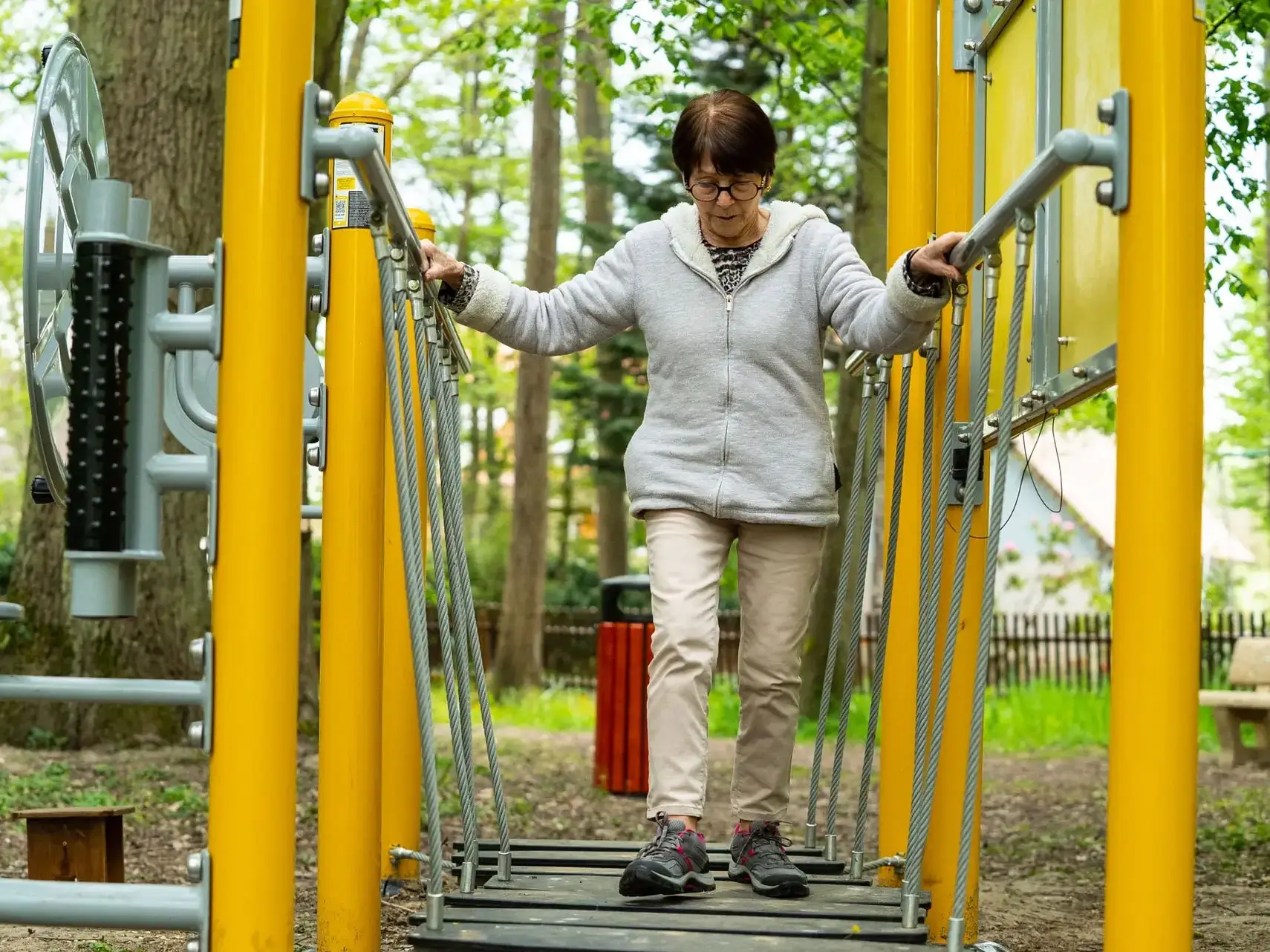
From the outset, a sports area in a disadvantaged neighborhood needs to be designed to cater for an extremely diverse population. Outdoor fitness facilities must be accessible to children, teenagers, active adults, senior citizens and people with reduced mobility, who make up a significant proportion of the population in some neighborhoods. Accessibility for PRMs (persons with reduced mobility) is not just a regulatory obligation: it’s an ethical imperative and a guarantee of maximum use of the equipment.
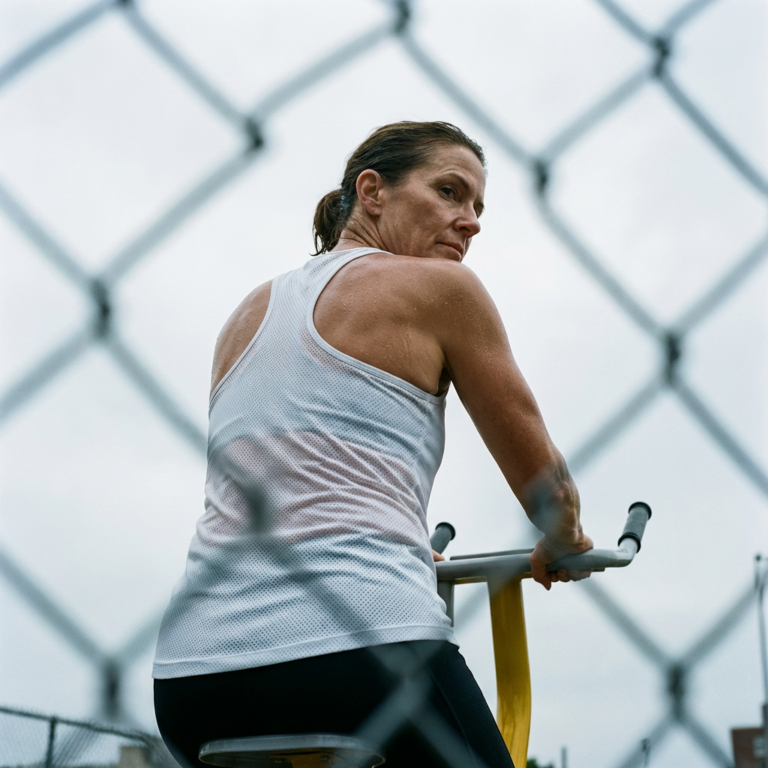
Gender diversity is another crucial issue. Studies carried out in several French cities have shown that women are significantly under-represented in the use of outdoor sports spaces when these are dominated by weight training or team sports equipment (basketball courts, soccer cages). A design that includes areas for gentle fitness, stretching and active walking encourages spontaneous mixing and encourages women to make the space their own.
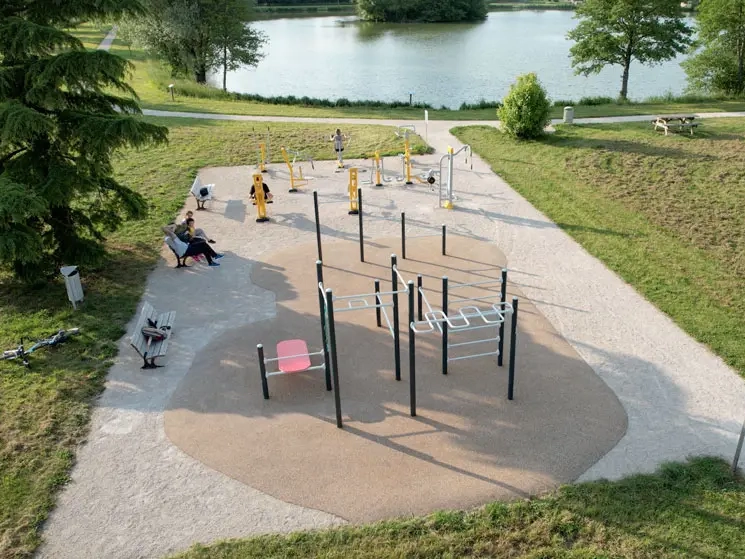
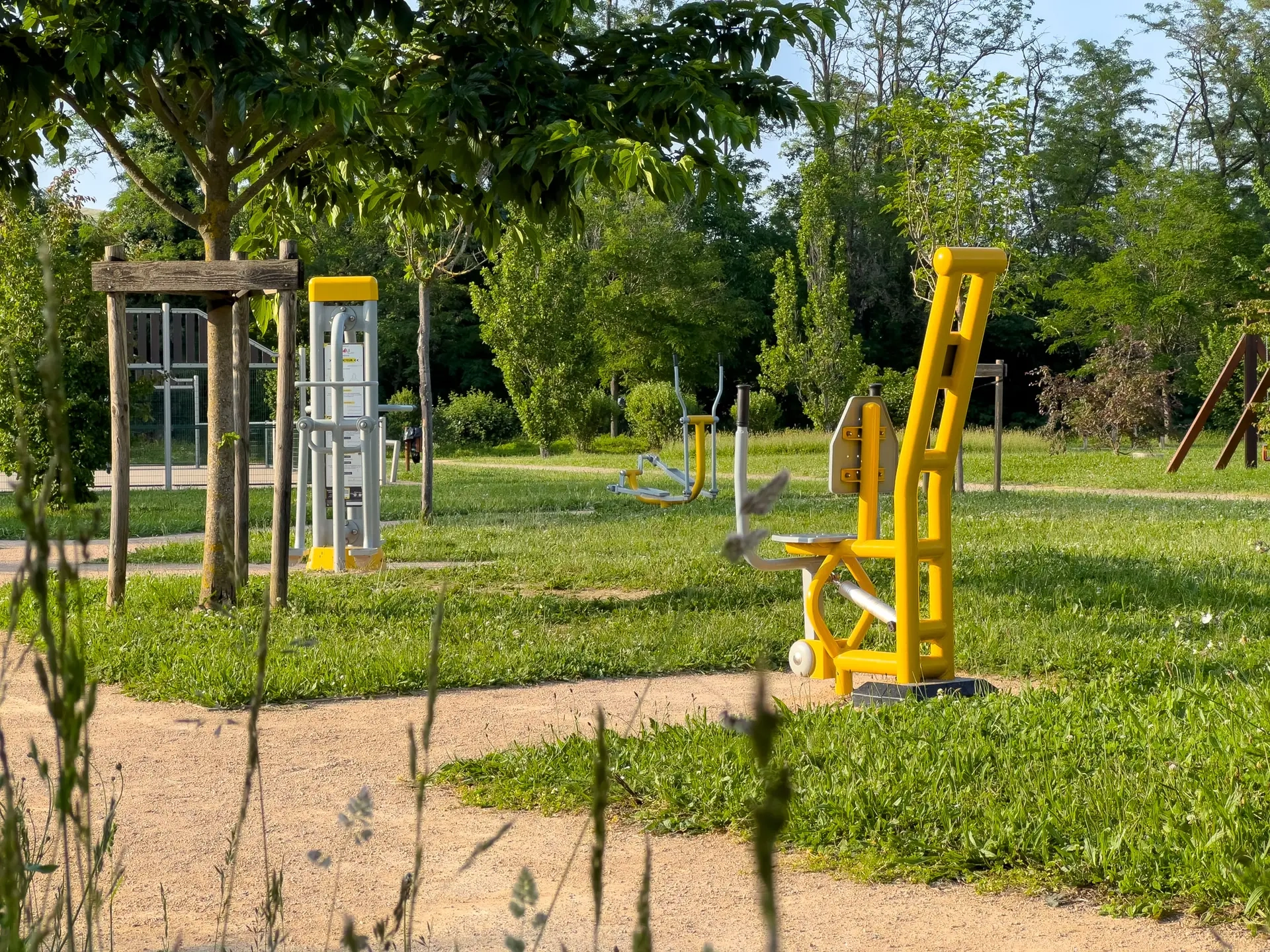
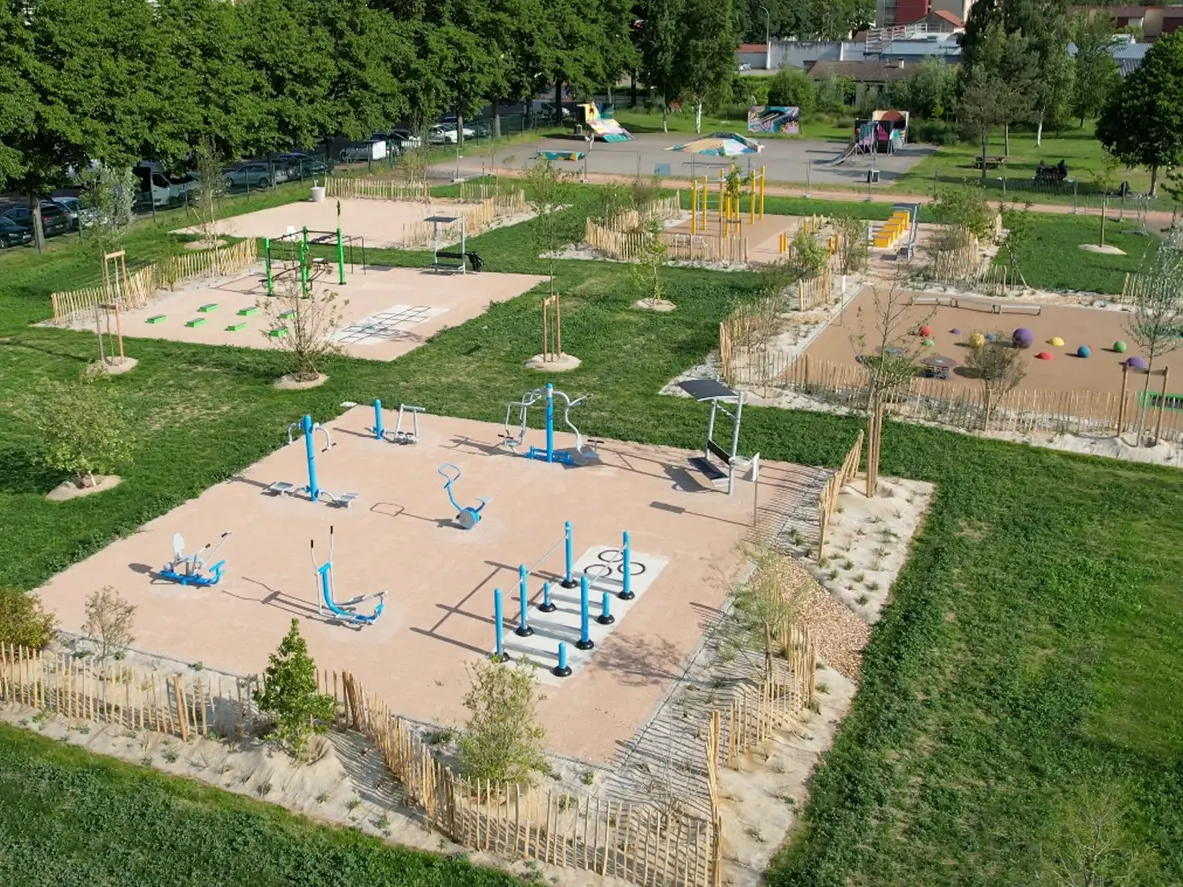
| ✅ Design principleThink ofthe sports area in terms of complementary “usage zones” rather than isolated facilities: a fitness and body-building zone for young adults, a cardio-training and mobility zone for seniors, an active play area for children, and a convivial space (benches, shade, water point) that creates links between the different zones and different audiences. |
Robustness and durability: an imperative in QPVs
Sports facilities in disadvantaged neighborhoods are subject to particularly intensive use, often higher than in less densely populated residential areas, and can be exposed to acts of vandalism, particularly in the early stages of the facility’s life, before the residents have fully appropriated it. The choice of materials is therefore crucial.
High-quality galvanized steel equipment, with strong bolted joints and integrated anti-slip surfaces, offers the best compromise between durability, investment cost and ease of maintenance. Avoid equipment made of untreated wood or low-density plastic, which degrade rapidly under heavy use and are difficult to partially repair.
Involving local residents: a prerequisite for project success
The experience of the many sports facilities projects carried out in QPVs in recent years has shown that facilities designed without consultation with residents have a much higher rate of deterioration and abandonment than those resulting from a participatory approach. Involving residents, and young people in particular, in the choice of facilities, the organization of the space and the rules for living together creates a sense of ownership that translates directly into better spontaneous maintenance and less vandalism.
This consultation can take several forms: co-design workshops with local residents, consultation via neighborhood citizens’ councils, partnerships with local sports or socio-cultural associations, or the organization of equipment test days prior to final installation.
Equipment best suited to QPVs
The choice of equipment must be based on a detailed analysis of local needs. However, certain types of equipment have proved their worth in the QPV context in terms of attractiveness, inclusiveness and sustainability.
| Type of equipment | Relevance to QPV |
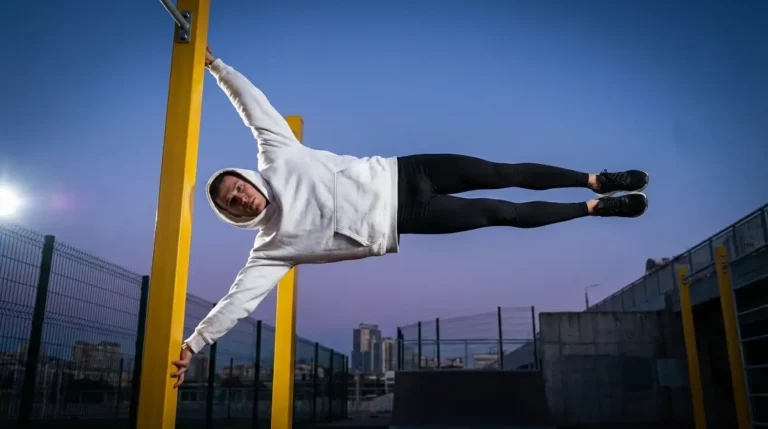
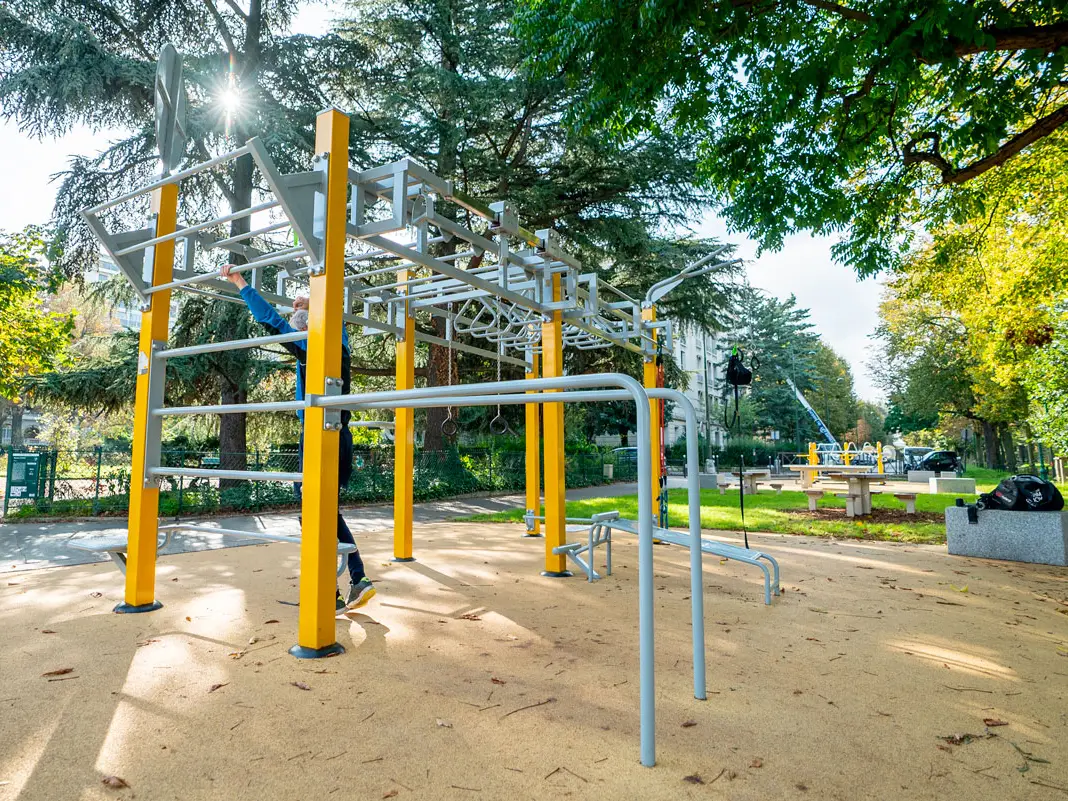
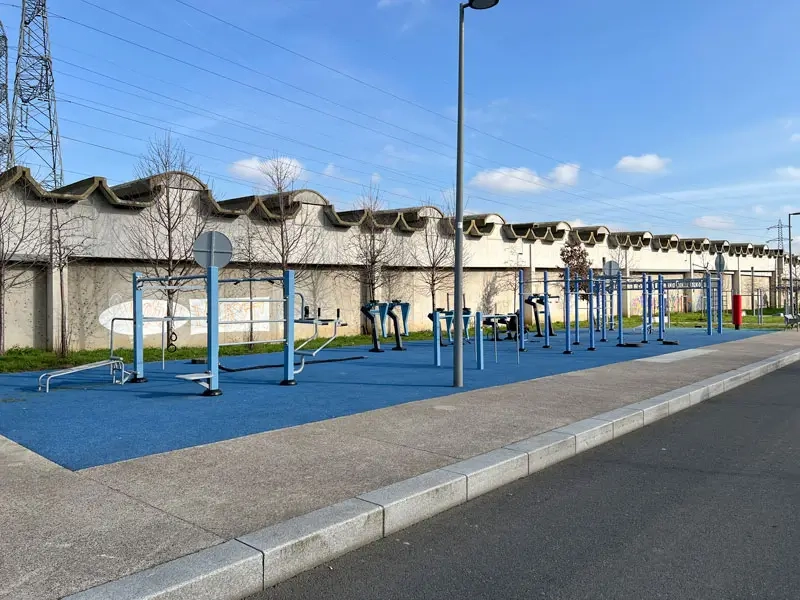
| Street workout equipment (bars, dips) | Highly attractive to 15-30 year-olds. Inexpensive, extremely robust, no additional equipment required. High potential for independent practice and peer-to-peer transmission. |
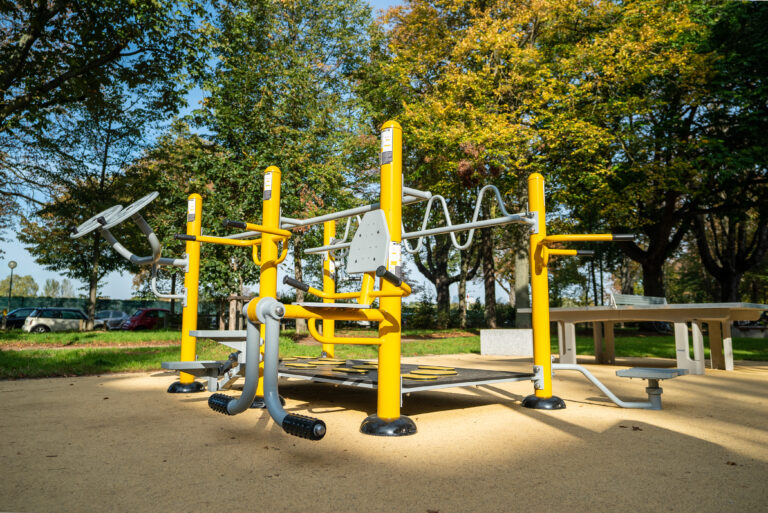
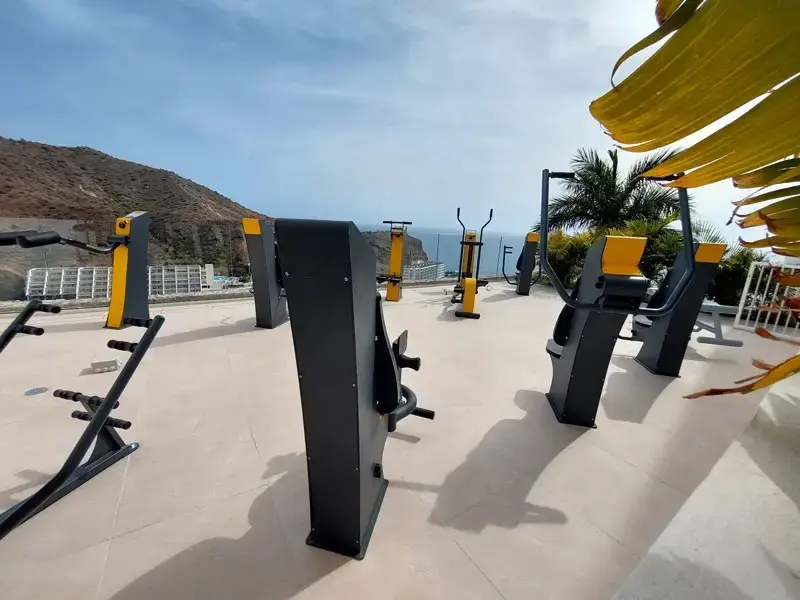
| Fitness and cardio-training equipment | Attracts a wider audience, especially working adults and seniors. Accessible without prior training. Encourages a mixed public on the site. |
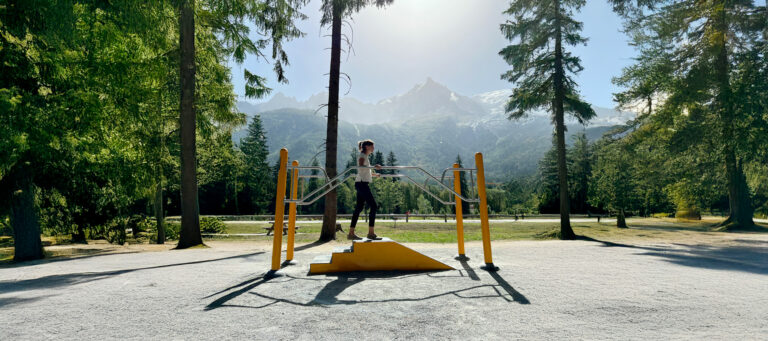
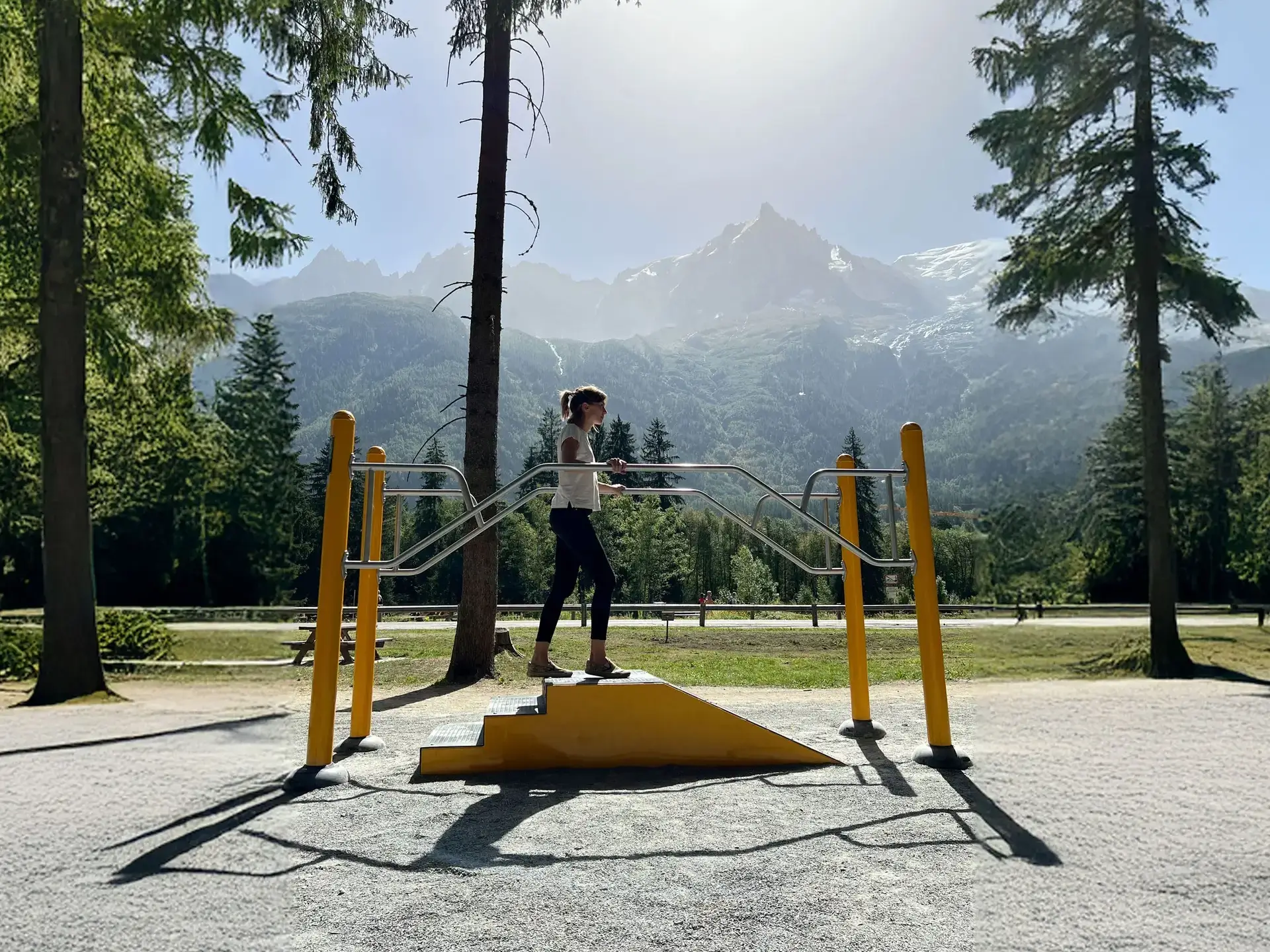
| Modular health path | Ideal for structuring an active path through space. Suitable for all ages and levels. Integrates well into green spaces or neighborhood promenades. |
| Multipurpose sports field (MUGA) | Much used by youngsters for basketball, 5-a-side soccer and badminton. Requires maintenance of floor and panels. High impact on spontaneous neighborhood activity. |
| Active play area for children | Indispensable in neighborhoods with a high proportion of families. Allows parents to use fitness equipment while supervising their children. |
| Furniture for sports and leisure areas (benches, pergolas) | Facilitates socialization around the sports area. Encourages parents and senior citizens to stay and make the space their own, even without practicing. |
Financing options available
This is often the most complex question for the elected representatives and technicians of the local authorities concerned. QPVs benefit from an arsenal of specific funding mechanisms, but their articulation and eligibility conditions require a good understanding of the institutional landscape. Here’s a complete overview of the main sources of funding available.
1. National Agency for Urban Renewal (ANRU)
ANRU is the main operator of France’s urban renewal policy. Its flagship program, the Nouveau Programme National de Renouvellement Urbain (NPNRU), provides funding for projects to transform QPV neighborhoods, in particular for the redevelopment of public spaces. Outdoor sports facilities are eligible as part of an overall project to upgrade a public space or residence.
ANRU funding can cover up to 50% of the total cost of a project for eligible municipalities, with modulation according to the community’s financial capacity. The project must be part of a prefiguration protocol or NPNRU agreement validated with the regional prefecture.
2. The National Fund for the Development of Sport (FNDS) / CNDS
The Centre National pour le Développement du Sport (CNDS), which administers part of the FNDS funds, supports sports facility projects in QPVs via its regional delegations. Subsidies are awarded on the basis of applications submitted to the DRAJES (Direction Régionale Académique à la Jeunesse, à l’Engagement et au Sport). Projects in QPV generally benefit from a higher subsidy rate than projects outside QPV.
3. European funds ERDF
ERDF (European Regional Development Fund) funds can be mobilized for sports facilities in disadvantaged neighborhoods, notably within the framework of regional operational programs. The “sustainable urban development” axis of the 2021-2027 ERDF programs explicitly provides for the financing of local facilities in disadvantaged areas. The mobilization of ERDF funds requires the region or intermunicipality to take the lead, and is governed by specific calls for projects.
4. The “5,000 Sports Fields” and “200 Neighborhoods” Plans
Launched in the wake of the Paris 2024 Olympic Games, the government’s “5,000 sports fields” plan provides massive funding for local sports facilities throughout the country, with a clear priority for QPVs. This scheme, managed by the Agence Nationale du Sport (ANS), finances multi-sports pitches, street workout facilities and outdoor fitness areas in priority neighborhoods. Applications are submitted to the regional sports conferences.
5. Dotation de Soutien à l’Investissement Local (DSIL) and DETR grants
The Dotation de Soutien à l’Investissement Local (DSIL) and the Dotation d’Équipement des Territoires Ruraux (DETR) are government grants administered by departmental prefectures. While the DETR is aimed more at rural communes, the DSIL can finance structural projects in communes with QPVs. These grants must be applied for from the prefecture within the framework of the annual envelopes.
6. Regional and departmental funding
Many regions and départements have their own funds dedicated to sports facilities in priority neighborhoods, often supplemented by State-Region planning contracts (CPER). Regional councils can also mobilize funds as part of their youth, territorial cohesion or sustainable development policies. It is advisable to consult the regional and departmental councils to find out what is available locally.
| Device | Maximum subsidy rate | File holder | Instruction |
| ANRU / NPNRU | Up to 50% off | Municipality or EPCI in QPV | Prefecture de region + ANRU |
| CNDS / DRAJES | 20 à 40 % | Community, sports association | DRAJES (regional delegation) |
| ERDF | 40 à 50 % | Region or EPCI | Regional management authority |
| YEARS (5000 plots) | 30 à 80 % | Municipality or grouping | Regional Sports Conference |
| DSIL | 20 à 50 % | Municipality | Prefecture departement |
| Region / Department | Variable 15-40 | Municipality | Regional/departmental council |
| 💡 Financing strategyTheoptimal financial package for a sports area project in a QPV is based on the combination of several schemes. It is common and recommended to combine ANRU or ANS funding (main subsidy), CNDS or DRAJES co-financing (additional subsidy) and a contribution from the regional or departmental council. In many cases, this arrangement can cover 70-90% of the total project cost, reducing the share to be financed by the local authority’s own funds to 10-30%. |
Putting together a solid financing package: the key stages
Step 1: Carry out a territorial diagnosis
Before applying for funding, a territorial diagnosis is essential. It must document the existing sports offer in the neighborhood and its immediate surroundings, the needs identified among residents (via the citizen council or a survey), the available spaces and their constraints (land, easements, underground networks), and related projects underway in the neighborhood (road renovation, residential project, etc.).
This diagnosis forms the basis of the financing application: it demonstrates the relevance of the project, its suitability for real needs and its inclusion in a coherent regional strategy.
Step 2: Defining the project and costing the investment
The application must present a precise project with a layout plan, a detailed list of equipment, their technical specifications and certifications (EN 16630 for fitness equipment, EN 1176 for children’s play equipment), as well as a detailed costing including earthworks, flooring, signage, lighting and any connections. 3D visualizations of the finalized project are highly appreciated by instructors, and reinforce the credibility of the dossier.
Step 3: Mobilizing partnerships
Funding officers attach particular importance to the project’s partnership base. Letters of support from local sports associations, neighborhood citizen councils, national education authorities (if a school is nearby) or social sector players (social center, local mission) considerably strengthen the credibility of the application and its likelihood of funding.
Step 4: Draw up a management and maintenance plan
From the outset, a sports area project in a disadvantaged neighborhood must include a management plan specifying the governance of the area (who manages it, who maintains it, who intervenes in the event of deterioration), the preventive maintenance plan for the equipment, the organization of activities (partnership with a sports association, programming of neighborhood sports events) and monitoring indicators (number of users, condition of equipment, incidents). This management plan is often required by funding bodies as a condition of grant allocation.
Animation and ownership: after installation
The inauguration of a sports area in a disadvantaged neighborhood is only the beginning of the project. Even the best facilities struggle to find their audience without support and animation, and can quickly fall into disrepair or be diverted from their intended use. Here are some of the most effective ways to get people involved.
– Organize a festive inauguration day involving residents, local associations and elected officials: the inauguration event is a founding moment that creates an emotional bond between residents and their new facility.
– Partner with a local sports club or sports education association to offer free introductory sessions in the first few weeks: nothing is more effective than demonstrating the correct use of equipment and creating habits of practice.
– Set up a neighborhood referent: a sports educator, social mediator or trained volunteer, who ensures a regular presence on the area and can intervene in the event of conflicts of use or inappropriate behavior.
– Schedule neighborhood sports events (tournaments, team challenges, theme days) to maintain momentum over time and attract new users.
– Involve local schools and colleges in PE sessions on the sports area: children’s ownership often guarantees the involvement of families and reinforces the feeling of collective ownership of the space.
| 📌 Experience feedbackThemost successful long-term projects for sports areas in disadvantaged neighborhoods are invariably those in which a local sports association or street sports educator has been involved from the design phase and continues to animate the space after installation. The equipment alone is not enough: it’s the social use that gives it its value. |
Setting up a sports area in a priority urban district is a project with a strong social, educational and urban impact. It requires a rigorous approach, with a prior territorial diagnosis, an inclusive and concerted design, the choice of sustainable materials and an anticipated management plan, but benefits from a particularly favorable funding ecosystem, with dedicated national and European schemes that can cover up to 80-90% of the total cost of the project. By placing local residents at the heart of the approach right from the design phase, and by ensuring high-quality activities after installation, local authorities have an exceptional lever for transforming the life of a neighborhood through sport.