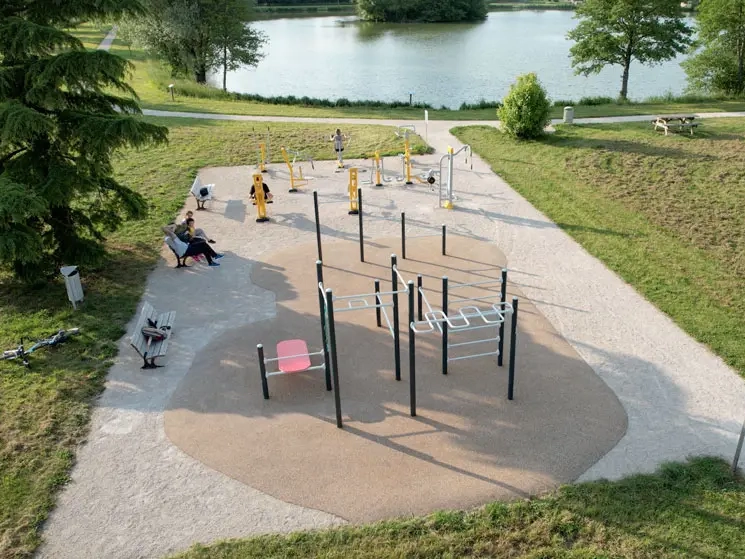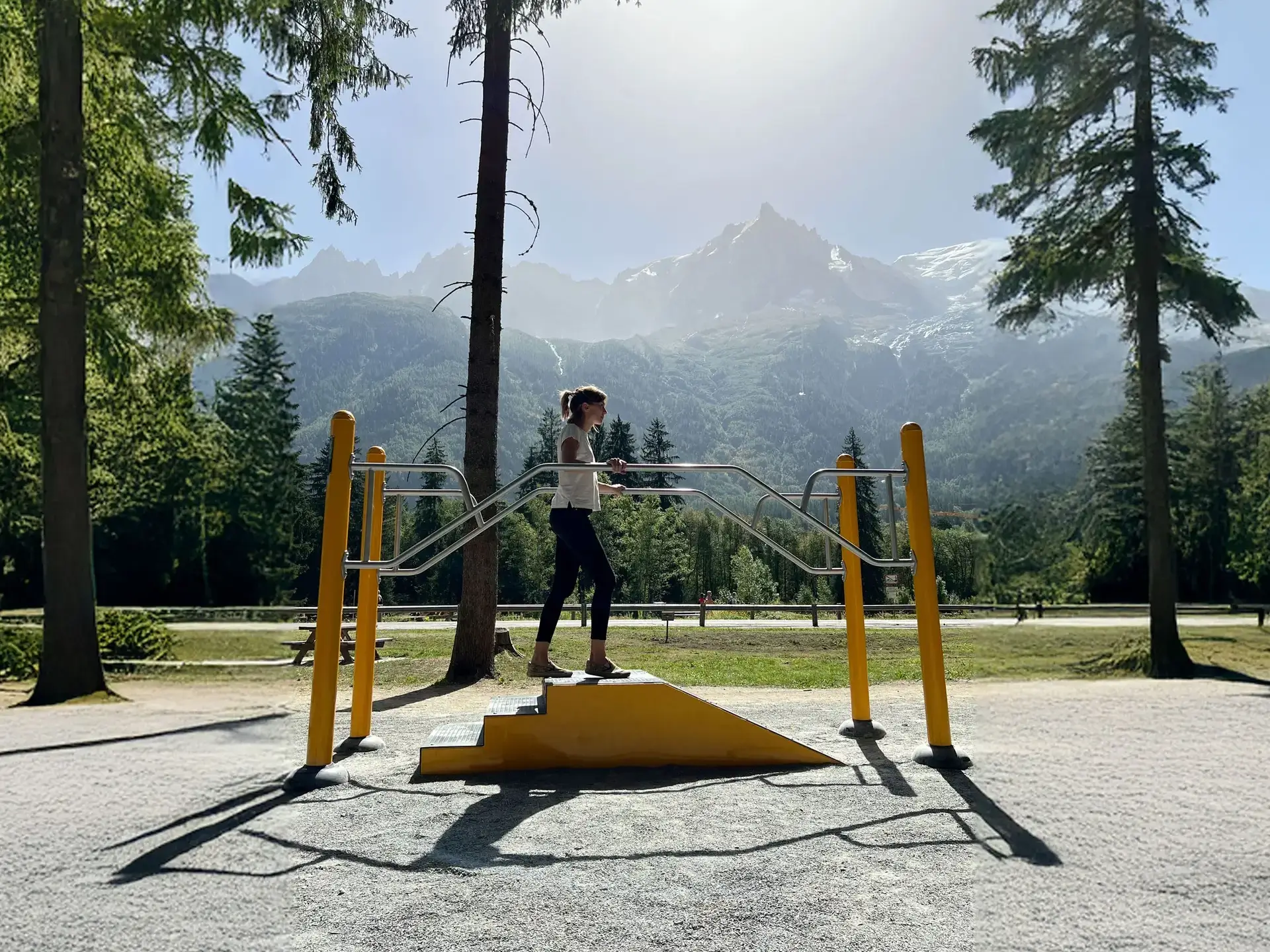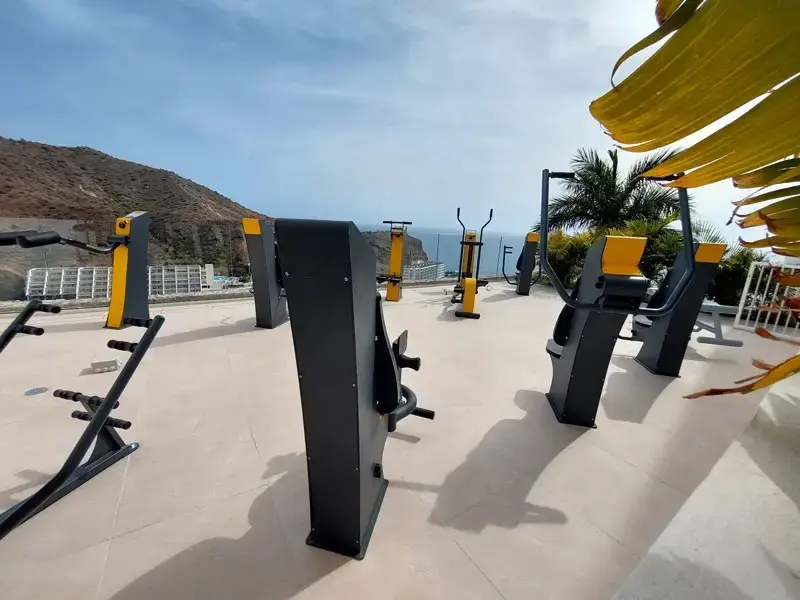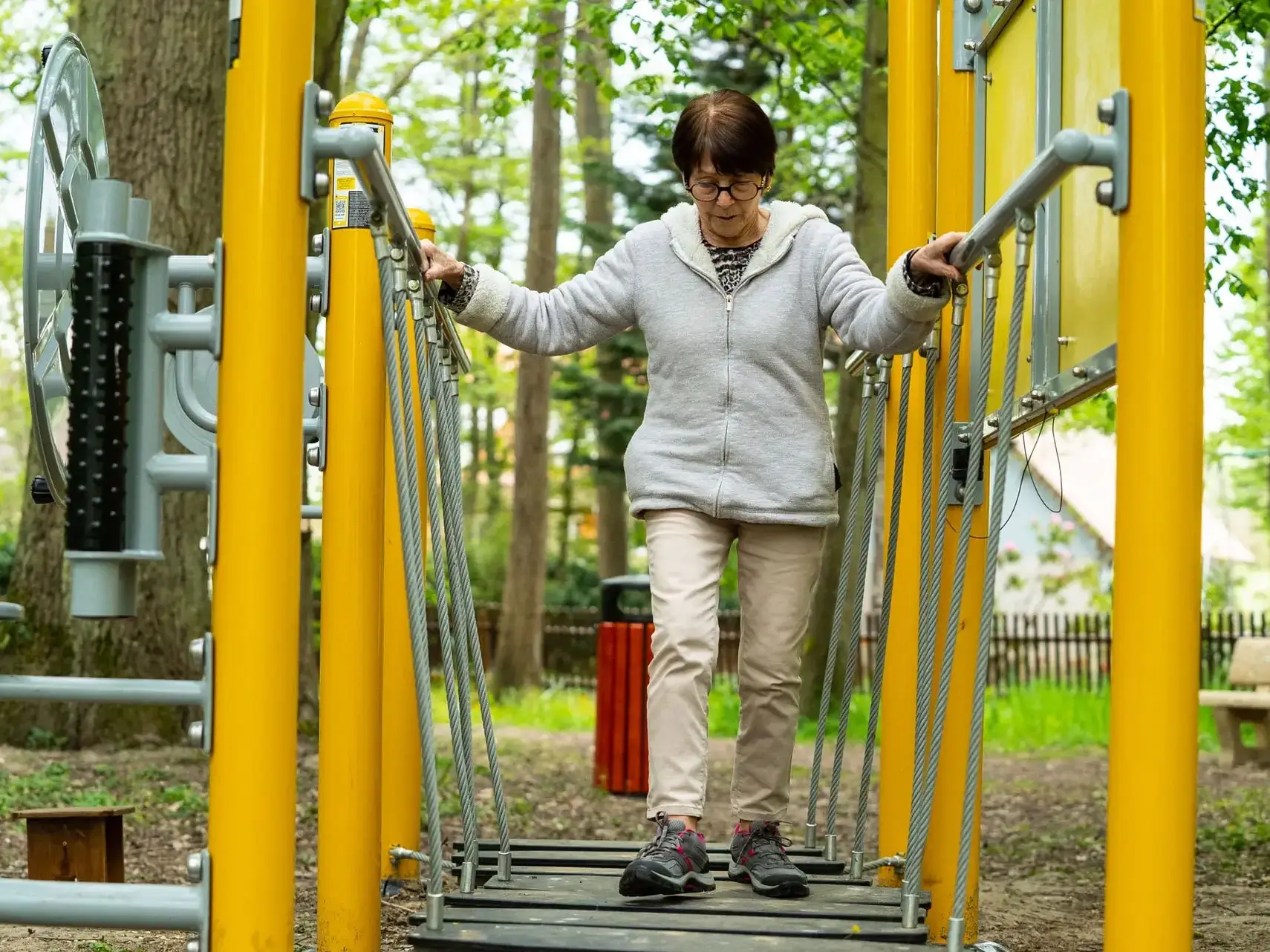

The outdoor rowing machine is one of the most complete pieces of outdoor fitness equipment available. Inspired by the movement of rowing, it reproduces, safely and without impact, a movement that simultaneously stimulates the upper limbs, the trunk and the lower limbs. Installed in public parks, residences or outdoor sports areas, it is suitable for beginners and experienced athletes alike. This guide explains in detail how it works, the muscles it mobilizes and the best practices for reaping its full benefits.

What is an outdoor rowing machine?
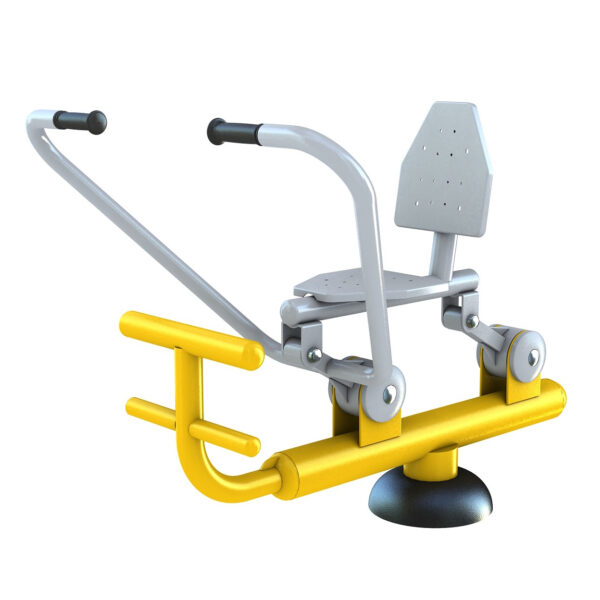
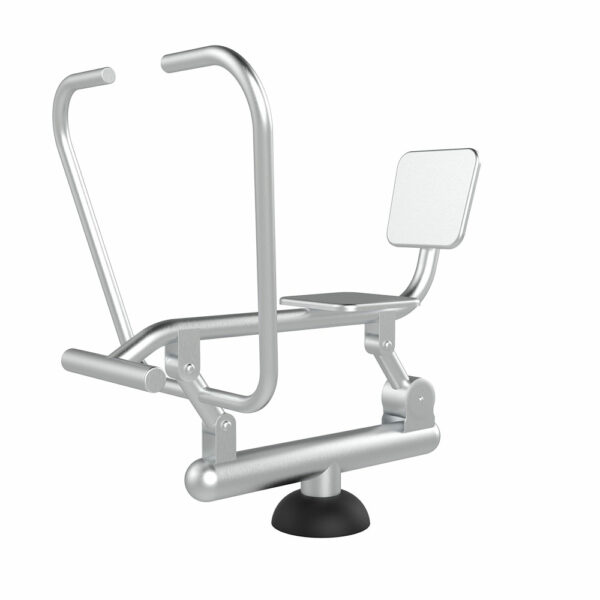
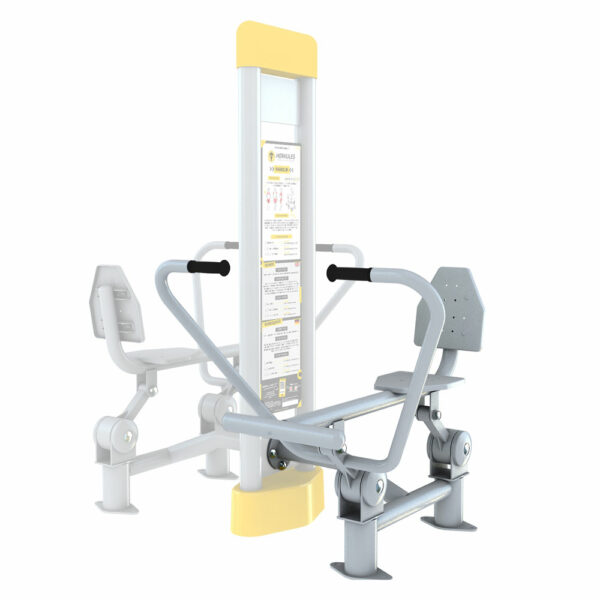
An outdoor rowing machine is a piece of fitness equipment designed to be permanently installed outdoors. Unlike indoor rowing machines (water, air or magnetic resistance ergometers), they are made from weather-resistant materials, usually powder-coated galvanized steel, and require no electricity or complex maintenance.
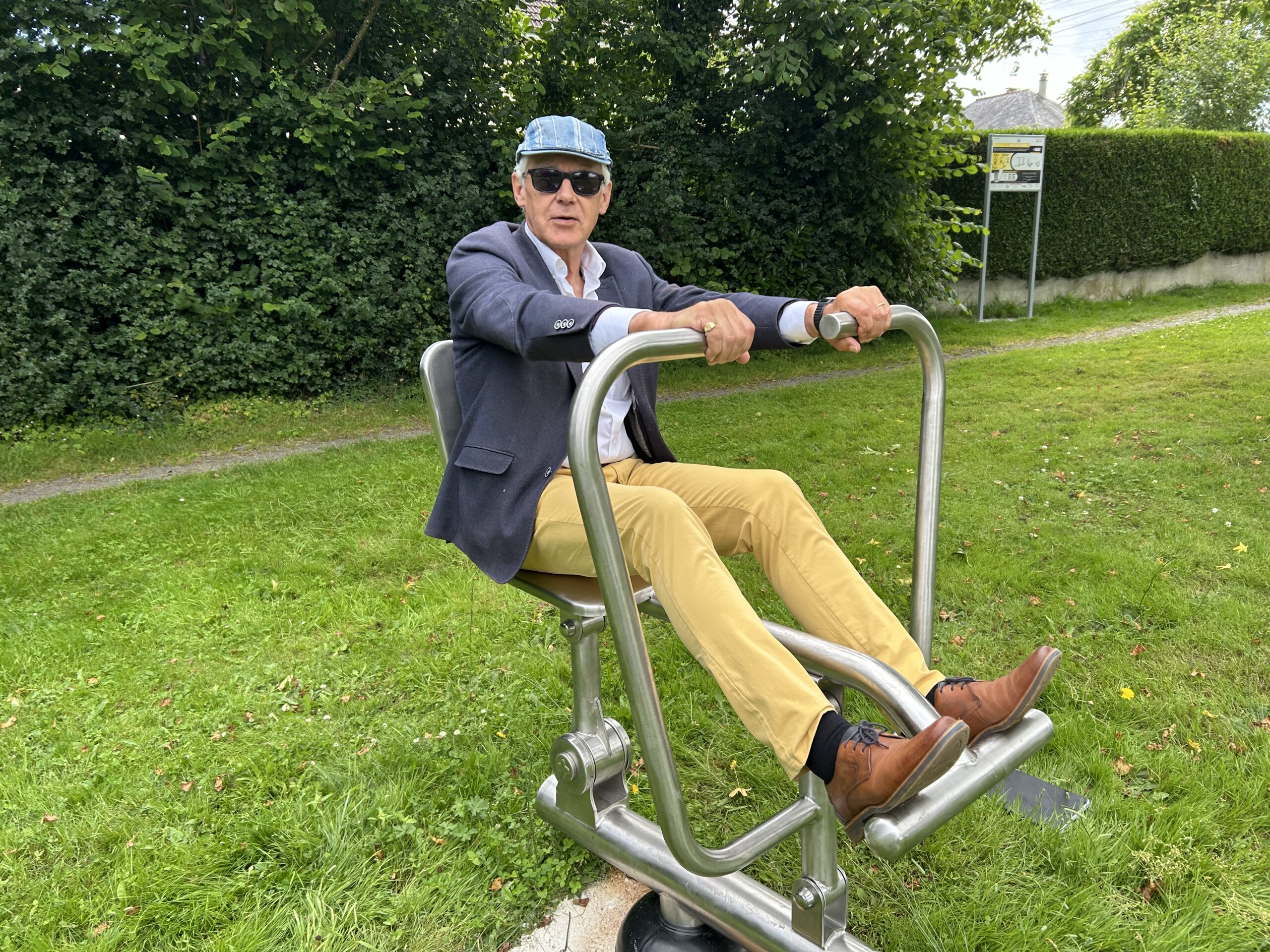
The mechanism is simple: the user sits on a fixed or slightly reclined seat, feet braced on footrests, and pulls handles connected to a resistance system (springs, pulleys or friction), reproducing the pulling motion of rowing. Some models feature a sliding seat for a fuller range of motion, close to that of a professional rower.
| ℹ️ Did you know?The outdoor rowing machine is one of the few pieces of outdoor fitness equipment to work the whole body in one continuous movement. That’s why it’s often referred to as the “full body” fitness machine par excellence. |
Which muscles does the outdoor rower work?
The rowing movement is one of the most complete in fitness. According to sports physiologists, it recruits around 86% of the body’s total musculature, making it a remarkably effective exercise. Here’s a breakdown of the muscle groups involved.
| Muscle group | Main muscles | Movement phase |
| Back | Latissimus dorsi, rhomboids, trapezius medius | Traction phase (return of arms) |
| Arm | Biceps brachii, brachialis, brachioradialis | Traction phase |
| Shoulders | Posterior deltoid, rotator cuff | Traction and return phase |
| Legs | Quadriceps, hamstrings, glutes | Leg thrust phase |
| Abdominals and sheathing | rectus abdominis, transversus abdominis, obliques | Throughout the movement |
| Forearm | Extensors and flexors of the fingers | Handle grip |
The back: the big beneficiary
The arm-pulling phase places intense stress on the lats, the large, fan-shaped muscle that extends from the shoulders to the lower back. It’s this muscle that gives rowers their characteristic V-shaped silhouette. The rhomboids and middle trapezius, responsible for bringing the shoulder blades together, are also heavily recruited. A back strengthened by regular rowing improves posture and significantly reduces chronic low-back pain.
Legs: the engine of propulsion
Contrary to popular belief, the legs are the muscle group most heavily used on a rowing machine. The thrust of the lower limbs initiates every movement and generates most of the power produced. Quadriceps, hamstrings and glutes work in synergy to produce full leg extension without any joint impact, which is particularly valuable for people with knee or hip pain.
Abdominals: a permanent sheathing
Throughout the rowing movement, the abdominal muscles work isometrically to stabilize the trunk and transmit forces between the lower and upper body. This permanent sheathing strengthens the transverse (deep muscle of the abdominal girdle) and obliques, contributing to better lumbar stability and a more upright posture in everyday life.
Arms and shoulders: finishing the movement
The biceps and forearm muscles are involved in the final phase of traction, bringing the handles towards the torso. The shoulders, particularly the posterior deltoid, help to extend and stabilize the glenohumeral joint. Regular work on the rowing machine helps to develop balanced shoulders and prevent certain injuries linked to the over-stressing of the anterior muscles (often caused by prolonged sitting postures).
How do I use an outdoor rowing machine properly?
The technical quality of your movements is crucial to getting the most out of your rowing machine and avoiding injury. Here are the key steps to optimal use.
The starting posture
Before starting the movement, adopt the correct starting position. Sit on the seat, feet firmly planted on the footrests. Back straight, leaning slightly forward (approx. 10-15 degrees), shoulders relaxed, arms outstretched toward the handles. Look straight ahead, not down.
| ⚠️ Common mistake to avoidNeverarch your back in the starting position. A rounded back under stress is the leading cause of back pain when rowing. Engage your abdominal muscles from the start to maintain a natural arch. |
The complete movement cycle in 4 beats
1. Leg push: from the bent position, push with your legs to extend your knees, keeping your back straight. This is the phase that generates the most power.
2. Trunk tilt: with the legs almost straight, tilt the trunk slightly backwards (no more than 20 degrees), maintaining abdominal support.
3. Arm pull: pull your wrists down your sides, elbows at your sides, until your hands are level with your navel or lower sternum.
4. The return: in reverse order, straighten your arms, bend your torso forward, then bend your legs to return to the starting position. The return should be controlled and slower than the pull.
Rhythm and cadence
A good rowing rhythm respects an effort/return ratio of about 1:2: the pull phase is powerful and fast, the return is slow and controlled. For beginners, a cadence of 18 to 22 strokes per minute is ideal for concentrating on technique. Experienced athletes can aim for 24 to 28 strokes per minute for aerobic work, or high-intensity intervals peaking at 30 strokes or more.
| ✅ Technical tipThink ofthe movement as a wave: legs, trunk, arms in this order on the pull; arms, trunk, legs in this order on the return. This precise sequence optimizes force transmission and protects joints. |
What are the benefits of an outdoor rowing machine?
Effective, low-impact cardio training
The outdoor rowing machine is an excellent cardio-training device. By mobilizing large muscle groups simultaneously, it rapidly raises the heart rate and effectively stimulates the cardiovascular system. Unlike running or jumping, it generates no joint impact, making it particularly suitable for overweight people, senior citizens, people undergoing rehabilitation or those suffering from knee or ankle pain.
Overall muscle strengthening
By simultaneously exercising back, arms, legs and abdominals, the rowing machine offers complete muscle strengthening in a single exercise. It’s a great asset for people with little time or who want to simplify their workout routine. A 20-30 minute session on an outdoor rowing machine can be an excellent substitute for a circuit combining several separate pieces of equipment.
Improving posture
The strengthening of back, rhomboid and deep abdominal muscles induced by regular rowing contributes directly to improved posture. In a society where a sedentary lifestyle and prolonged sitting postures are the cause of many muscular imbalances, the outdoor rowing machine is a particularly effective antidote to the neck and back pain associated with office work.
Accessible to all levels and ages
The outdoor rowing machine is inclusive by nature. The intensity of effort is fully adjustable according to the user’s pace, cadence and power. A senior citizen wishing to maintain joint mobility and muscle tone will use it at low cadence with reduced amplitude. An athlete seeking to develop endurance and power will use it at high intensity in intervals. The same machine can therefore satisfy users with very different profiles.
Examples of sessions on an outdoor rowing machine
Beginner session: Basic endurance (20 minutes)
– 5 min warm-up at very low cadence (15 strokes/min), reduced amplitude
– 10 min at moderate speed (18-20 strokes/min), maintaining regular breathing
– 5 min return to calm, very slow pace with back and shoulder stretches
Intermediate session: Fractionné (25 minutes)
– 5 min progressive warm-up
– 6 x 2 min of intense effort (25-28 strokes/min) with 1 min of active recovery between each stroke
– 5 min return to calm
Confirmed session: Power and endurance (35 minutes)
– 5 min warm-up
– 20 min at a steady, regular pace (22-25 strokes/min) with perfect technical maintenance
– 3 x 30 seconds at maximum power (sprint) with 90 seconds of recovery
– 5 min return to calm and complete stretching
Precautions and contraindications
While rowing machines are generally safe and suitable for a large majority of people, certain precautions are necessary in specific cases.
– Acute low-back pain: not recommended in the acute phase. In the recovery phase, consult a health professional before resuming.
– Herniated discs: the flexion-extension movement of the trunk can aggravate certain disc pathologies. Medical advice is essential.
– Recent hip prostheses: large hip flexion amplitudes should be avoided in the months following surgery.
– Advanced pregnancy: practice must be validated by a doctor and adapted as the pregnancy progresses.
| 📌 Important reminderBeforeany intensive sports practice, especially for sedentary people, seniors or those with a history of heart disease, it’s advisable to consult a doctor. The outdoor rowing machine places a significant strain on the cardiovascular system. |
Why choose an outdoor rowing machine for a public or private sports area?
For local authorities, residential property managers or developers of outdoor sports facilities, rowing machines are a particularly appropriate choice. Its versatility makes it an outdoor fitness equipment appreciated by a very wide range of users, which maximizes its utilization rate and therefore the return on investment of the installation.
Professional outdoor rowing machines, made from powder-coated galvanized steel, require no power supply, withstand the harshest weather conditions and require minimal maintenance. They can be easily integrated into a fitness trail, a multi-equipment fitness area or a themed sports area.
Herkules Fitness offers a range of outdoor rowing machines designed for intensive use in public and private spaces. Certified to EN 16630, they are available in a range of colors to blend harmoniously into any environment. Our teams can help you design your outdoor fitness area, from free 3D visualization to turnkey installation.
The outdoor rowing machine is much more than just a piece of outdoor fitness equipment: it’s a complete, accessible, effective and joint-impact-free training tool. By simultaneously exercising back, legs, arms and abdominals, it offers in a single movement what other machines can only produce in combination. Regular use improves cardiovascular endurance, strengthens overall musculature, corrects posture and reduces back pain. Whether you’re a beginner looking to get back into gentle exercise, or a sportsman looking to vary your outdoor workouts, the outdoor rowing machine deserves a place in your fitness routine.