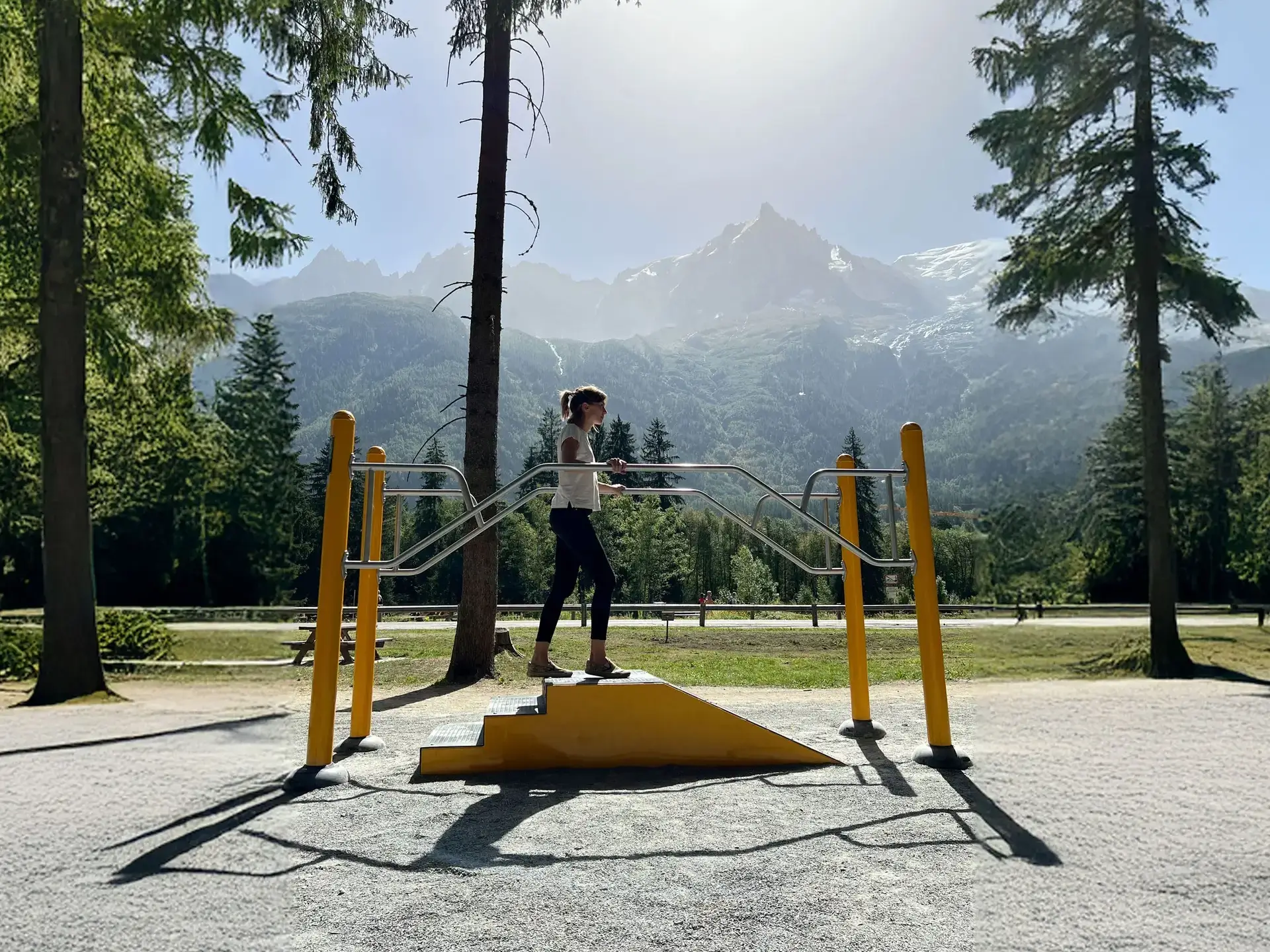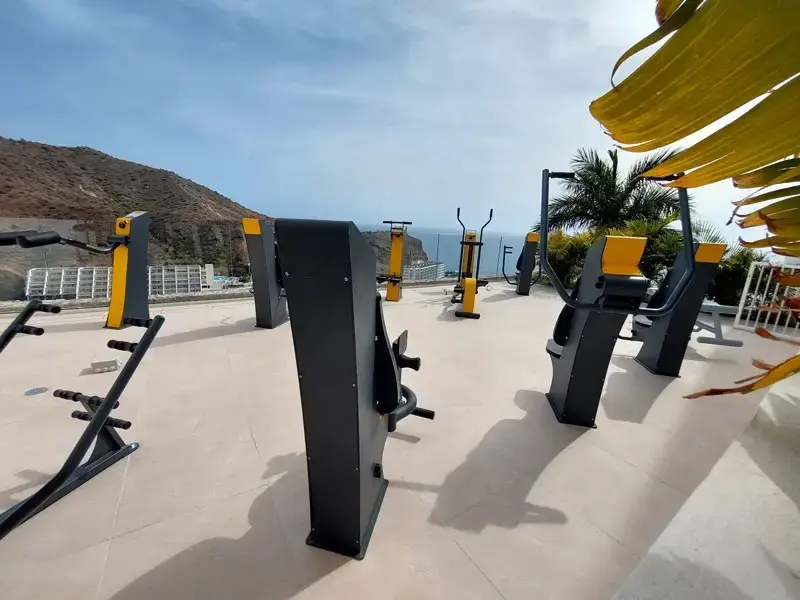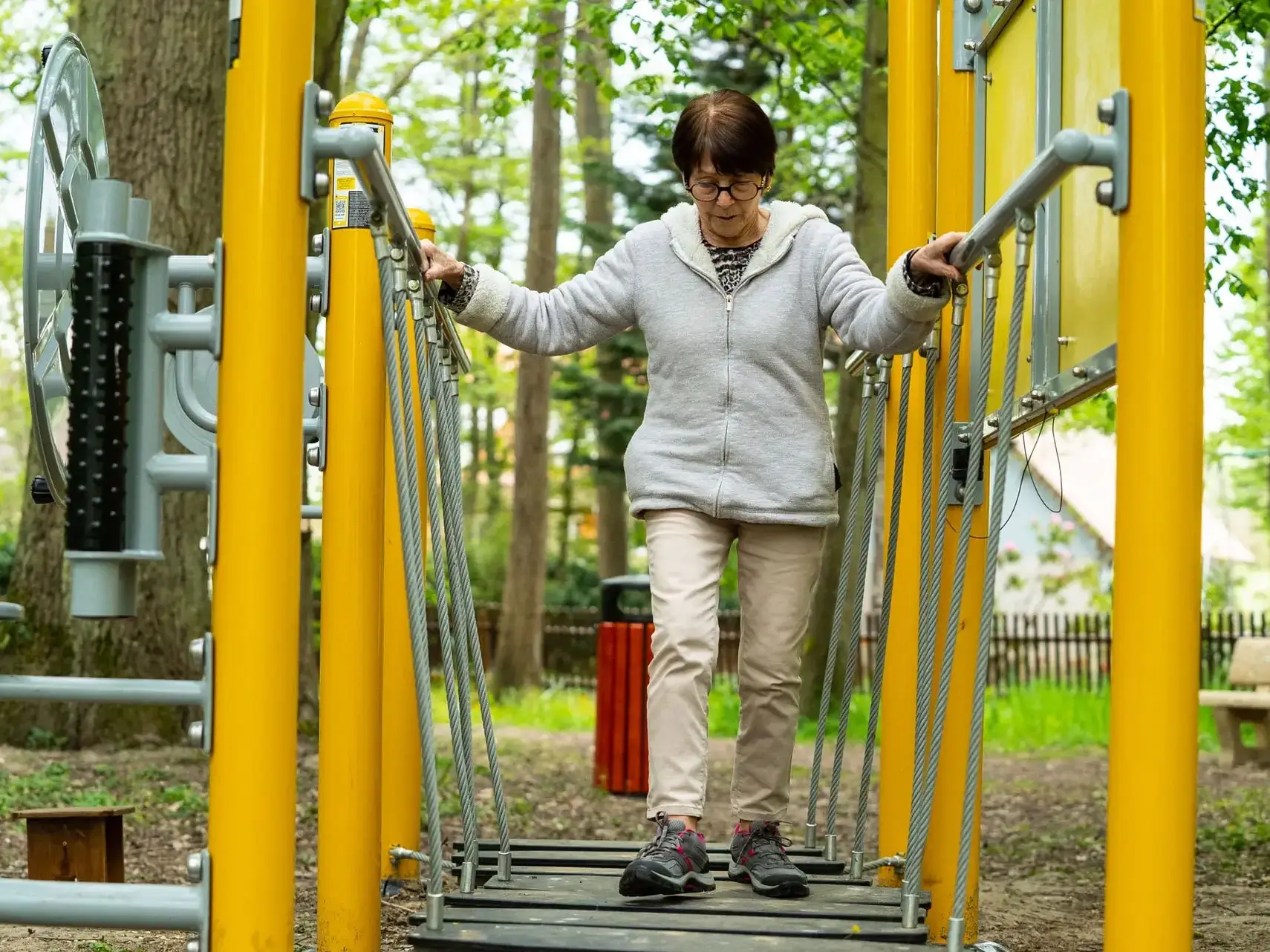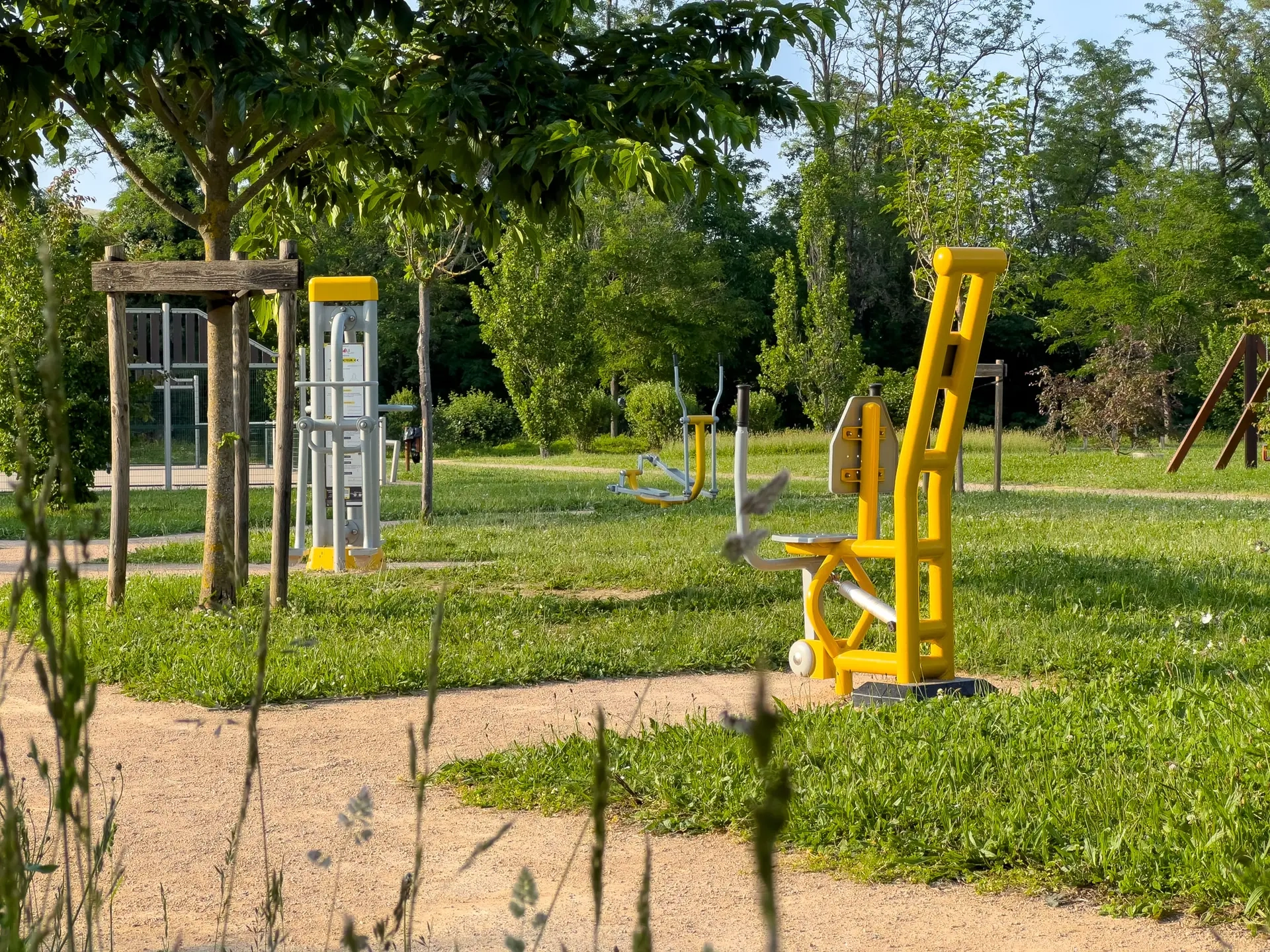

Train outdoors, breathe in the fresh air, feel the ground beneath your feet and build your physique without walls: outdoor weight training is winning over a new generation of athletes. Accessible, stimulating and rich in technical resources, it invites you to rethink your routine and progress in a different way. From street workoutpublic facilities or creative improvisation, this approach rivals the effectiveness of the classic gym. Take a behind-the-scenes look atoutdoor training and build a program adapted to your environment.

Key takeaways:
- Outdoor weight training develops strength, endurance and coordination through functional movements
- It offers total freedom: no subscription, training can be adapted to the place, time and energy of the day.
- The outdoor fitness equipment and body weight are all you need to build a complete, progressive program
- Training outdoors boosts mental strength and motivation, by getting out of the confines of the gym.
- Good technique, warm-up and cool-down are essential for safe progress.
Why choose outdoor weight training?
Outdoor training engages every muscle thanks to the diversity of movements and terrain. The practice demands both strength and endurance, and improves proprioception (perception of the body in space, essential for mastering complex exercises). The mental aspect is not left out: overcoming bad weather builds resilience, which is essential to all sporting progress.
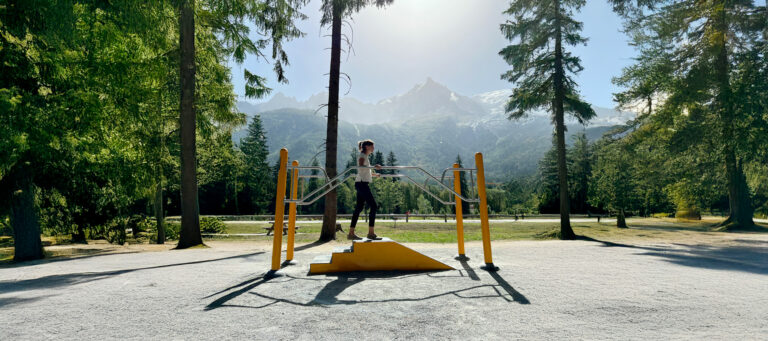
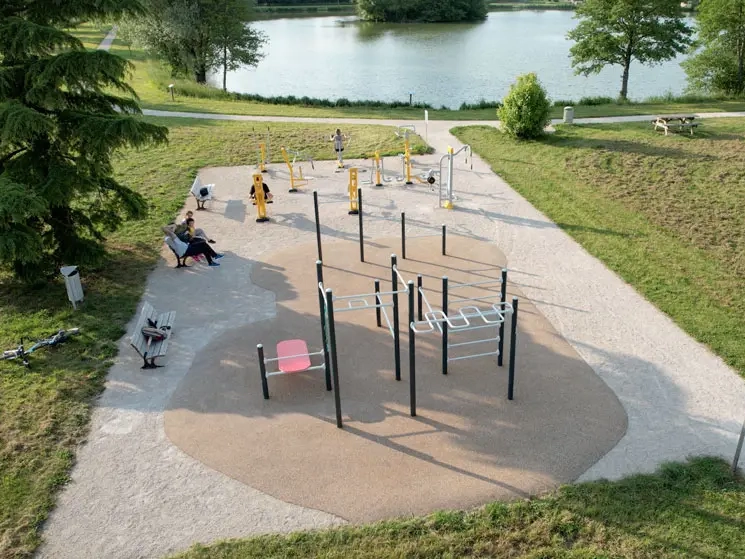
Outdoor weight training offers unique freedom. You can adapt each session by alternating between outdoor fitness machinesor using natural elements such as benches, trees or stairs. Each session reveals a new aspect, making the effort always stimulating. The simplicity and accessibility of parks and workout areas eliminates the need for membership or expensive equipment.
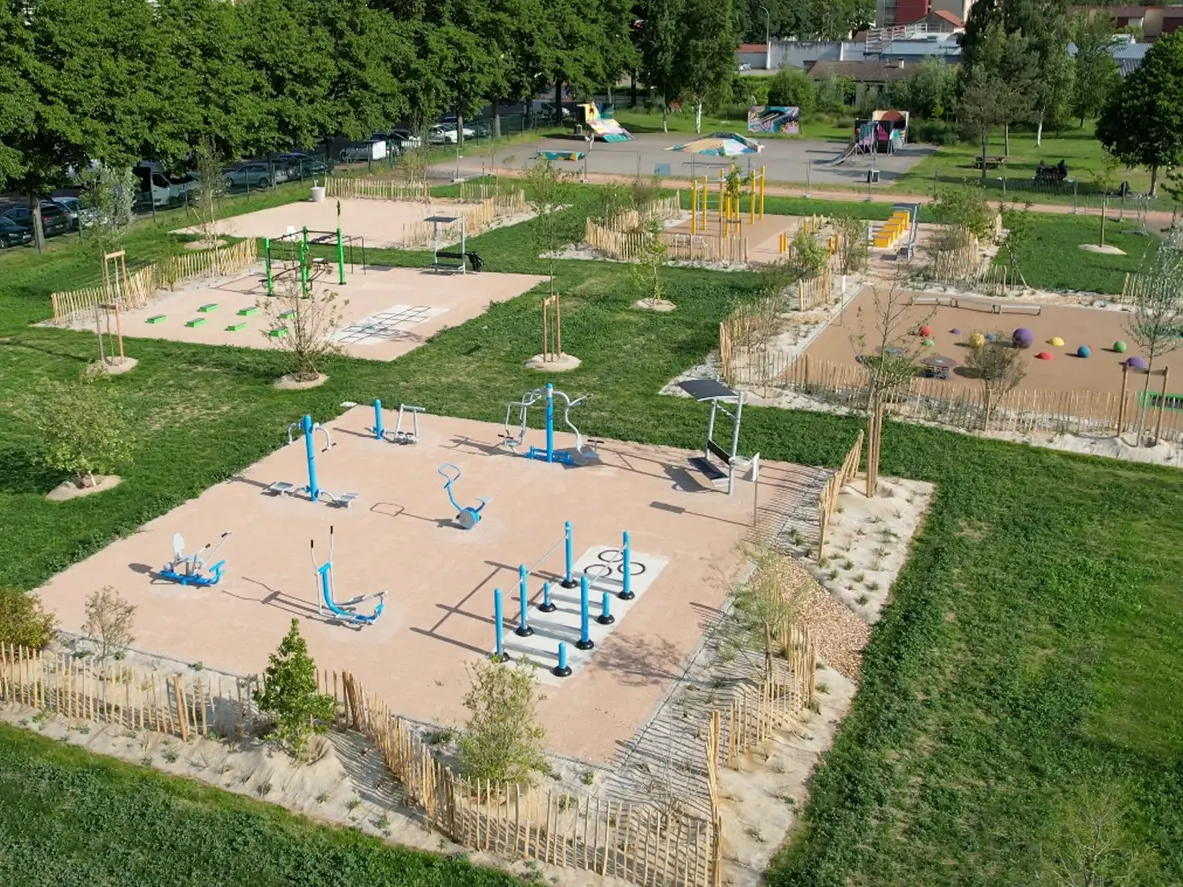
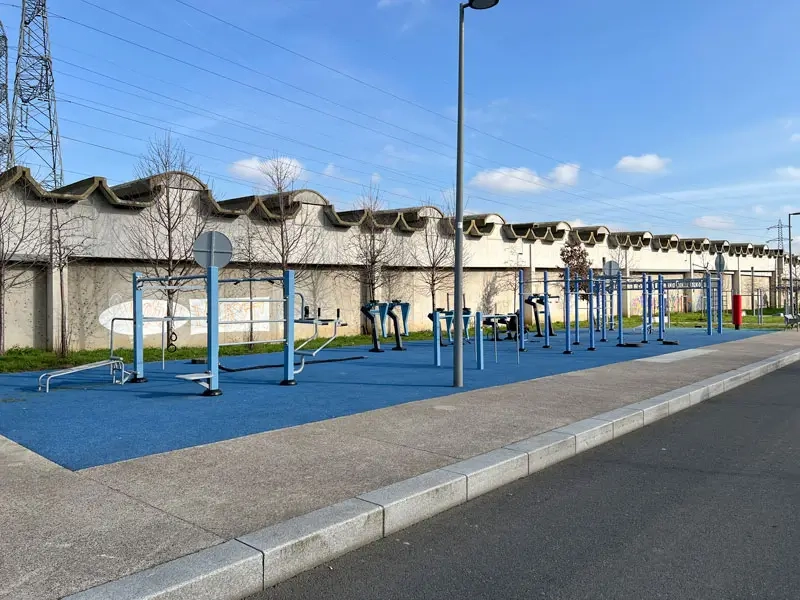
Outdoor fitness equipment: what can you find in parks?
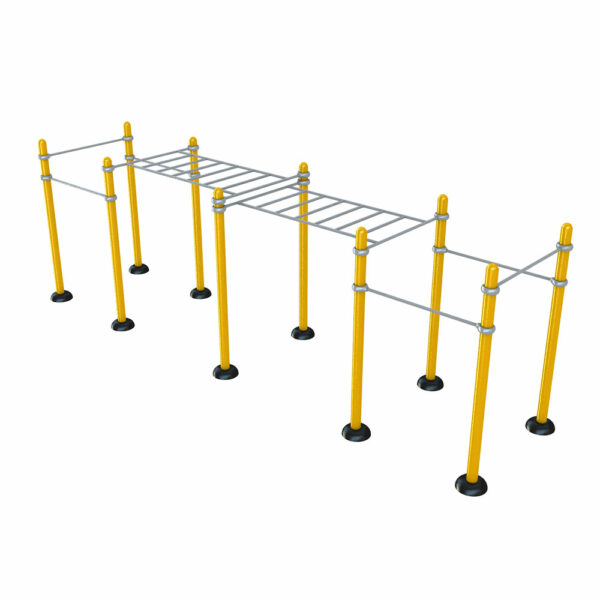
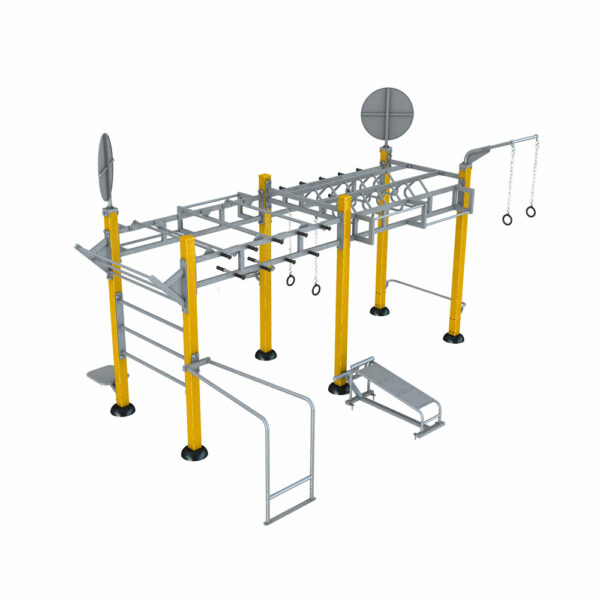
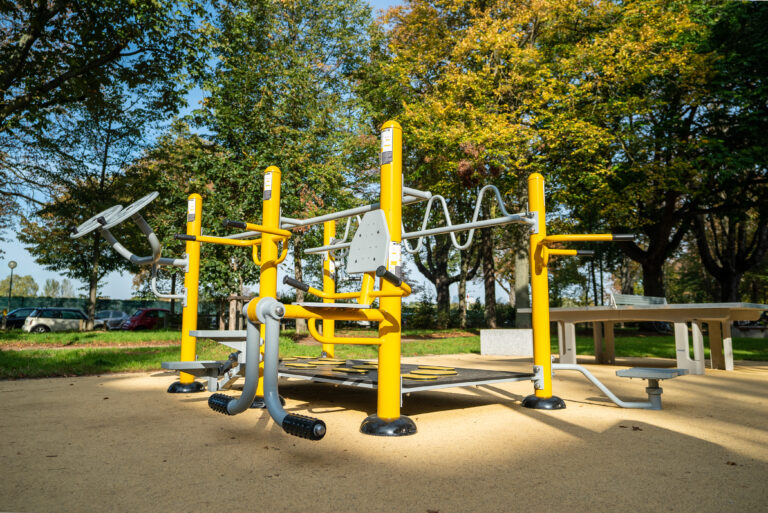
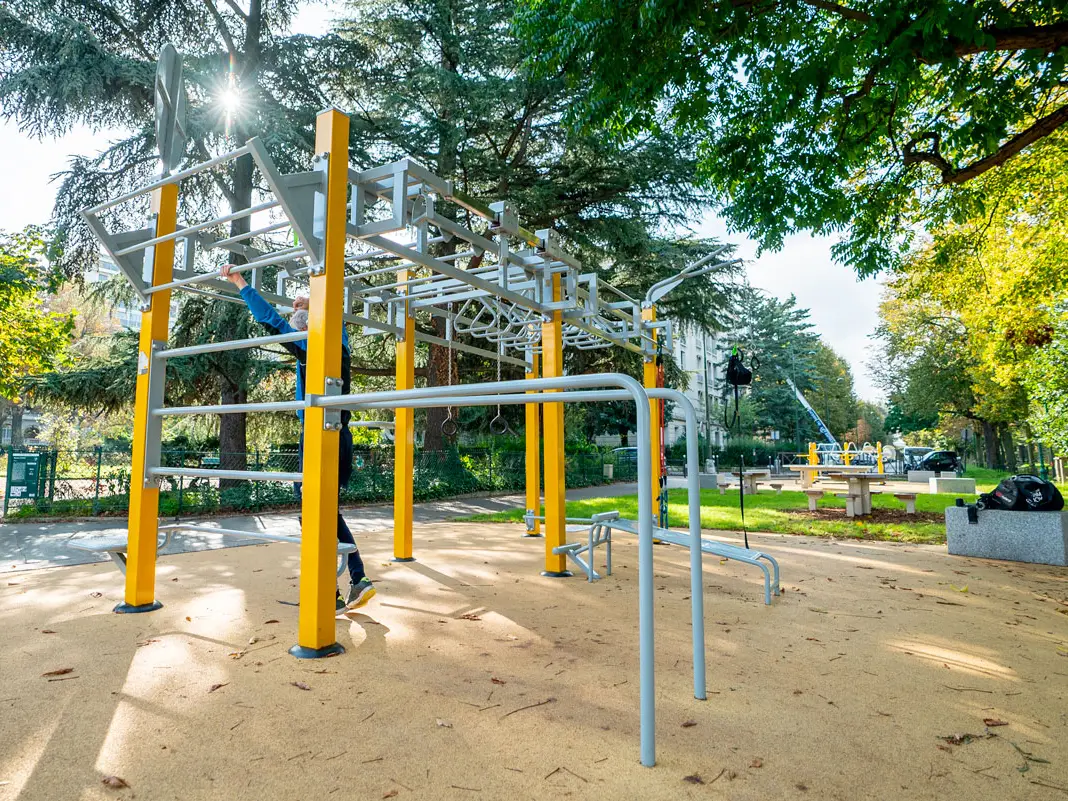
The stainless steel outdoor fitness equipment in public spaces. These sturdy modules offer a wide range ofbodyweight resistanceexercises. Fixed bars, parallel bars or dedicated stations: each element targets a specific muscle group.
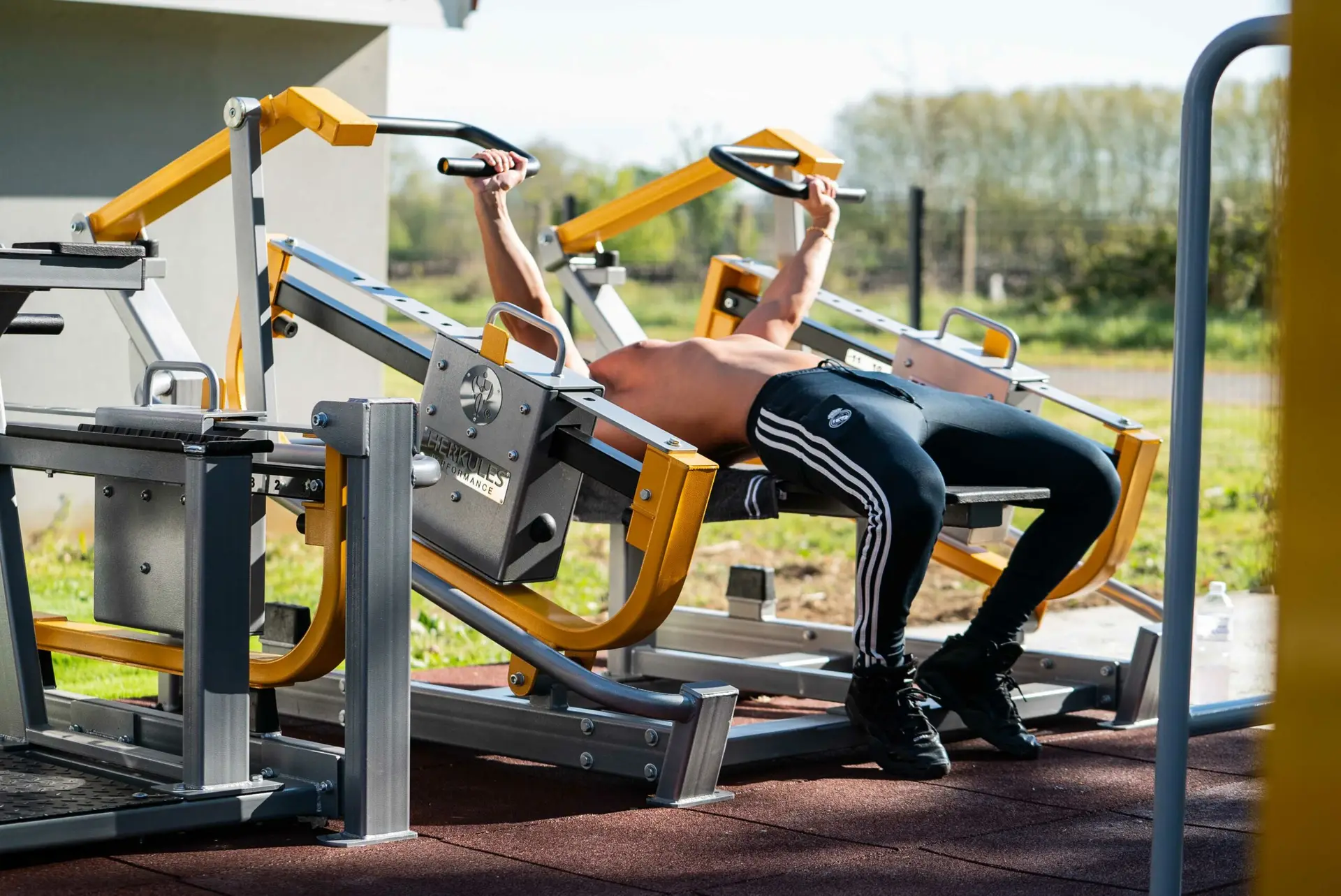
Other outdoor fitness equipment incorporates simple pulleys or movable seats, simulating classic movements such as pull-ups or dips. An overview of the facilities helps to create a personalized workout for all levels, from beginner to expert.
What are the advantages of these devices?
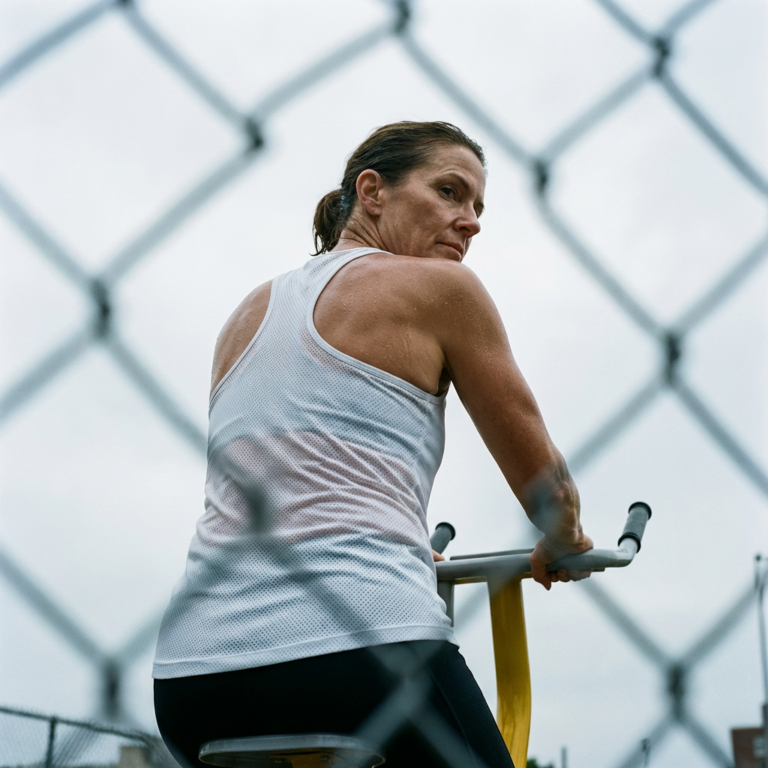
Their design promotes safety thanks to their stability and the absence of free loads. This reduces the risk of injury due to improper handling, particularly for new users. Non-slip grip zones ensure a secure hold, even when wet or sweaty.
These structures are weather-resistant and low-maintenance, allowing collective use without seasonal constraints. Finally, the convivial nature of these platforms encourages people to meet and exchange training tips, in a community spirit.
How to optimize equipment use?
To make the most of these adjustable external equipmentTake care with your posture settings (scapulas lowered for pull-ups, pelvis aligned for dips). Work at full amplitude, controlling concentric and eccentric phases to maximize muscle activation.
Think about combining different apparatus to create circuits incorporating progressive overload. For example, alternating barbell push-ups, jump squats and rope climbs effectively muscles the posterior and anterior chains while developing explosiveness.
Programs and examples of outdoor strength training exercises
An effective outdoor bodybuilding program combines large functional movements, adaptable to your physical or aesthetic goals. Vary the exercises regularly to avoid stagnation and prevent imbalances.
Outdoor HIIT sessions are gaining in popularity for burning calories while strengthening the whole body. Follow one another for 20-30 minutes with short, intensive blocks separated by brief breaks. You’ll build power and endurance, while enjoying the stimulating natural surroundings.
Ideas for exercises that can be performed without special equipment
Here are a few must-haves for everyone:
- Floor or elevated push-ups (pectorals, triceps, sheathing)
- Bar pull-ups (back, biceps, grip)
- Squats or jumping lunges (legs, explosiveness, cardio)
- Bench or parallel dips (triceps, pectorals, shoulders)
- Knee raises on a walk (cardio, abdominals, legs)
Work in short sets (6 to 15 repetitions) or focus on duration (30-60 seconds of effort), while maintaining impeccable technical quality. Allow yourself active recovery with deep, controlled breathing.
Example of a full-body circuit for all levels
Try this scheme for a multi-purpose session:
- Wide pull-ups x8
- Classic pumps x12
- Jump squats x15
- Bench dips x10
- 45-second plank gainer
Repeat the circuit 4 to 5 times, pausing for 60 seconds between each round. To progress, increase the number of repetitions or progressively reduce the rest time.
Training tips and precautions for outdoor use
Before every outdoor muscle-building session, start with a dynamic warm-up. Mobilize joints and large muscle groups with rotations, lifts and small jumps. This preparation significantly reduces the risk of injury and optimizes performance from the very first repetitions.
Adapt your clothing to the weather, choose shoes with good grip and take along regular hydration. A mat can be useful if the ground is unstable or damp. Pay particular attention to breathing, especially during temperature variations or HIIT-type split workouts.
Progress and recovery to watch
Don’t forget to adjust the intensity according to your level of fatigue or recovery. Uneven surfaces place greater demands on stabilizing muscles and tendons, so allow them the time they need to recover after a heavy session. Incorporate gentle mobility sessions to restore flexibility and joint function.
Take advantage of the outdoor setting to vary your workout schedule and stimulate your body in different ways: in the morning to boost energy, in the evening to relieve stress. Alternate heavy and light days in your bodybuilding program to avoid overwork and keep progressing serenely.
Frequently asked questions about outdoor weight training
What types of outdoor weight training equipment are usually found in public parks?
- Fixed bars (pull-ups, muscle-ups, leg raises)
- Parallel bars (dips, push-ups, isometrics)
- Inclined benches for sit-ups or step-ups
- Combined resorts integrating climbing or motorized courses
| Hardware | Main application |
| Fixed bar | Back, biceps, abdominals |
| Parallel bars | Pectorals, triceps, shoulders |
This equipment already covers most of the requirements for a varied bodybuilding program.
How do you structure an effective street workout session?
Plan to alternate muscle families:
- Pulls (pull-ups, rowing for back and biceps)
- Push-ups (push-ups, dips for torso and triceps)
- Lower limbs (squats, lunges, step-ups)
- Sheathing reinforcement (planks, mountain climbers)
Finish with a few minutes of stretching to improve recovery and limit muscle soreness.
Can you really build muscle without heavy equipment when training outdoors?
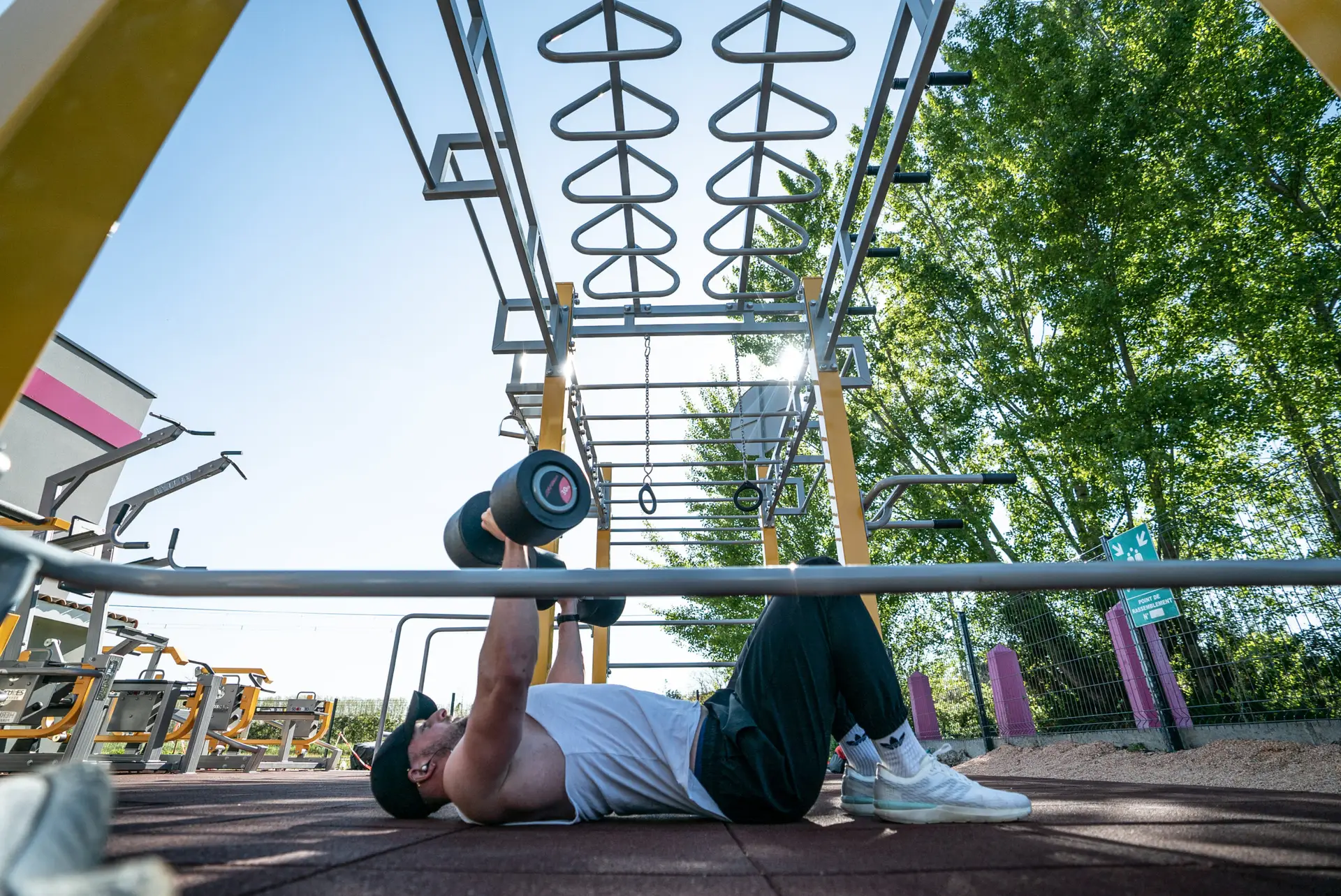
Yes, progressive overload also exists with bodyweight. Vary:
- Amplitude (e.g. explosive push-ups, weighted pull-ups with bag)
- Execution rhythm (slow tempo or plyometric)
- Volume (repetitions, sets or reduced breaks)
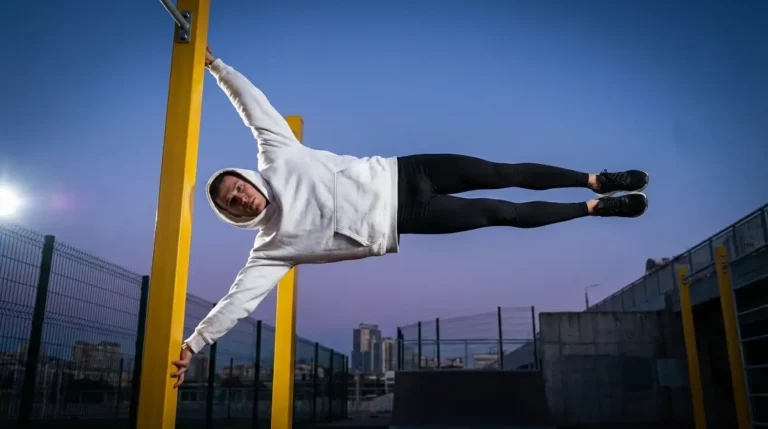
Athletes specializing in street workout are perfect examples of the ability to develop power, hypertrophy and coordination through adapted basic exercises.
What tips do you have for staying motivated all year round during an outdoor weight training program?
Set yourself achievable short-term goals. Change the order and nature of your exercises regularly. Involve a partner to reinforce regularity. Don’t hesitate to document your progress, either in notes or on video.
- Locate several parks and fitness centers near you
- Wear appropriate clothing to keep out the cold and heat.
- Use a dynamic playlist or podcast to punctuate your sessions.
Involving family or friends in certain routines maintains pleasure and motivation over time.