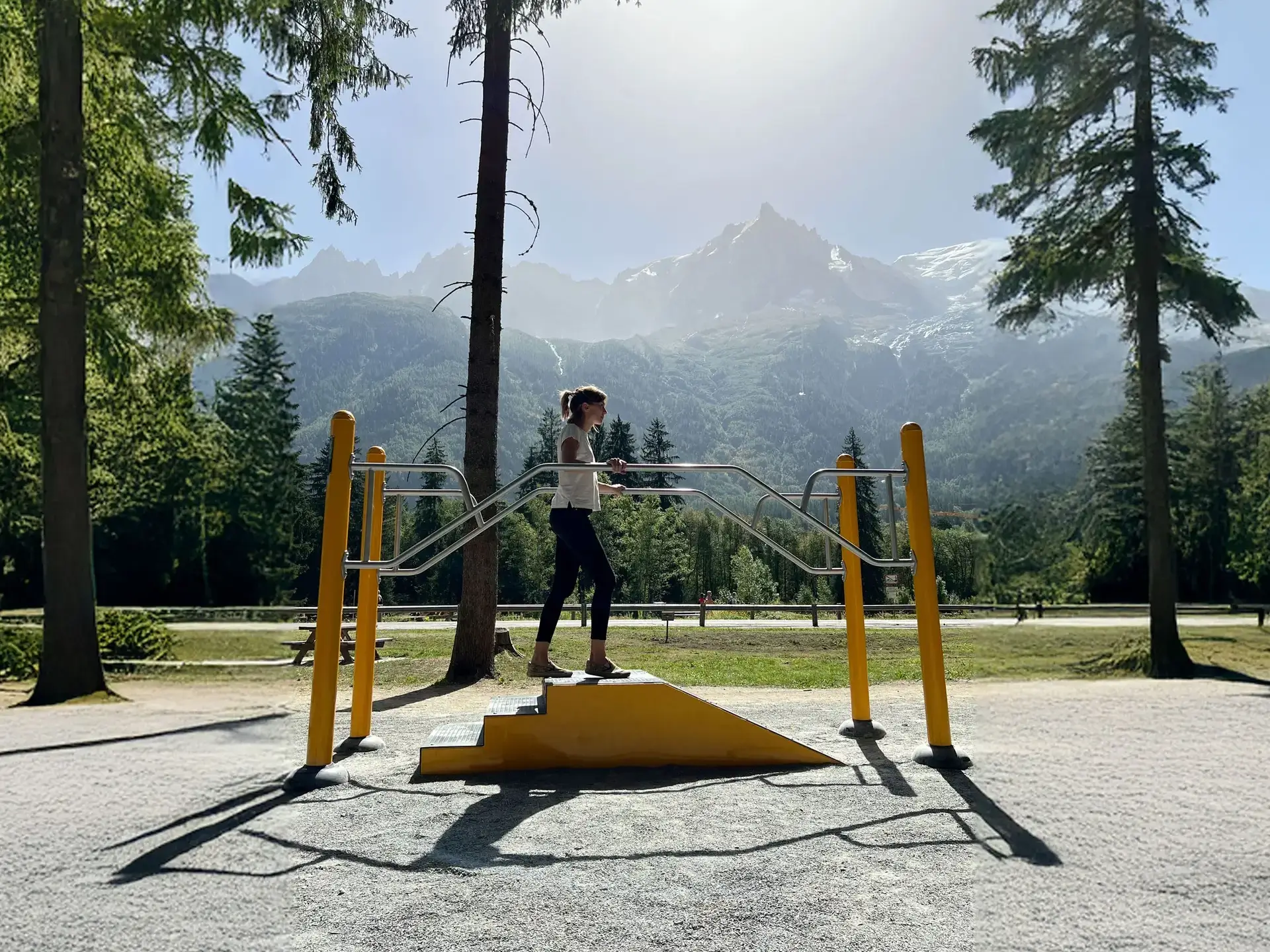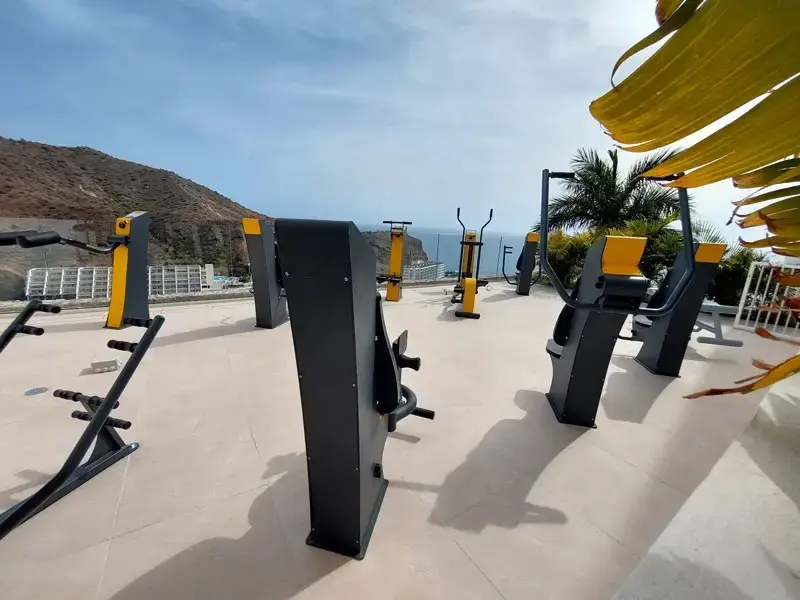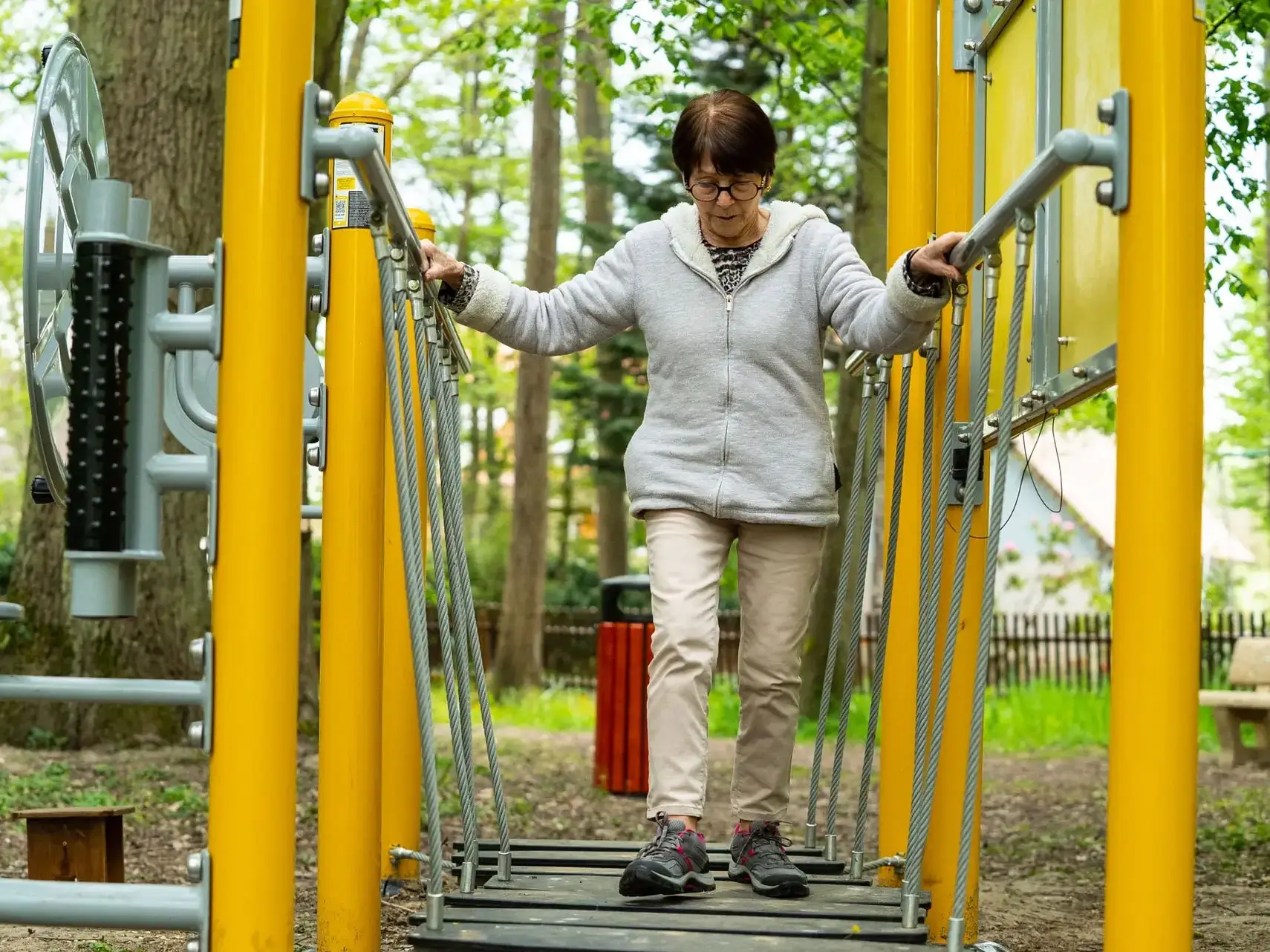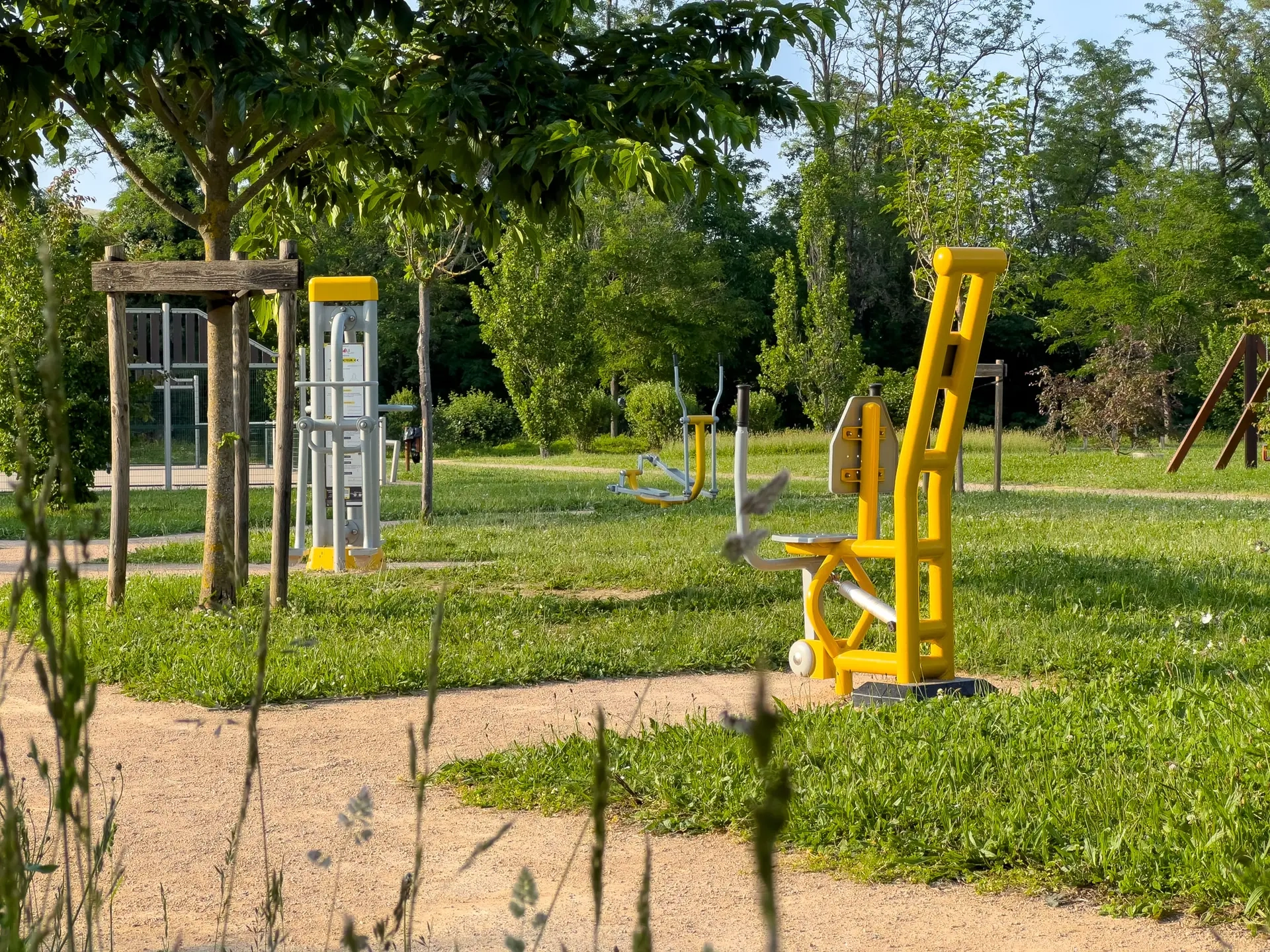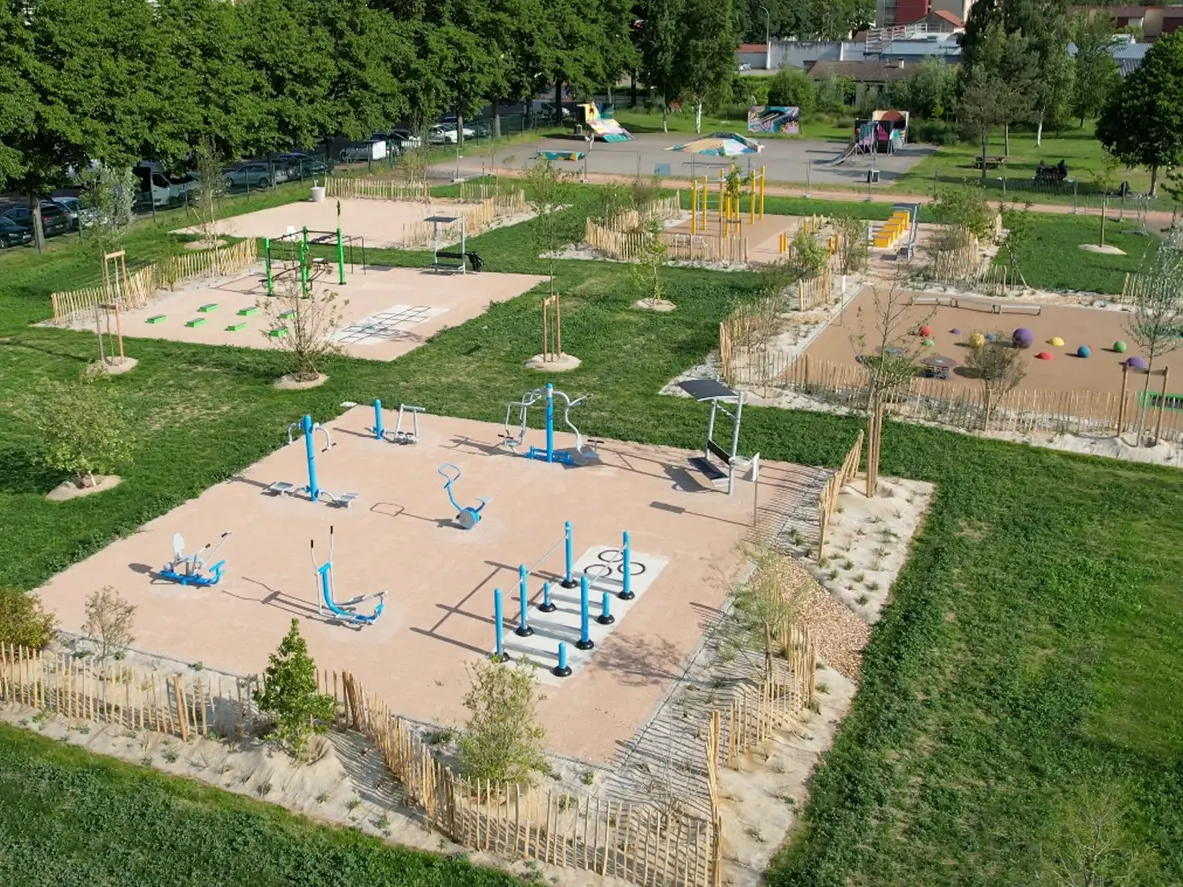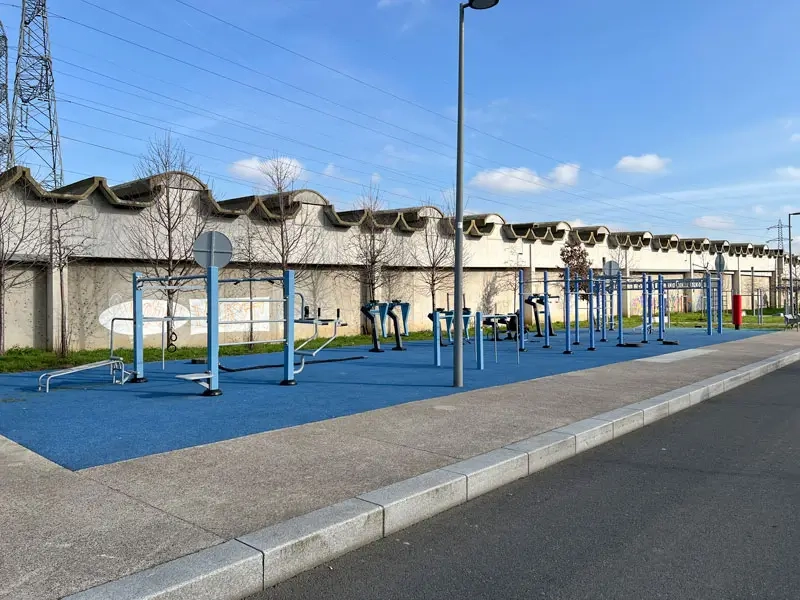

Quality of working life (QWL) has become a major strategic issue for French companies. Faced with the rise in psychosocial risks, the increase in musculoskeletal disorders and the intensifying war for talent, employers are looking for concrete, sustainable ways to improve the well-being of their employees. One of the most effective and profitable responses to these challenges is theoutdoor sports area, set up in the yard, in green spaces or on the roof terrace of the company site. This comprehensive guide presents the proven benefits, the most suitable equipment and the keys to a successful project.

QWL and corporate sport: a scientifically established link
Figures to alert HRDs
The state of occupational health in France paints a worrying picture. Musculoskeletal disorders (MSDs) are the leading cause of occupational illness, with over 40,000 new cases recognized each year. Back pain affects 80% of working people during their careers, and is the leading cause of long-term sick leave. A sedentary lifestyle at work, characterized by more than 7 hours of sitting per day, is now recognized as an independent cardiovascular risk factor, comparable to smoking in terms of its impact on premature mortality.
Against this backdrop, scientific studies are converging: regular physical activity in or near the workplace has measurable and significant effects on employee health, productivity and commitment.
| 📊 Key dataAccording toa study by the Institut National de Prévention et d’éducation pour la santé (INPES), employees who engage in regular physical activity have 27% less absenteeism on average than their sedentary colleagues. The WHO estimates that every euro invested in workplace health programs related to physical activity generates a return of 2.5 to 4.8 euros in reduced absenteeism and presenteeism costs. |
The physiological and psychological mechanisms at work
Physical activity has a number of complementary effects on well-being at work. Physiologically, it stimulates the production of endorphins and serotonin, the neurotransmitters of well-being, improves cerebral blood circulation, strengthens postural muscles that protect the back and joints, and regulates blood sugar and blood pressure. These effects translate directly into improved concentration, reduced mental fatigue and less chronic pain.
On a psychological level, sharing sports activities with colleagues creates informal bonds that strengthen team cohesion, reduce interpersonal tensions and improve the sense of belonging to the company. The sports break also acts as a decompression valve in the face of professional stress, enabling a return to work with a renewed level of energy and concentration.
Why choose an outdoor sports area rather than an indoor gym?
Many large companies have invested in indoor gyms. While these facilities offer undeniable advantages (all-weather accessibility, varied equipment), outdoor sports areas offer additional benefits that are often underestimated.
| Comparison criterion | Outdoor sports area |
| Investment cost | Significantly lower (no structural work, no fluids, no changing rooms to be created) |
| Operating costs | Virtually nil (no energy, no specialized maintenance staff) |
| Impact on well-being | Benefits enhanced by exposure to natural light and fresh air (vitamin D, chronobiology) |
| Hourly accessibility | 24 hours a day, 7 days a week, with no booking or maximum capacity constraints |
| Effect on creativity | Walking and outdoor exercise are associated with a 60% increase in creative thinking (Stanford study) |
| Maintenance | Simple periodic inspections, without permanent specialist technician |
| Employer signal | Visible from the common areas, the outdoor sports area is a concrete sign of the company’s commitment to well-being. |
| 🌿 The nature bonusResearchin environmental psychology shows that exposure to a natural environment, however brief, however partial, significantly reduces cortisol (stress hormone) within 5 to 10 minutes. A sports area integrated into a corporate green space combines the benefits of physical exercise and nature, producing a mental recovery effect superior to that of an indoor gym. |
The equipment best suited to your business context
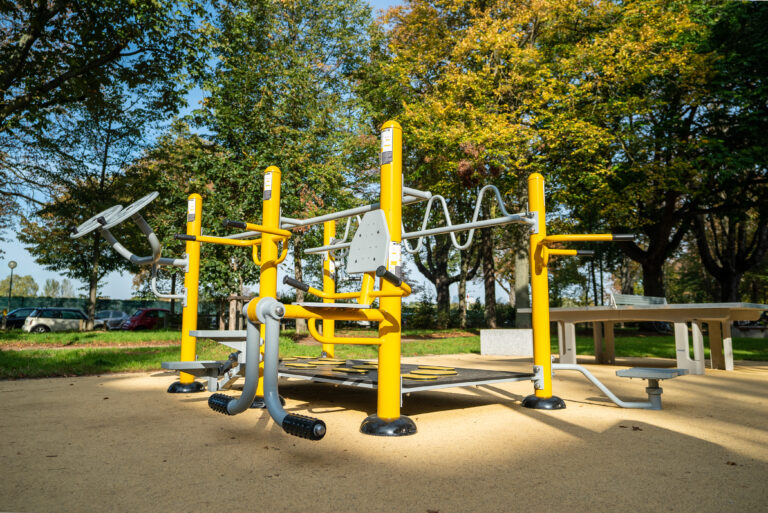
Not all outdoor fitness equipment is equally suitable for professional use. The corporate context imposes specific constraints: employees exercise in street clothes, breaks are short (20 to 45 minutes maximum), physical profiles are very varied, and the notion of accident risk must be minimized.
Priority equipment for company sports facilities
| Equipment | Main profit | Business context |
| Cardio-training equipment(elliptical trainer, rowing machine, bicycle) | Low-impact cardio for all levels | Excellent: suitable for street wear, short break sufficient |
| Stretching and mobility bars | Against RSI and cervical/lumbar strain | Ideal: just 5 to 10 minutes, no clothing constraints |
| Gentle strengthening equipment (press, puller) | Accessible muscle strengthening | Very good: guided movements, minimal risk of injury |
| Active walking routes | Decompression, light cardiovascular activation | Excellent: accessible to all, no special clothing required |
| Lumbar bench and postural equipment | Preventing and relieving back pain | Priority: direct targeting of the 1st cause of sick leave |
| Outdoor stretching and yoga area | Stress management, flexibility, relaxation | Very good: popular with women, rapid compression effect |
| Table tennis | Team cohesion, conviviality, reflexes | Ideal for lunch breaks, very high return on commitment |
What to avoid
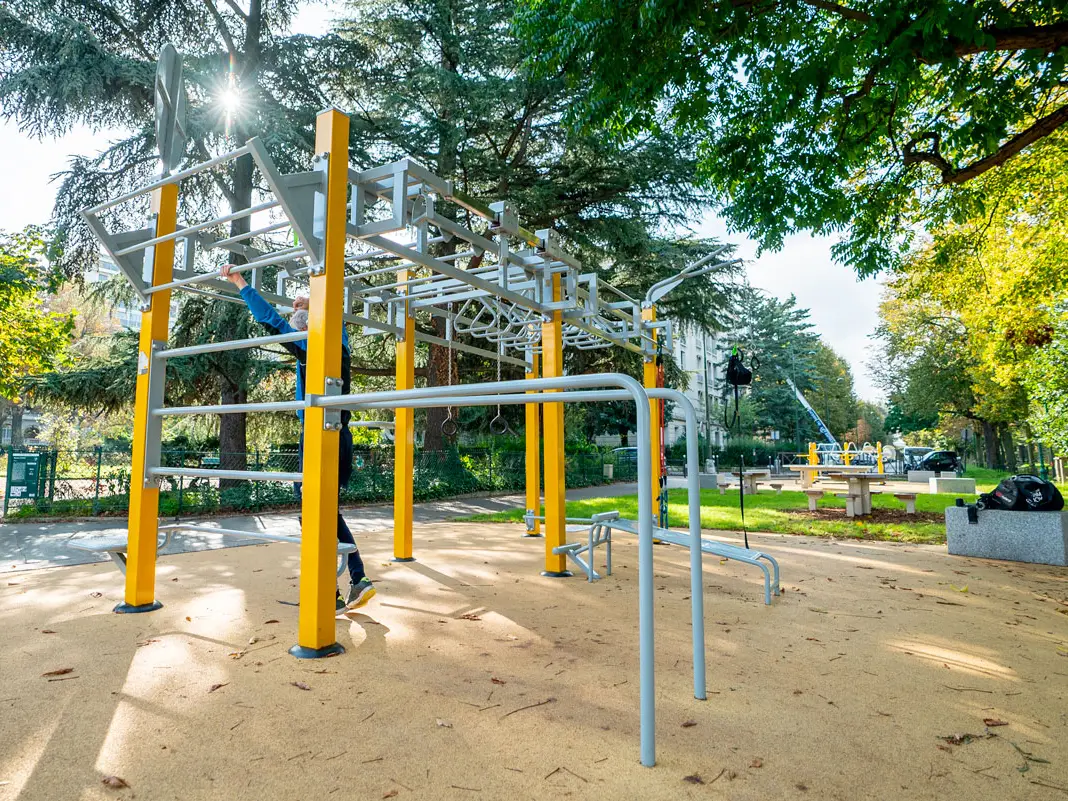
Some equipment, while effective in other contexts, is less suited to the corporate environment. Heavy weight training equipment(pull-up bars requiring high amplitude, deep dips) exposes unprepared employees to the risk of injury. High-intensity equipment (HIIT, advanced calisthenics) is unsuitable for short breaks, as it requires too long a recovery period for an immediate return to the workstation. Noisy equipment (machines with mechanical impacts) can disturb adjacent workspaces.
Return on investment: figures that speak to finance departments
One of the main obstacles to investing in a corporate sports facility is the difficulty of demonstrating return on investment (ROI) to financial decision-makers. Yet the available data can be used to build a solid business case.
| Cost indicator | Measuring the impact of physical activity in the workplace |
| Absenteeism | Average reduction of 25-30% among physically active employees (source: WHO Workplace Health Promotion) |
| MSD-related work accidents | 40% reduction in reported MSDs in companies with physical health programs (INRS) |
| Turnover | Companies with wellness programs average 18% lower turnover (Gallup 2023 report) |
| Productivity | Productivity gains of 5 to 11% in employees who engage in regular physical activity (University of Bristol study) |
| Recruitment costs | 65% of managers surveyed consider wellness facilities as a criterion for choosing an employer (Randstad 2024 barometer) |
| Presenteeism (work degraded by poor health) | Estimated reduction of 2,000 euros per employee per year in companies with active health programs |
| 💡 Simplified ROI calculationFora company of 200 employees with average absenteeism of 8 days a year and a daily cost of 300 euros per absent employee: total cost of absenteeism = 480,000 euros/year. A 25% reduction represents annual savings of 120,000 euros. A complete outdoor sports area for 200 people represents an investment of 30,000 to 60,000 euros amortized over 15-20 years, i.e. 1,500 to 4,000 euros per year. The ROI is clear from the very first year. |
Outdoor sports facilities as a lever for employer appeal
The war for talent: well-being as a recruitment argument
In a tight job market, where many sectors are struggling to recruit and retain qualified profiles, offering well-being at work has become a recruitment argument in its own right. New generations of employees (millennials and Generation Z) are placing increasing importance on quality of working life in their criteria for choosing an employer, sometimes to the detriment of slightly higher remuneration.
A visible, well-maintained outdoor sports area sends a strong signal to job applicants during site visits: it reflects the company’s concrete commitment to the health of its employees, well beyond the rhetoric of QWL. It’s a tangible and immediately perceptible differentiator in terms of employer branding.
The impact on engagement and loyalty
In addition to recruitment, a company sports facility is a powerful loyalty-builder. An employee who regularly uses the company’s sports facilities develops an additional attachment to his or her workplace. The space becomes a shared living space, a social landmark, part of the implicit contract between employer and employee. Studies show that employees who benefit from physical well-being programs are significantly more likely to recommend their company as a good employer.
Design and layout: best practices
Choosing the right site location
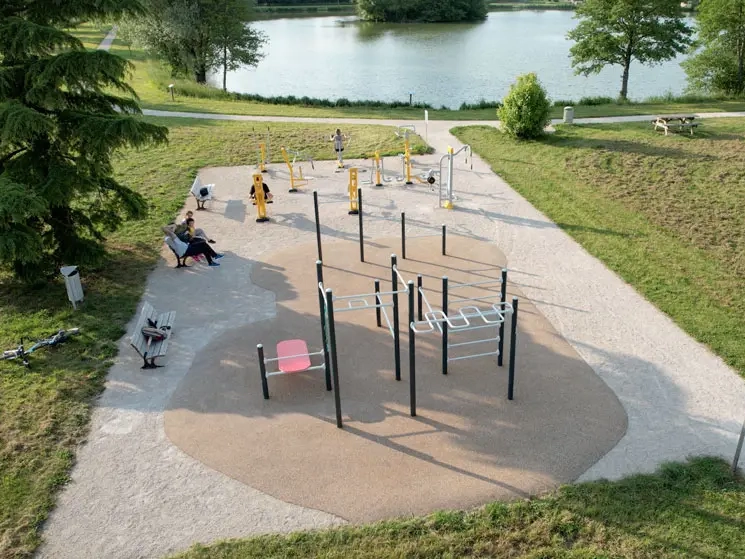
The location of the sports area is crucial to its utilization rate. It must be visible from the windows of work areas and catering zones, so that employees are constantly reminded of its existence. It should be easily accessible from the site’s main entrance, ideally within a 3-minute walk from the main building. A sunny location with the possibility of shade (pergola, trees) is ideal for comfortable use all year round.
Thinking about schedules and actual usage
Analysis of peak usage is essential to correctly size the space. In the workplace, the most frequently used periods are the lunch break (12h-14h), the morning before starting work (7h30-9h) and the end of the day (17h30-19h). The space must be able to accommodate several users at the same time without creating queues, otherwise usage will quickly be discouraged. Plan for a minimum of one machine for every 15 to 20 employees on site.
Integrating equipment into HR policy
An isolated sports area with no support policy produces disappointing results. To maximize its impact on QWL, it needs to be integrated into an overall HR approach that includes regular internal communication on the benefits of physical activity, collective challenges (step challenge, cardio challenge between departments), introductory sessions led by a sports professional at the launch, and educational signage on each piece of equipment explaining the recommended exercises and their benefits.
| ✅ Best practiceDesignateone or more “sports ambassadors” from among volunteer employees. These internal relays, often sports enthusiasts or health-conscious people, informally promote the use of the space, invite their colleagues to join them and maintain the momentum over time. Peer leadership is far more effective than top-down communication. |
Configurations to suit company size and available space
| Company profile | Recommended surface | Priority equipment | Indicative budget |
| SMEs (20 to 50 employees) | 40 to 80 m2 | 3 to 5 machines: elliptical, stretching bars, lumbar bench, cardio machine | 10,000 to 25,000 euros |
| ETI (50 to 250 employees) | 80 to 200 m2 | 6 to 10 machines + ping-pong table + walking course + stretching zone | 25,000 to 60,000 euros |
| Large company (250+) | 200 m2 and over | 10 to 15 units, separate zones, pergola, lighting, complete signage | 60,000 to 150,000 euros |
| Industrial / logistics site | Variable | Focus on RSI: stretching, lumbar strengthening, gentle cardio. Focus on safety | 15,000 to 40,000 euros |
Legal and tax framework: what employers need to know
The employer’s occupational health obligations
Article L. 4121-1 of the French Labour Code requires employers to take the necessary measures to ensure the safety and protect the physical and mental health of workers. Although the installation of a sports area is not a legal obligation as such, it is part of the primary prevention measures recognized and encouraged by occupational health organizations (CPAM, INRS, DREETS).
Tax benefits available
Investment in company sports facilities is eligible for a number of tax breaks. Expenses relating to the provision of collective sports facilities for employees are deductible from the company’s taxable income, provided they are incurred in the interests of the business. The employer’s contribution to the cost of sports facilities made available to employees is exempt from social security contributions within certain limits set by URSSAF, provided that access is collective and non-discriminatory.
In addition, companies that invest in quality of working life initiatives can benefit from reductions in their occupational injury and disease (AT/MP) contributions via the CPAM’s incentive pricing scheme. A well-documented application to the CPAM can generate significant savings on AT/MP contribution rates.
The QWL agreement and collective bargaining
Since the 2015 Rebsamen law, QWL has been a mandatory topic for negotiation in companies with at least 50 employees and a union delegate. The QWL agreement can include provisions on sports and wellness facilities made available to employees. Including outdoor sports facilities within the framework of a QWL agreement lends it additional legitimacy and commits the company to an approach recognized by social dialogue.
| 📌 Practical tipInvolvethe occupational physician right from the project design phase. His expertise in the occupational pathologies present in the company (RSI, low back pain, cardiovascular risks) will enable you to prioritize the most relevant equipment for your employee population. His support for the project also reinforces his legitimacy with management and employee representatives. |
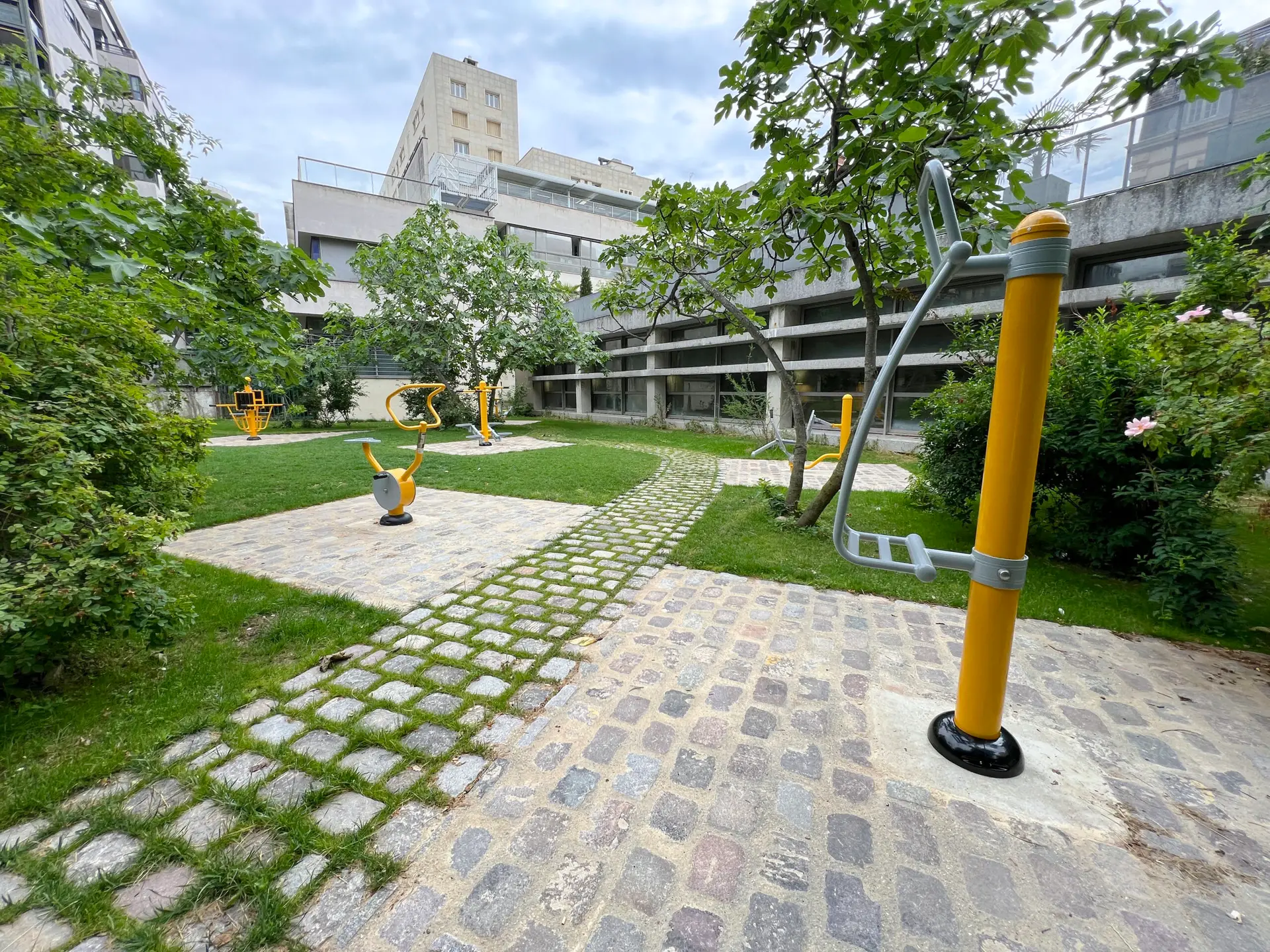
Maintenance and durability: a long-term investment
Unlike an indoor sports hall, which requires electrical equipment and regular technical maintenance, a quality outdoor sports area is extremely inexpensive to run. Galvanized steel equipment requires only periodic cleaning and annual inspections by a qualified service provider in compliance with EN 16630.
The lifespan of professional outdoor sports equipment is 15 to 20 years with minimal maintenance, bringing the annualized cost down to very low levels. Choose equipment whose manufacturer guarantees long-term availability of spare parts and offers a preventive maintenance contract. This security is particularly important in the corporate context, where out-of-service equipment sends out a negative signal about the employer’s real commitment.
A corporate outdoor sports facility is one of the most profitable and visible QWL investments an organization can make. By reducing absenteeism, preventing musculoskeletal disorders, strengthening team cohesion and improving employer appeal, it produces measurable benefits on all the HR indicators that count towards company performance. At a time when well-being at work has gone from being a differentiating advantage to a fundamental expectation of employees, failure to make a concrete commitment in this direction means running the risk of finding oneself out of touch with the new realities of the working world.