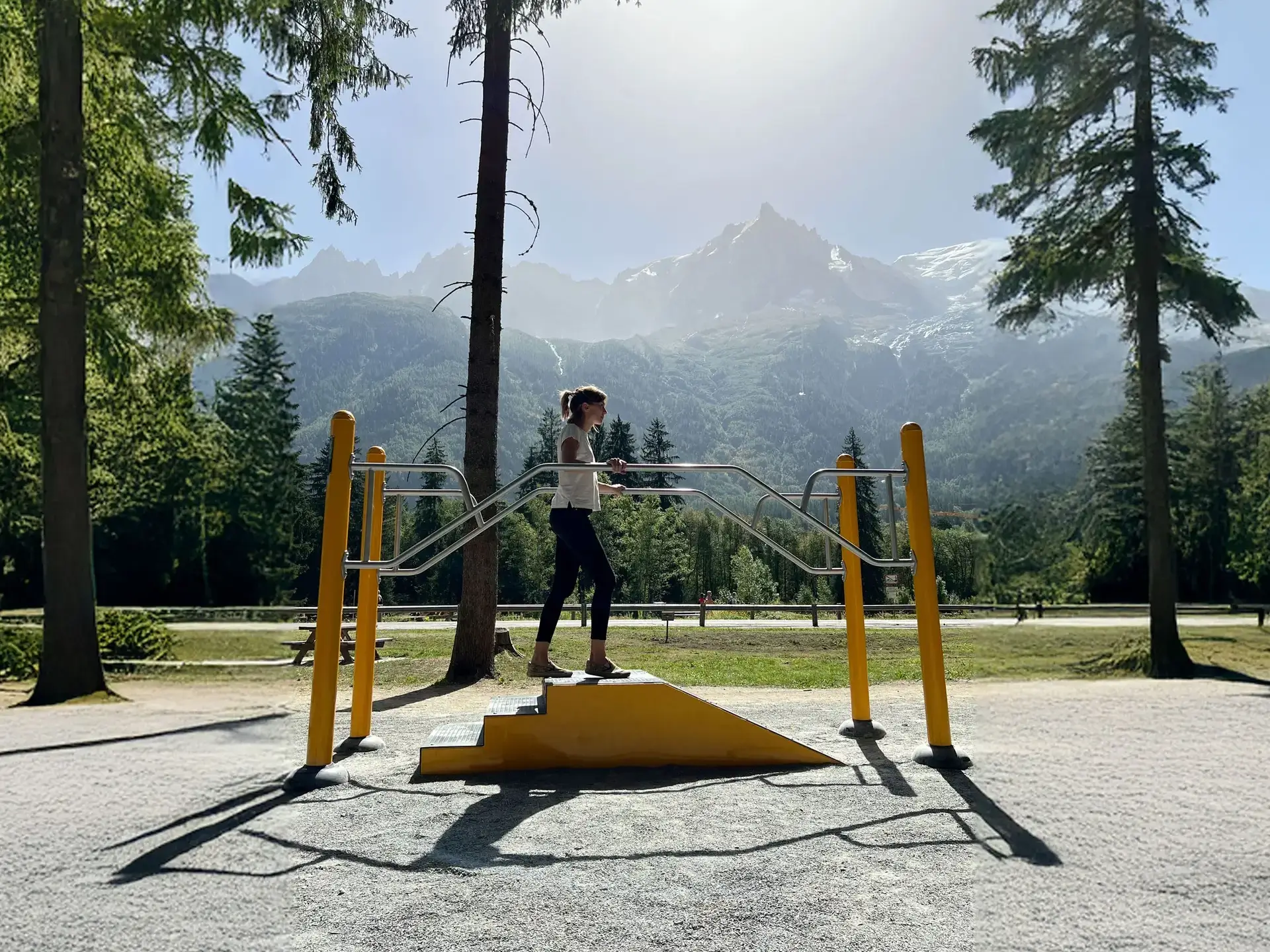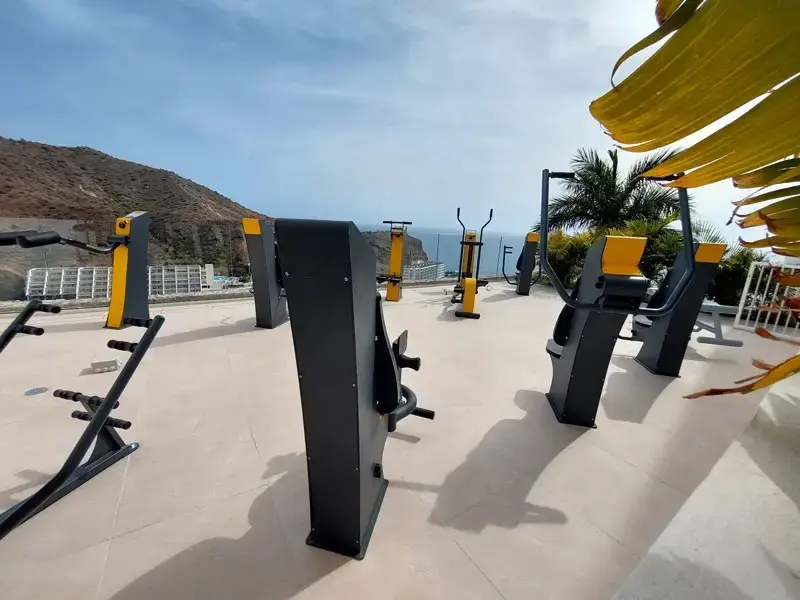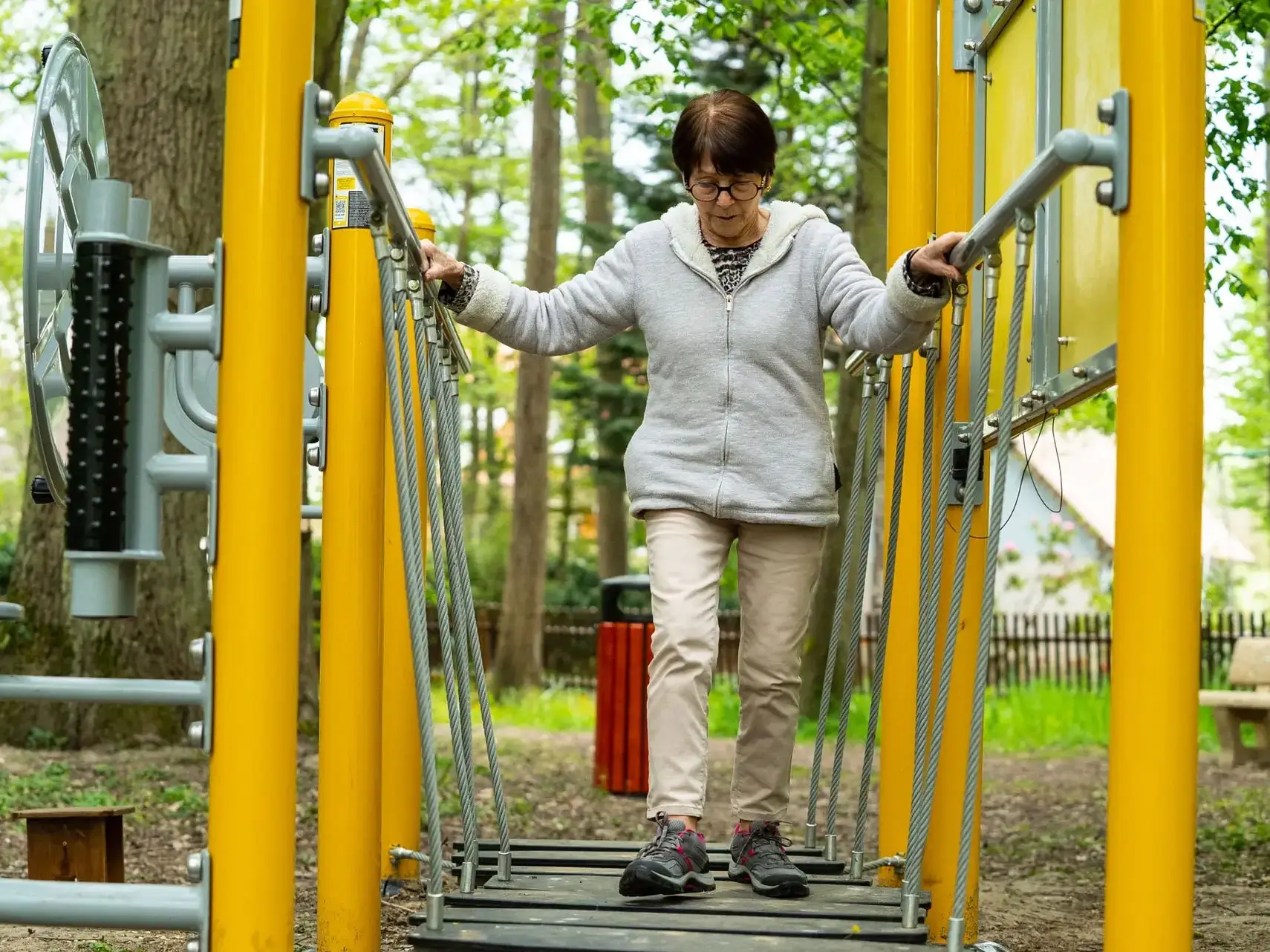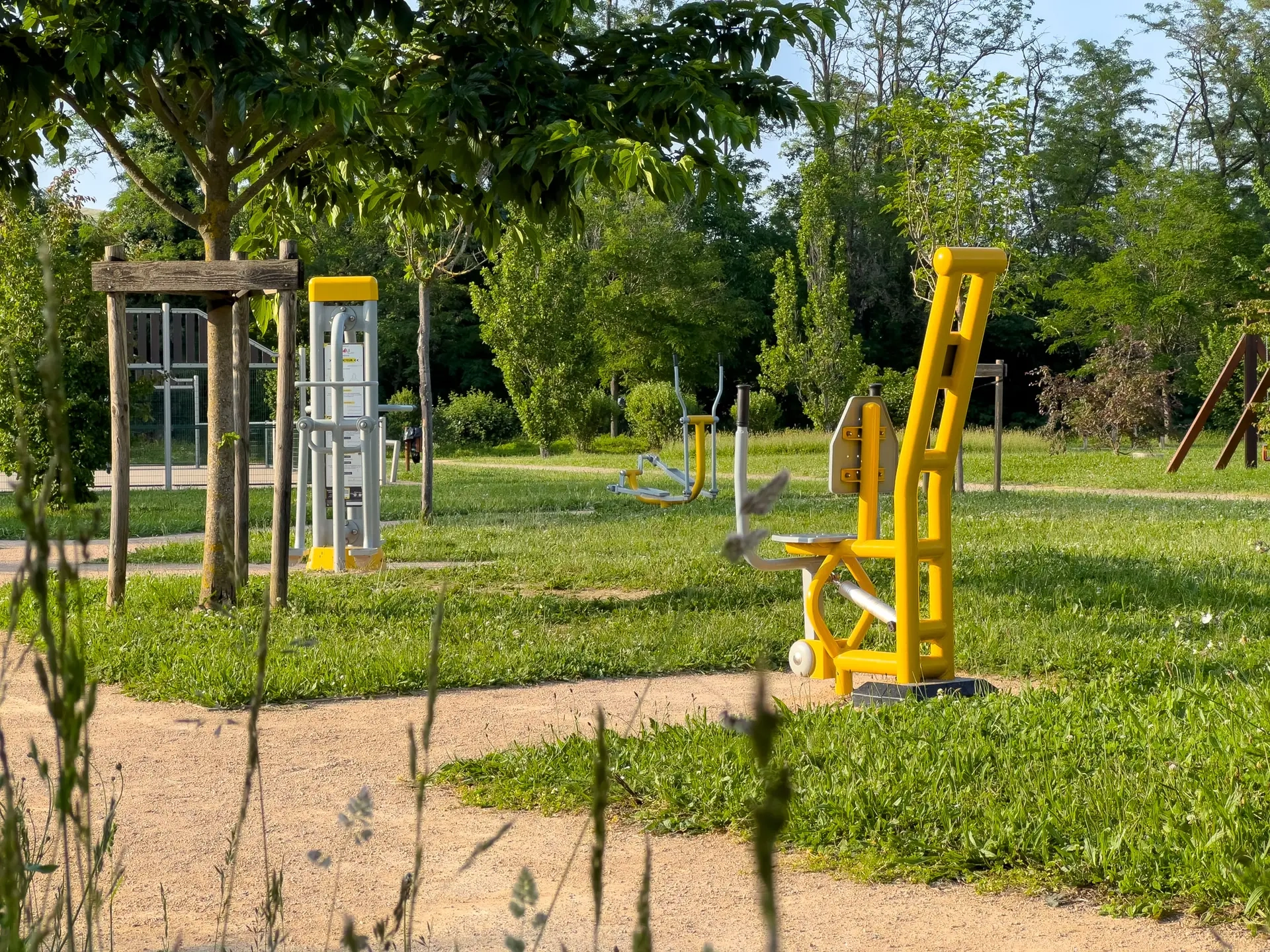

Motorway rest areas are much more than just sanitary rest stops. They are temporary living spaces frequented by millions of users every year in France, whether families on vacation, professional drivers or long-distance travellers. Faced with driving fatigue and the risks it generates, the installation of outdoor sports areas on these sites represents a concrete and effective response. But setting up a fitness area at a motorway service area raises specific regulatory, technical and operational constraints, which all managers need to master before taking the plunge.

Why set up a sports area on a motorway service area?
Combating driver fatigue: a road safety issue
Fatigue is implicated in almost a third of fatal freeway accidents, according to Road Safety figures. Official recommendations call for a break of at least 15 minutes every two hours of driving. However, a simple static break, sitting in a vehicle or standing by a picnic table, is rarely enough to restore alertness over the long term.
Physical activity, however brief, is an effective way of waking up the nervous system. A few minutes’ stretching, brisk walking or exercise on outdoor fitness equipment increases blood flow, oxygenates the brain and significantly reduces drowsiness. A well-designed sports area naturally encourages users to take an active rather than a passive break, with a direct impact on road safety.
| 📊 Key figureAccording tostudies by ASFA (Association des Sociétés Françaises d’Autoroutes), areas equipped with entertainment and physical activities record longer average break times and a better sense of recuperation among users. |
A differentiating lever for dealers
At a time when motorway operators are seeking to improve the user experience and enhance the value of their concessions, the outdoor sports area represents a differentiating feature at a low investment cost. It improves the perception of service quality, contributes to the concessionaire’s brand image, and meets the growing expectations of motorists for well-being on their journeys.
The rise of itinerant tourism, family road trips and long electric vehicle journeys, which require recharging breaks of 20 to 45 minutes, makes this equipment even more relevant. During a recharging break, a sports area transforms a constrained wait into a moment of active recuperation.
Constraints specific to motorway service areas
Developing a sports area at a motorway rest area is not the same as developing one in a municipal park. The constraints are numerous and must be anticipated right from the design phase.
Strict regulatory and administrative constraints
Rest areas on motorways under concession are subject to a precise regulatory framework. All developments must be approved by the motorway concession holder and, depending on the case, by the Direction Interdépartementale des Routes (DIR) or the relevant prefecture. Accessibility standards for people with reduced mobility (law of February 11, 2005) apply in full, as do safety standards for outdoor sports equipment (EN 16630).
In addition, the visibility of equipment from the freeway is regulated: no element should constitute a visual distraction for drivers, nor create confusion with road signs. Colors must be chosen with this in mind.
| ⚠️ RegulationsAnydevelopment project in a concession area must be submitted to the concessionaire for approval, and must comply with the concession specifications. A complete technical file, including plans, product data sheets and certifications, is generally required before any work is authorized. |
Intense attendance and a very heterogeneous public
Motorway service areas cater for an extremely wide range of user profiles: young children, families, senior citizens, professional truck drivers, sports enthusiasts and people with reduced mobility. Equipment must therefore be accessible to all, robust in the face of intensive use, and intuitive enough to be used without instructions or supervision.
The duration of the break is generally short, between 10 and 30 minutes in the majority of cases, which means that the exercises must be short and easy to start and stop, without the need for a long warm-up or specific sportswear.
Demanding environmental conditions
Motorway service areas are exposed to particularly severe environmental conditions. Proximity to the freeway means exposure to vibrations, fine dust and particles from road traffic. Outdoor fitness equipment must withstand these pollutants without deteriorating prematurely. Surfaces must remain playable in all seasons, including rain and frost.
User safety is also conditioned by the organization of pedestrian flows on the site: the path between the parking lots, the sanitary facilities, the catering areas and the sports area must be clearly signposted to avoid any accidents on foot.
Specific maintenance requirements
Unlike a municipal park served by municipal technical teams, a motorway service area is often managed by an external service provider whose teams are not necessarily trained in sports equipment maintenance. The equipment chosen must therefore be particularly robust, unlikely to break down and easy to inspect visually. The availability of spare parts and the manufacturer’s responsiveness in case of need are essential selection criteria.
Adapted solutions: which equipment to choose?
Given these constraints, not all outdoor fitness equipment is suitable for motorway use. Here are the decisive criteria and the most appropriate types of equipment.
Essential selection criteria
| Criteria | Requirements for the motorway context | Recommended solution |
| Robustness | Intensive use, 24/7, all conditions | Hot-dip galvanized steel, self-locking bolt connections |
| Intuitivite | No supervision, uninitiated public | Integrated signage, simple movements and guides |
| PMR accessibility | Regulatory obligation | Adapted heights, compliant manoeuvring spaces |
| Minimum maintenance | Non-specialized on-site teams | Lubrication-free mechanics, standardized parts |
| Environmental resistance | Pollution, vibrations, bad weather | Epoxy paint, stainless steel for sensitive parts |
| Passive safety | Unsupervised public, children present | No sharp edges, EN 16630 certified |
Equipment best suited to motorway service areas
Taking into account the constraints identified, certain types of equipment are particularly well suited to rest areas.
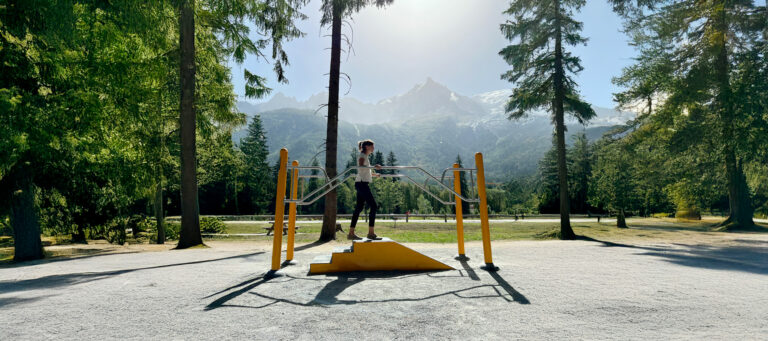
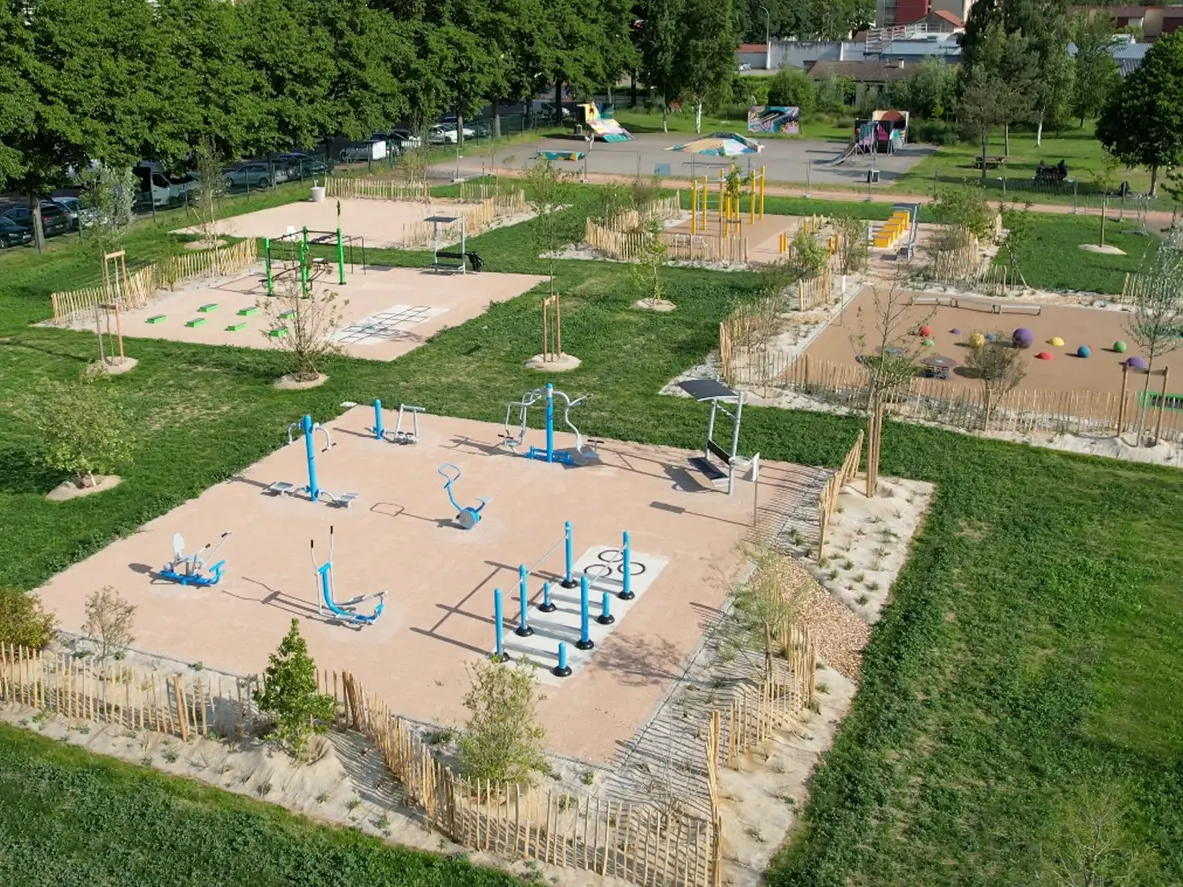
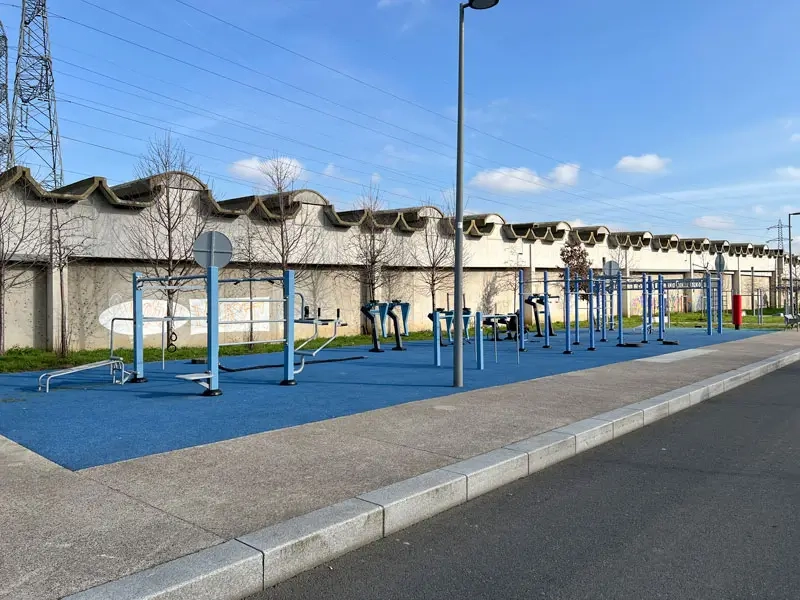
– Stretching and joint mobility equipment: stretching bars, stretching panels, shoulder swings. This equipment is accessible to all, requires no prior physical fitness and produces a rapid, perceptible recovery effect. They are ideal for drivers looking to loosen up their backs and shoulders after hours at the wheel.
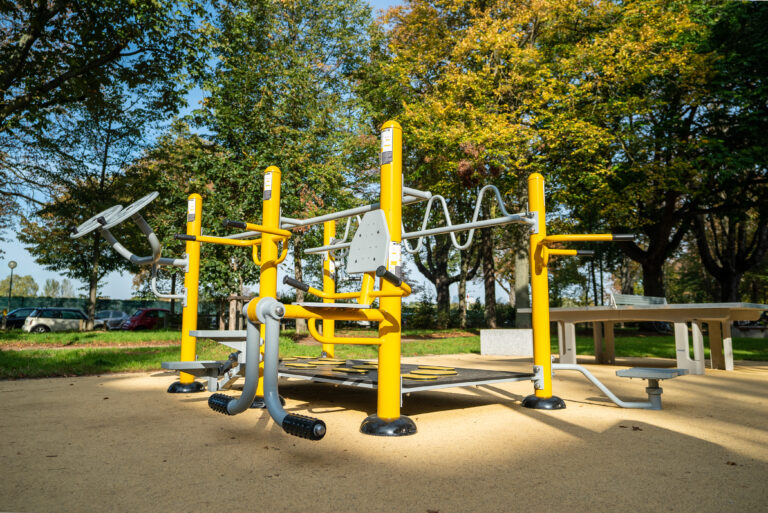
– Seated walking and pedaling machines: elliptical bikes or outdoor pedalboards. Easy to use, with no risk of falling, they are suitable for seniors and children alike, and provide a gentle way to get back into motion. They are particularly appreciated during long electric charging breaks.
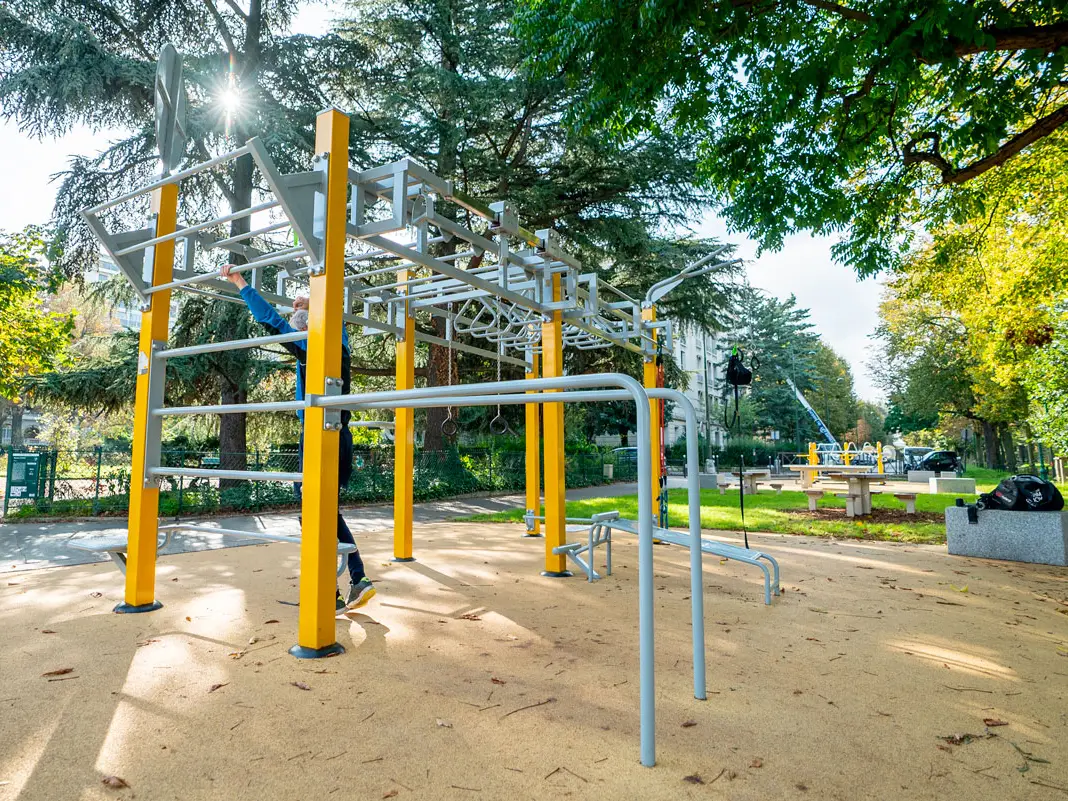
– Pull-up bars and strengthening equipment: designed for more athletic users, particularly truck drivers on long journeys who require more intensive exercise. Their installation must be accompanied by signs indicating any contraindications.
– Health and walking trails: a wooded circuit a few hundred meters long with integrated exercise points is an ideal solution for areas with sufficient space. It encourages active walking, promotes disconnection and naturally extends break times.
– Ping-pong tables and play equipment: particularly popular with families with children, these are easy to access and encourage a playful break that appeals to adults and youngsters alike.
| ✅ Best practicePrefera modular approach: start with a core of 3 to 5 devices covering essential needs (stretching, pedaling, walking), then gradually enrich the offering according to user feedback and the area’s attendance performance. |
Designing sports areas: best practices in layout
Choosing the right spot on the site
The sports area should be located so as to be visible from the parking lots and catering areas, to encourage users to go there spontaneously without having to look for it. It should be located away from heavy goods traffic and accessible via a safe, signposted footpath. A semi-shaded location is ideal for comfortable use during the summer months.
Signage: a key element
At a motorway service area, users are often in a hurry and unfamiliar with the area. Directional signage (signs indicating the presence of a sports area from the parking lot) and educational signage (instruction sheets on each piece of equipment, safety recommendations, suggested duration of use) are essential to maximize use of the area and prevent accidents.
Exercise sheets must be written in at least one of the following languages: French, English, Spanish and German, given the international traffic on French freeways, particularly on the routes linking northern Europe with Spain and Italy.
Floor coverings
The choice of flooring is crucial to user safety and comfort. Recycled rubber tiles or draining stabilized surfaces are the most commonly chosen solutions. They offer good shock absorption, remain passable in wet weather and require little maintenance. The surface must be clearly demarcated from pedestrian traffic zones.
Night lighting
Even if motorway service areas are frequented at all hours of the day and night, the sports area can benefit from lighting adapted to night-time breaks, particularly in winter when the days are short. Presence-detecting lighting is an energy-saving solution that guarantees the visibility of equipment while avoiding permanent power consumption.
Examples of configurations according to area size
| Area type | Recommended configuration |
| Small area (less than 50 places) | 3 devices: stretching bar, seated pedal, stretching guide panel. Bilingual signage. Surface area: 30 to 50 m². |
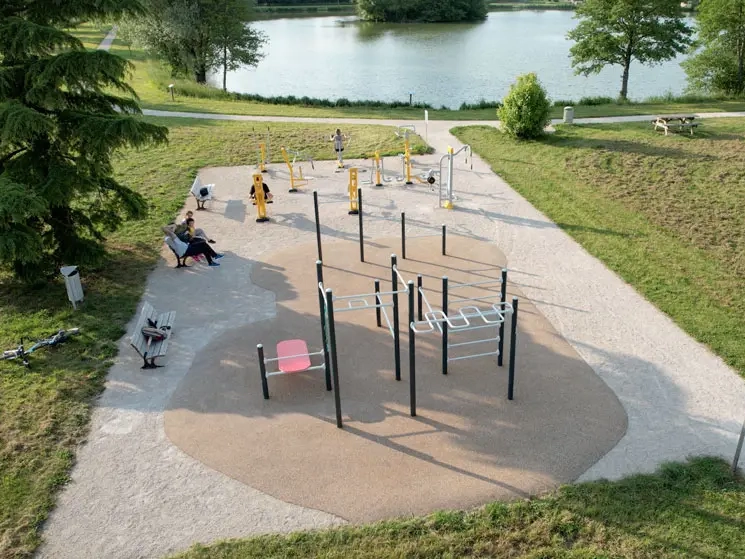
| Medium area (50 to 150 places) | 5 to 7 machines: stretching, pedaling, active walking, pull-up bar, ping-pong table. 100 m course. Surface area: 80 to 150 m². |
| Large service area (150+ spaces) | 8 to 12 machines with separate zones (adults, seniors, children), wooded fitness trail, full multilingual signage, night lighting. Surface area: 200 m² and more. |
| Area with electric charging station | Prefer long-lasting equipment (fitness trail, ping-pong table, pedaling) to occupy 20 to 45 minutes of recharging time. Comfort: benches, shade, water. |
What’s your budget?
The cost of a motorway sports area varies according to a number of factors: the surface area of the area, the number and type of equipment, earthworks and paving, signage and lighting. In addition to these items, there are the costs of project design and application to the concessionaire.
In terms of return on investment, the outdoor sports area is one of the most profitable facilities an area can offer: its running costs are virtually nil (no staff, no energy consumption apart from any lighting), its lifespan is long (15 to 20 years for quality equipment) and its impact on user satisfaction is immediately measurable.
| 💡 FinancingAspart of their CSR policy and their commitment to road safety, some motorway concessionaires can co-finance projects to develop sports areas on their service areas. Public funding schemes (ADEME, Cerema, FEDER funds) can also be mobilized as part of sustainable mobility or road accident prevention projects. |

Maintenance and monitoring: a particular challenge at motorway service areas
The maintenance of sports facilities at a motorway service area needs to be carefully organized, given the remoteness of the technical teams and the continuous use of the site. A formal maintenance plan, with weekly visual inspections and an annual main inspection by a qualified body, is essential.
It is strongly recommended to choose equipment whose manufacturer guarantees the long-term availability of spare parts and offers a responsive after-sales service. In the event of an anomaly being detected, rapid decommissioning of the equipment concerned, by physical condemnation, is the only acceptable response to protect users and the manager’s liability.
Some manufacturers offer turnkey preventive maintenance contracts, including periodic visits, replacement of wearing parts and production of the inspection reports required by standards EN 16630 and EN 1176. This formula is particularly well-suited to the motorway context, where the operator does not always have in-house technical expertise in outdoor fitness.
Outdoor sports facilities at motorway rest areas meet a real and growing need among users, while at the same time promoting road safety and quality of service. Its implementation requires a rigorous approach – regulatory validation, choice of suitable equipment, multilingual signage, maintenance plan – but the constraints are perfectly surmountable with the right partners.Herkules Fitness supports motorway concessionaires, service area management companies and local authorities in the design and installation of customized outdoor sports areas. Our EN 16630-certified equipment is designed to withstand the most demanding conditions, and we offer comprehensive support: project study, free 3D visualizations, technical file for dealer approval, turnkey installation and maintenance contracts.